GENERAL ADVICE ON HEAT
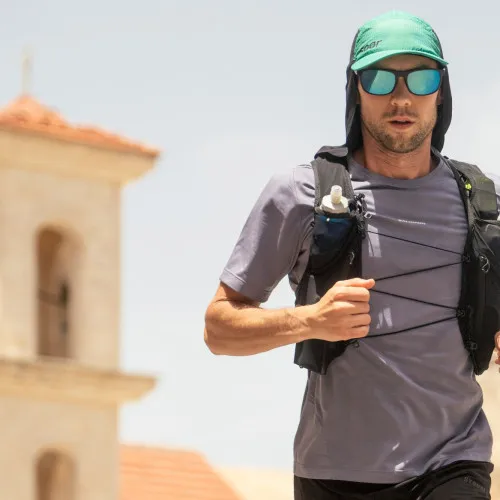
This event will take place in the British summer. Typically temperatures can be warm, mild or even cool. But over 35 days, there are bound to be some ‘hot ones.’ Given it is not consistently warm on these shores, it is important you are prepared for those days where the sun can beat down and dehydrate you, perhaps without you even knowing it. So a wide-brimmed sunhat, sun-cream and lightweight and breathable fabrics (ideally with SPF protection) should be used. Given the sweating you will endure, application of waterproof sun-cream and hat selection is very important for such a long multi-day undertaking where you are outdoors for the majority of the day. As the sun comes up, sunglasses with at least Cat 3 protection are required.
The beauty of the support afforded by the vehicles is that we can interact with you many times on the route. So whilst we require you to take water with you at all times (and always leave a pit stop with full supplies), we can also re-supply you often.
Do not underestimate how much the heat will take out of you, when that sun does bear down on a clear cloudless day. Even if you think you are going well earlier on, as soon as that sun starts warming you up, it’ll start sapping energy. You really do want to ensure you have max sun protection and keep taking on fluids and salts.
For your feet, we would advise you bring both trail running footwear and road shoes. You do not need a very aggressive chunky sole however. There will be times where one pair is advised over the other and there may also be certain stages where we permit you to change footwear within the stages (i.e. at designated Pit Stops). We will advise you of such occurrences throughout the journey. We will provide access to Pit Stop bags on certain stages at certain locations, allowing you to change clothes, socks and stash favourite snacks in your gear to access later on the day, when you need them most on a stage.
In terms of how much kit you should bring (i.e. how many changes of clothes), we would advise that you look to change your socks and underwear daily. You may also wish to change your running tops and bottoms every 2/3 days. Remember in all cases we will have a ‘laundry day’ at the end of each stage. So in essence, you are looking to provide a weeks’ worth of clean clothes in any given case.
Here’s a kit list. It may change between now and the event – but the general list will remain pretty consistent:
MANDATORY KIT LIST
Running/Trekking
-
Trail running footwear
-
Road running footwear
-
Shorts
-
T-shirt
-
Ultra vest or small daypack
-
CAT 3 sunglasses
-
Bladder or bottles/ soft flasks (aim to be able to carry a MINIMUM of 1.5l)
-
Hat – cap or wide brimmed are fine
-
Waterproof jacket and trousers with taped seams
-
Socks – and plenty of spares!
-
Buff or similar neck gaiter
-
Blister care kit
-
Scooby snacks of choice*
-
Either a GPS handheld device or Smartphone capable of following a GPX file (phone with Viewranger App is recommended – see section on ‘route finding’ below) OR a GPS watch for following the route
-
In all cases, participants must carry a Smartphone for comms purposes (so if using a watch for following the route, you must also have a Smartphone in your kit)
-
Power pack and cable for recharging phone, in waterproof bag (ziplock or dry bag)
-
Headtorch, waterproof to IPX7 standard, minimum 150 lumens + spare batteries or second headtorch
-
Salt tablets and dissolvable electrolyte tablets for water. You will 100% need these on this trip and they are MANDATORY
-
First Aid kit (small personal kit with a triangular bandage, steri strips and an adhesive dressing as a minimum). Also include any personal medication
-
Trekking poles – totally optional
-
Dry bag or small zip lock bags: Very useful for general gear storage/ organisation/ protection – especially for your day pack
-
Bivvy bag
-
Whistle
*Whilst the Pit Stop vehicles will be stocked up with yummy things, including drinks and sweet/ savoury snacks, sports nutrition can be a very personal thing so we would advise that, regardless of our Pit Stop service, you pack items that you know will work for you out on the course.
Overnight
-
Personal toiletries and medication
-
Towels will typically be provided in many accommodation types; but not always. We would recommend bringing one for overnights and a separate one for use on the challenge itself and at Pit Stops, most likely
General
-
Casual clothing for use in evenings at hotels and rest days
-
General ‘overnight’ bag (holdall, duffel) for spare kit – pls don’t bring a hard suitcase – ensure all bags are soft (much easier for managing in vehicles)
-
Towel – travel micro towel or full-size. 2 total (one for overnight and 1 for Pit Stop use as specified in ‘overnight’s above)
-
Power bank for mobile phone and/ or GPS unit
-
International plug adaptor for UK use if coming from overseas
IF THERE ARE ANY CHANGES FOR THE EVENT THIS WILL BE COMMUNICATED IN THE PRE-EVENT DOCUMENTATION
Carrying this kit is a requirement of the Event and forms part of our planning in ensuring reasonable measures are put in place to keep you safe should anything go wrong during this adventurous endeavour. We ask you not to take short cuts or ‘second guess’ our advice. For instance, the carrying of waterproofs is required even if rain is not forecast as a means to prevent cooling down too fast if you get injured in a location that is very exposed to wind – remember you may be very tired and sweaty, and who says the forecast is always right?
The emergency kit is important for several reasons:
-
It helps you to help yourself should you have a problem.
-
We are in this together and you may need to assist others if they have a problem.
-
In the case of an incident our Event and Medical teams will make decisions based on the knowledge that you all have this equipment.
-
Carrying the kit is a requirement for everyone and hence provides an equal and fair challenge.
-
It is part of our risk assessment process that is shared with insurers. Your insurance may be invalid if you do not follow our advice.
-
If your lack of kit preparation contributes to making an incident more serious, then you may be avoidably drawing resources from our medical team and the Emergency services at the expense of others.
-
Without the kit you will be unable to complete registration.
PIT STOP KIT
In order to allow you to access the right kit at the right times during a stage, on some stages we will permit a Pit Stop bag to be used, which you will be able to access at specific Pit Stops. This will be particularly handy if you need to change footwear selection, for example.
Pit Stop bags must be soft (and not hard suitcase-style cases) and can be up to circa 30l each in size. Small holdalls, duffels or rucksacks are perfect.
BAGS
There are therefore 3 bags to be considered for this journey.
1.) General ‘overnight’ bag (Recommended: Holdall or duffel and no suitcases) for spare and general kit. Please go for a MAXIMUM size of around 80 litres and no more than approx 25kg pls. This should be plenty of weight and space. This bag will be transported to the event accommodation with you and remain there throughout.
2.) Daypack or running vest. This is the bag you will carry with you for the daily stages. It should contain the mandatory kit, spare clothes, food and water. You may use the same pack throughout, or bring a couple and alternate if you think one will succumb to wear and tear over this distance. Your choice. Either way, you will need a decent daypack or run vest on your person each day throughout the challenge.
3.) Pit Stop bag – can contain anything you wish and will be available to you when you come into specified Pit Stops on specified stages. You can remove and leave anything you do not wish to take on the stage, also. Any discarded items at Pit Stops should be stowed in your Pit Stops bags and will be taken by the crew back to the accommodation.
BLISTER KIT
Your feet are your best friends on this adventure and looking after them is essential to completing your challenge. Its important not to take them for granted and treat any issues or hotspots immediately rather than wait for them to get worse. Prevention is way better than cure. It’s pretty rare for me to suffer from blisters and it’s something you shouldn’t have to suffer with either. Here are my top tips for keeping those toes happy.
Wear the right shoes – your shoes should ideally be half a size bigger that you would normally wear – your feet will swell on hot multi day events. A wide toe box will also stop your toes hitting the end of your shoes and so reduce black toenails and blisters. Altra and HOKA do great wise toe box trail and road shoes. You should be training in the shoes that you plan to wear so test out a number of options before you commit.
Have a morning and evening routine. I find the following works really well for me. in the morning, make sure your feet are dry and lube them with a silicon based lube like Uberlube, put your socks on (wicking merino running socks like these are brilliant) and go. If you do have hotspots, look at covering them with a plaster and KT tape before you lube them. Tape won’t stick to slippery feet! In the evening, socks off, wash feet and if you have anything like a blister forming, rub them in rubbing alcohol – this dries out the blister overnight and prevents you having to pop it – popping them can lead to infection and further discomfort so should be a last resort. If your feet get wet during the day, change socks and shoes if you can. Again rubbing alcohol will dry them out very fast. I would recommend taking a pair of waterproof socks with you so if your feet get wet and you don’t have the option of changing shoes, you can dry your feet, put the waterproof sock on and put your feet back into wet shoes. As always we will have out medics o hand should you have any feet disasters but its your responsibility to stop your feet getting bad enough to need them!
You should carry a blister kit with you in your vehicle drop back that contains the following items:
-
Compeeds or other blister plaster pads
-
General plasters – various sizes
-
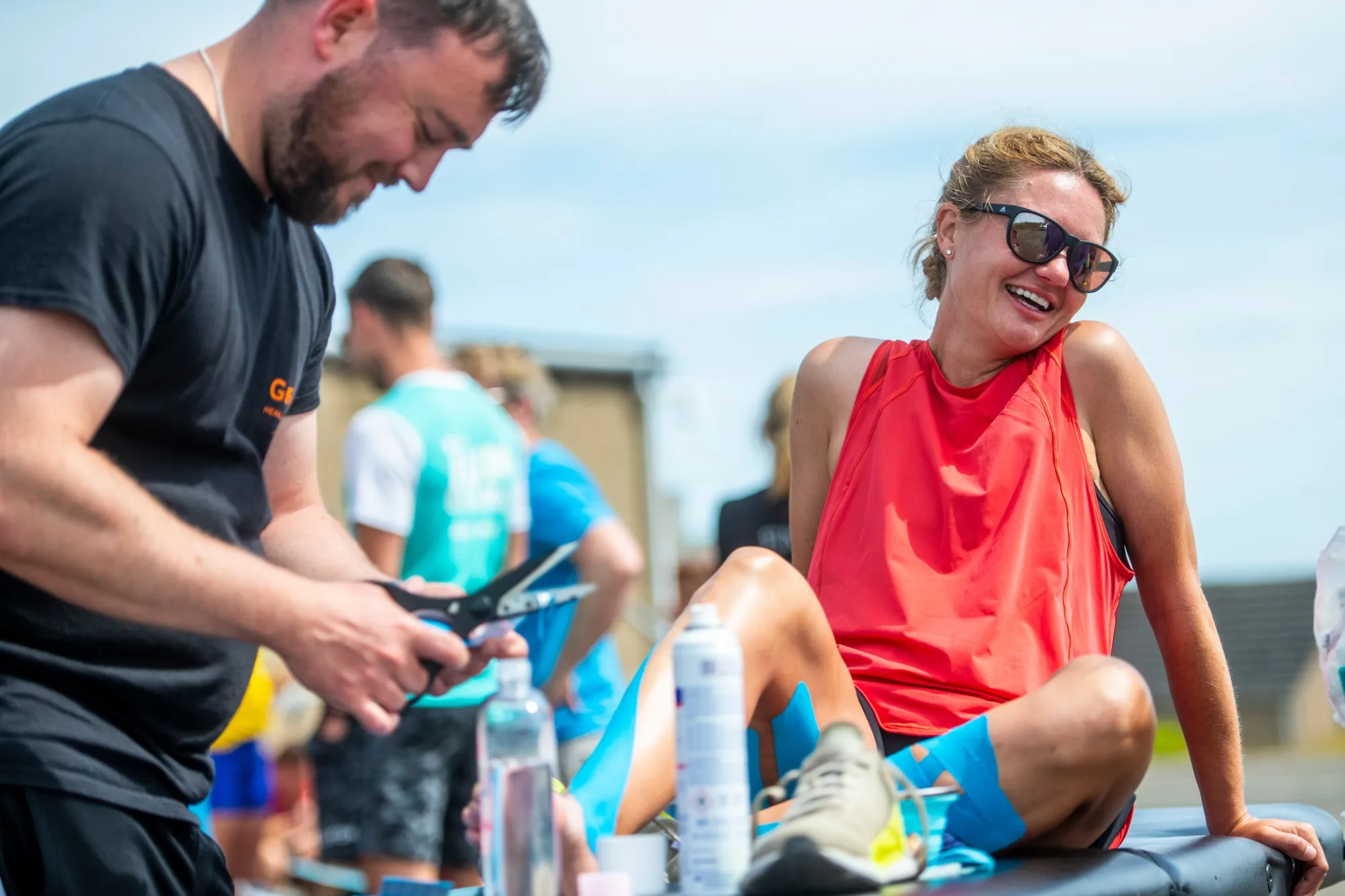
KT (Kinesiology) Tape – for taping feet and for taping other joints
-
Hypafix tape – ideal for covering blisters. Hypoallergenic and wheras KT tape won’t hold feet when wet, hypafix tape will
-
Rubbing alcohol (70% alcohol)
-
Sterile needle or scalpel blade
-
Iodine