Skip to contentSkip to footer

We Value Your Privacy

We use cookies to enhance your browsing experience, serve personalised ads or content, and analyse our traffic. By clicking 'Allow All', you consent to our use of cookies. For further details, please see our cookies policy.

Skip to content

Race to the Wreck

A journey across the Namib desert by fat bike or foot

Take on one of the world’s most extraordinary desert ultramarathon adventures across the vast Namib Desert in Namibia. Journey through towering sand dunes, remote desert wilderness and the legendary Skeleton Coast on a fully supported endurance crossing to the famous Eduard Bohlen shipwreck. Choose between a 200km ultramarathon on foot or a 300km multisport adventure combining trail running and fat biking for an unforgettable expedition through one of the planet’s most iconic desert landscapes. 

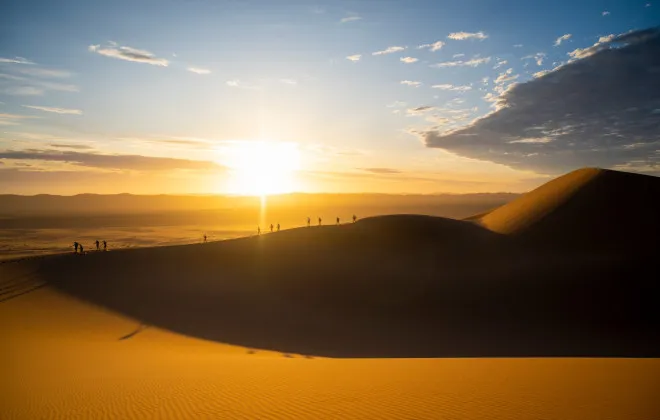
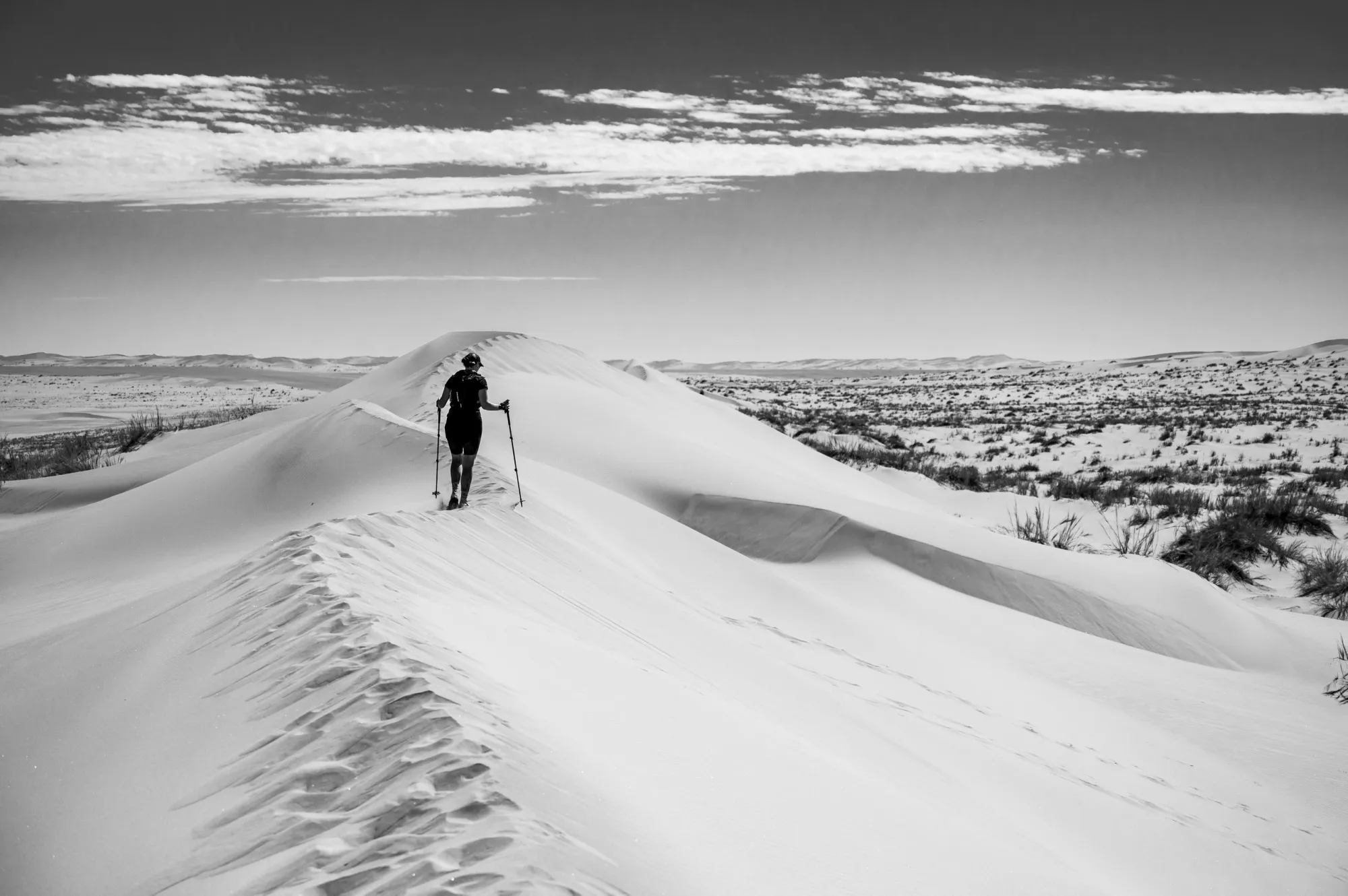
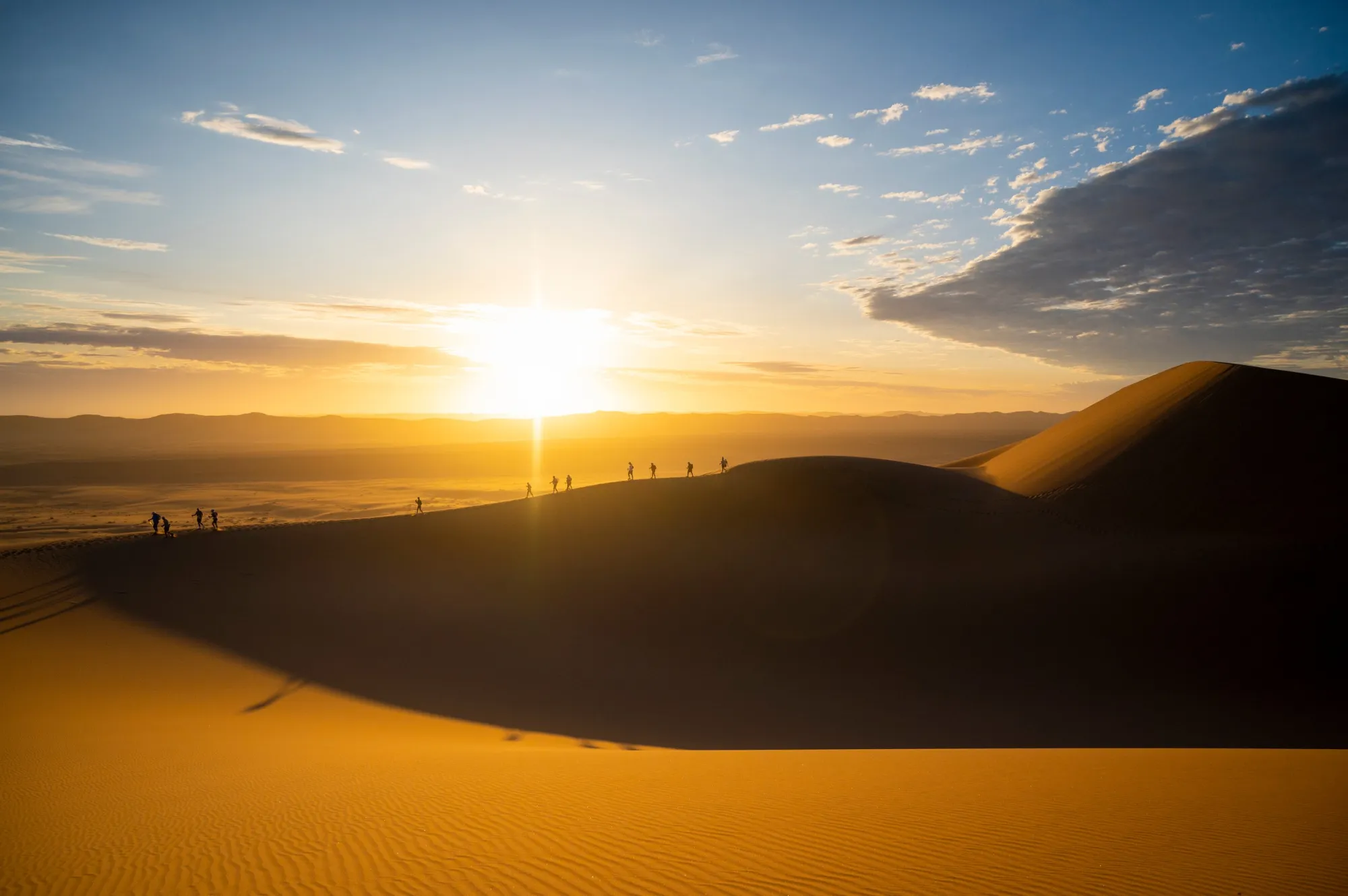
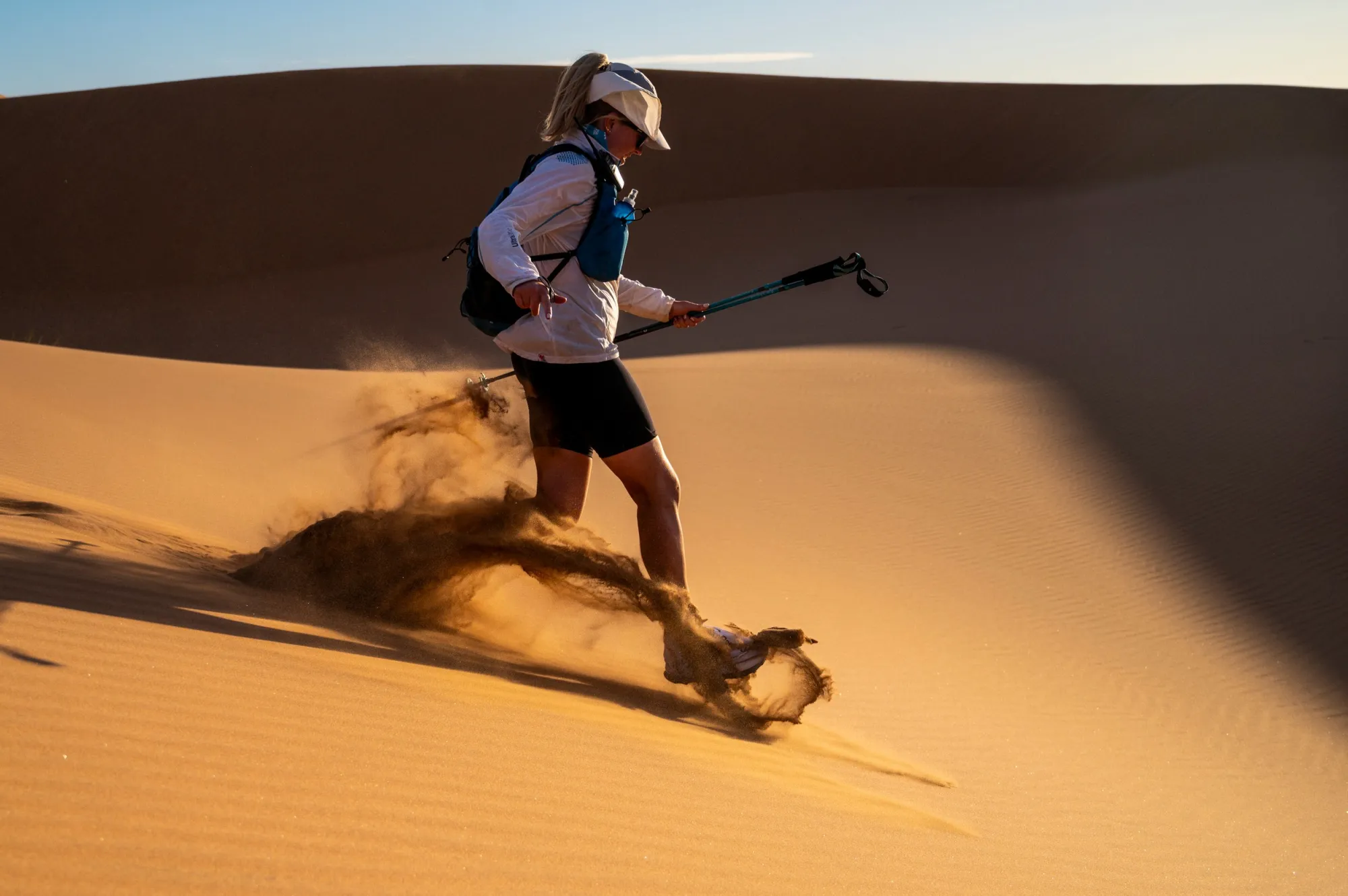
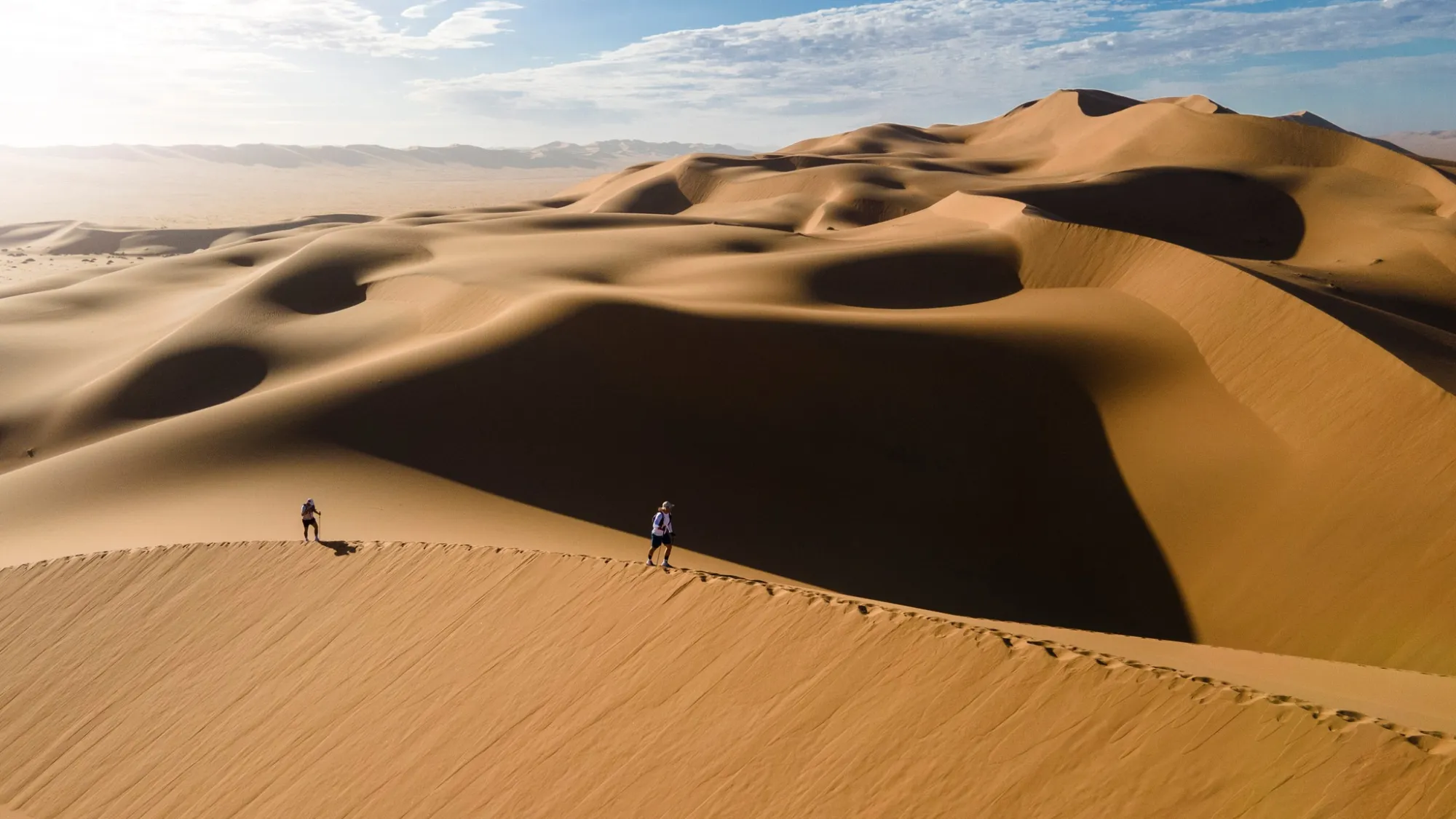
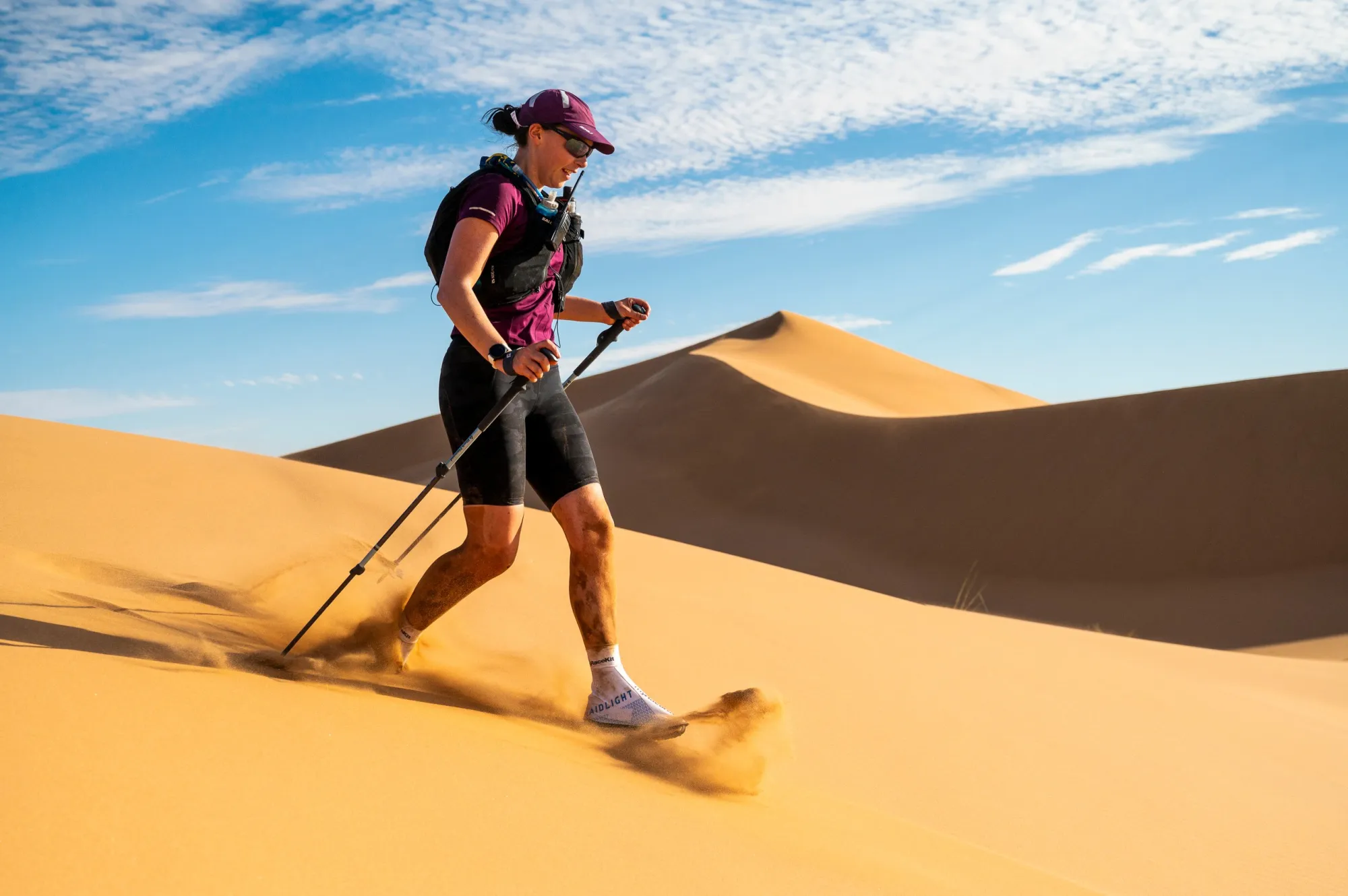
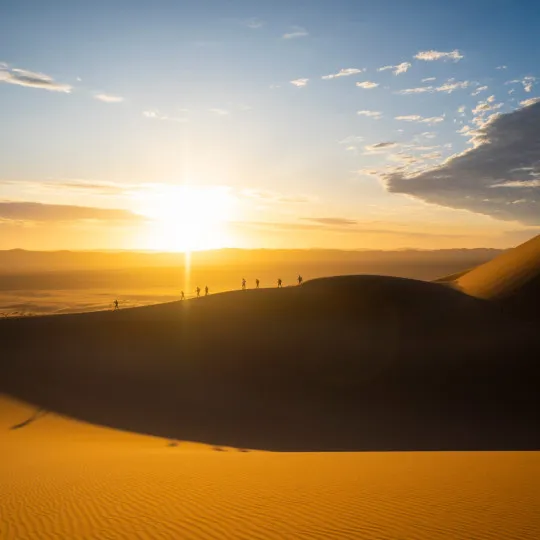
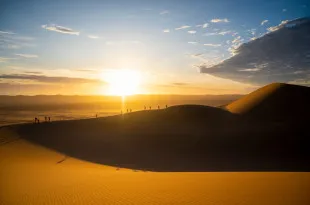
Participants walking over sand dunes with low sun beside them
Enter

Dates

1 - 8 November 2026

5 - 12 November 2028

Duration

8 Days / 7 Nights

Distance

124 miles foot (200km)
186 miles bike/foot (300km)

Event Type

Bucket List Adventures

Highlights

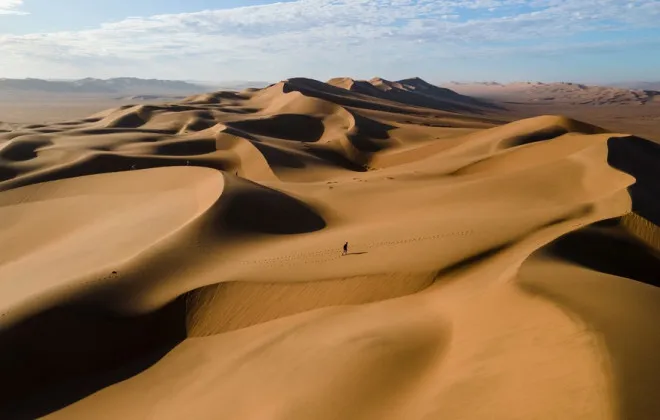
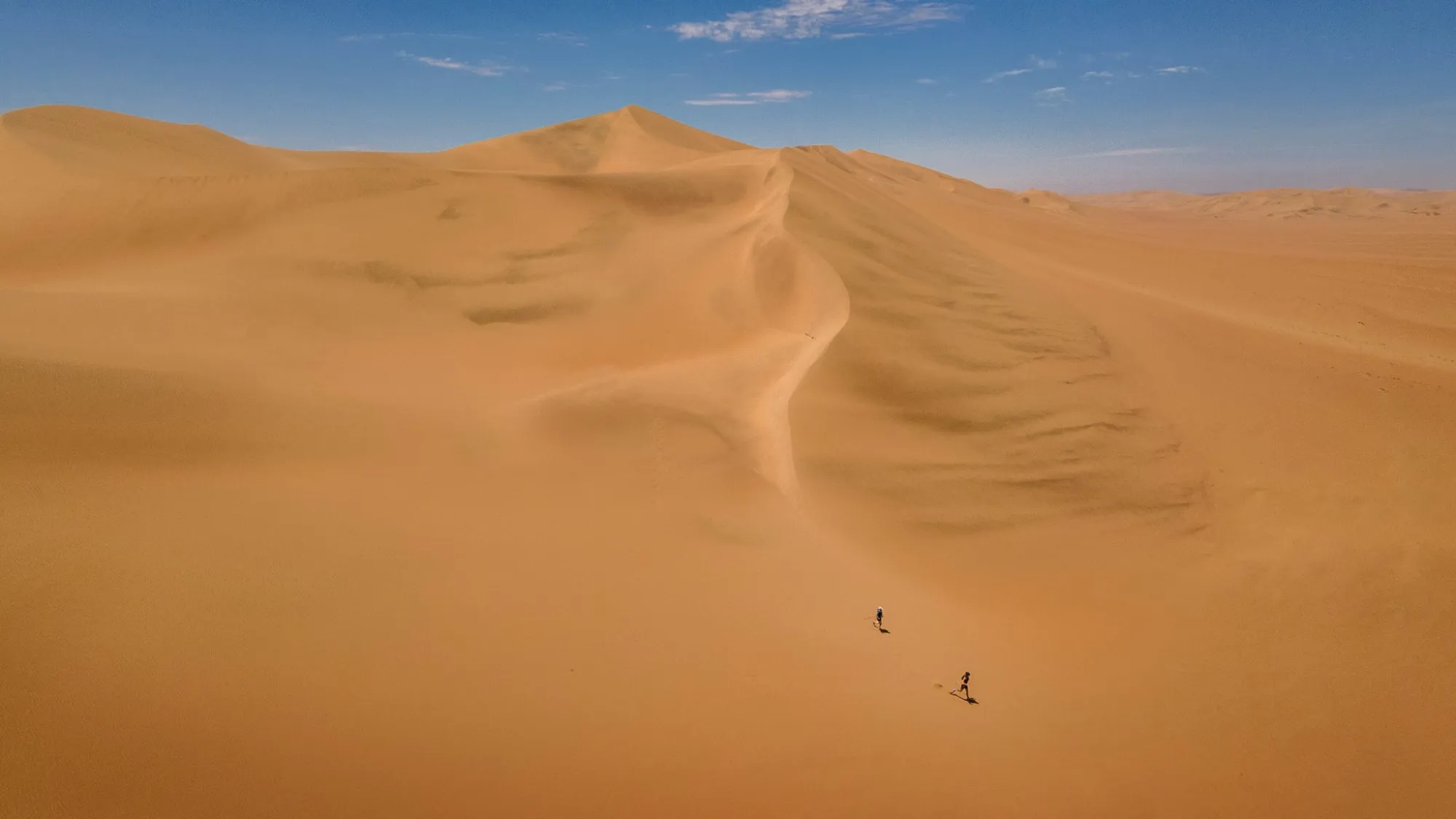
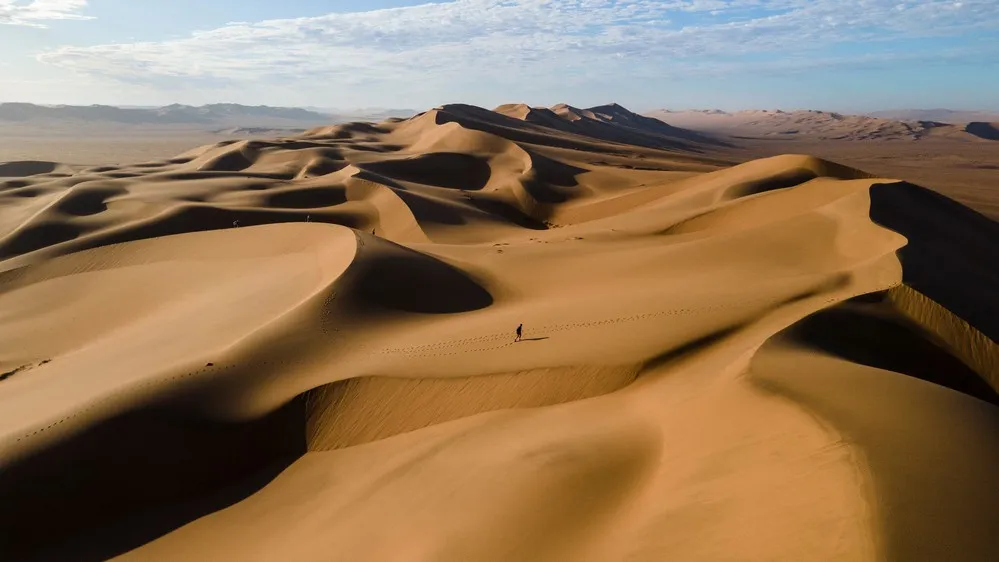
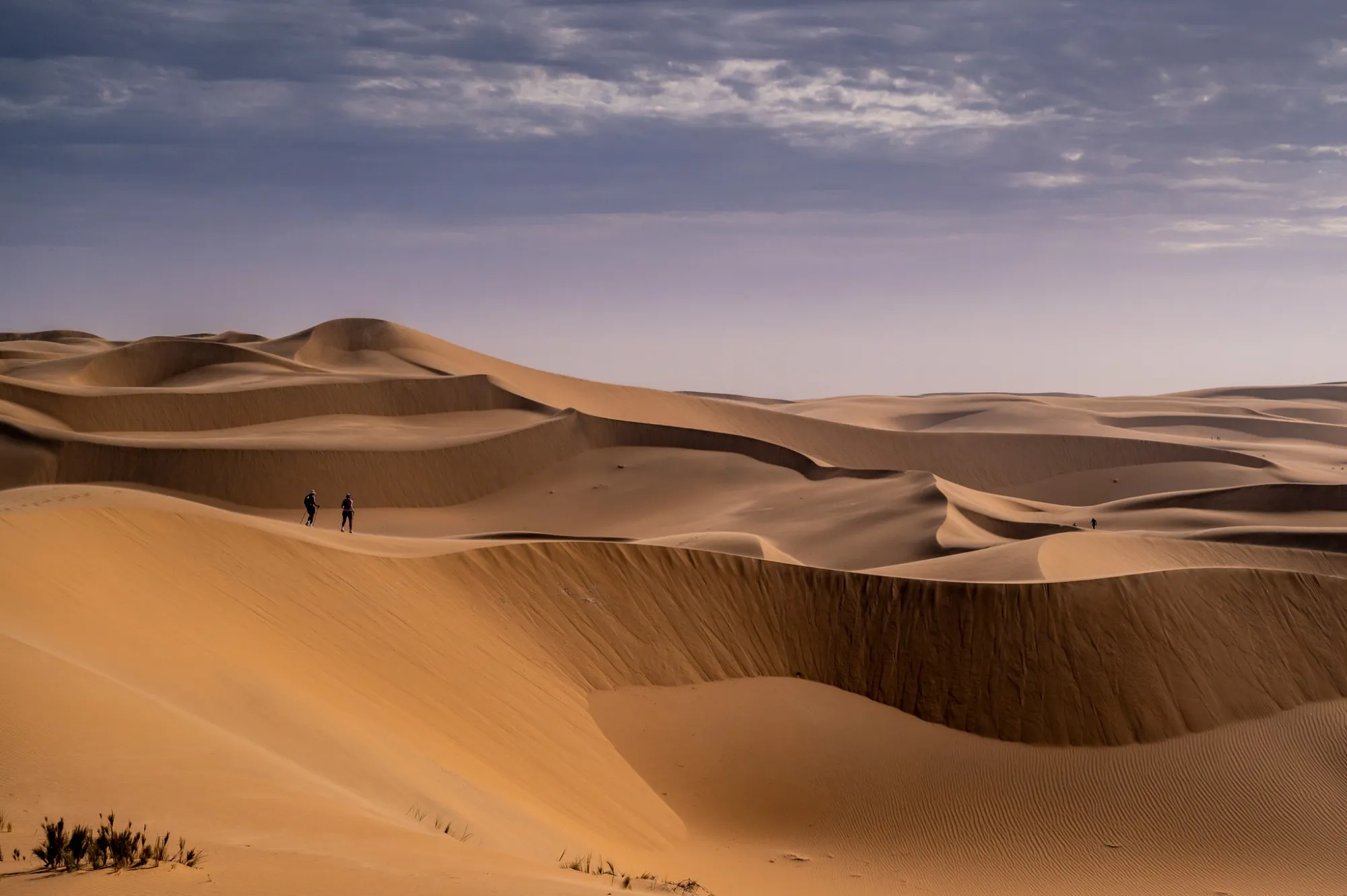
Smooth sand dunes under clear sky

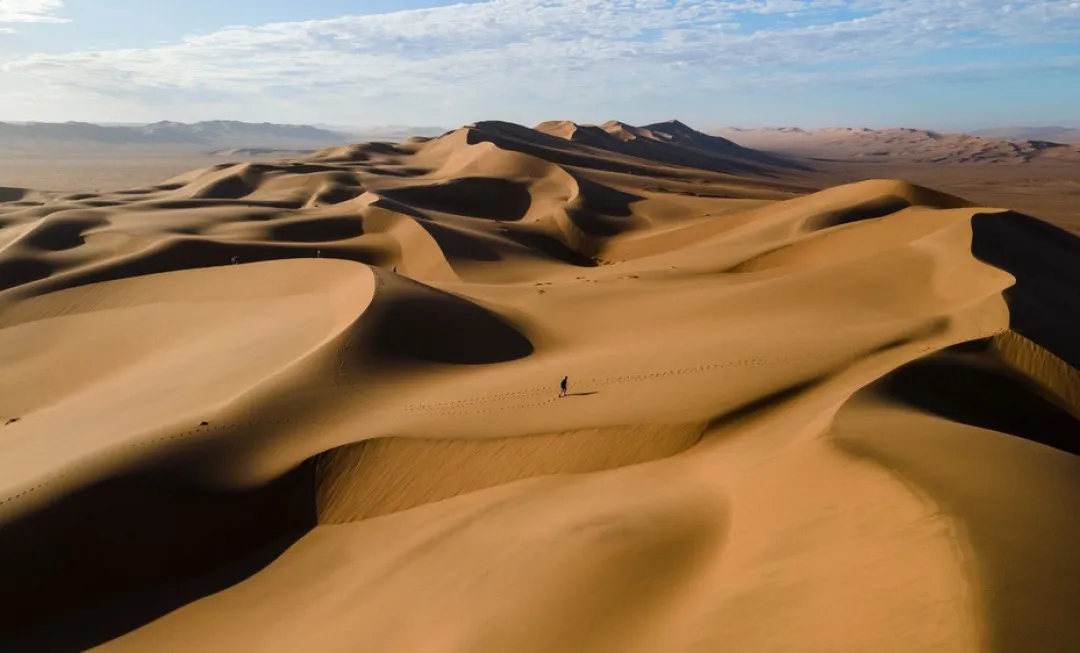
Climb some of the biggest sand dunes in the world

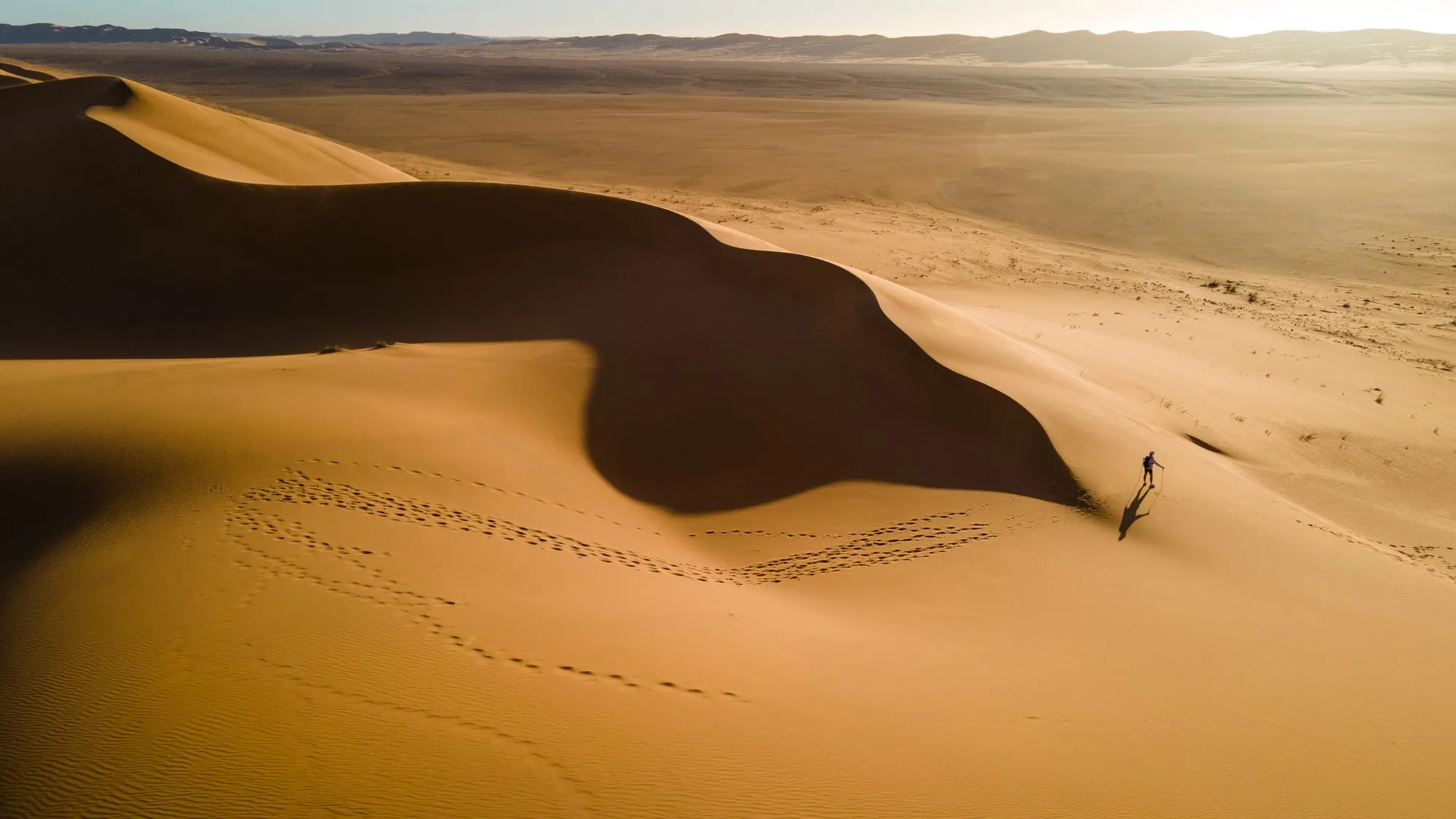
Get ready to take on 'Big Dune Day' where the size of the dunes are beyond anything you can picture.

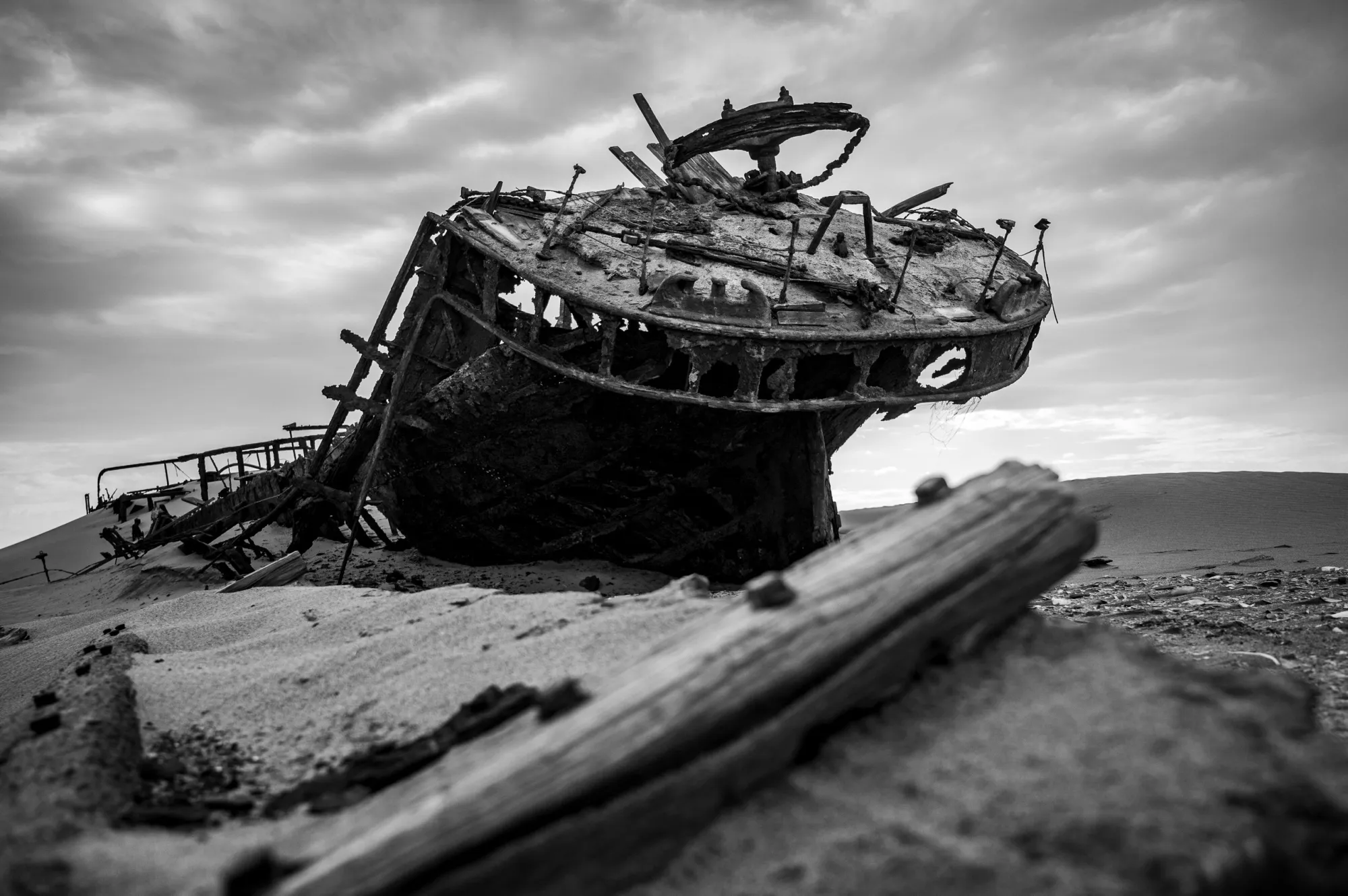
Wreck in the sand

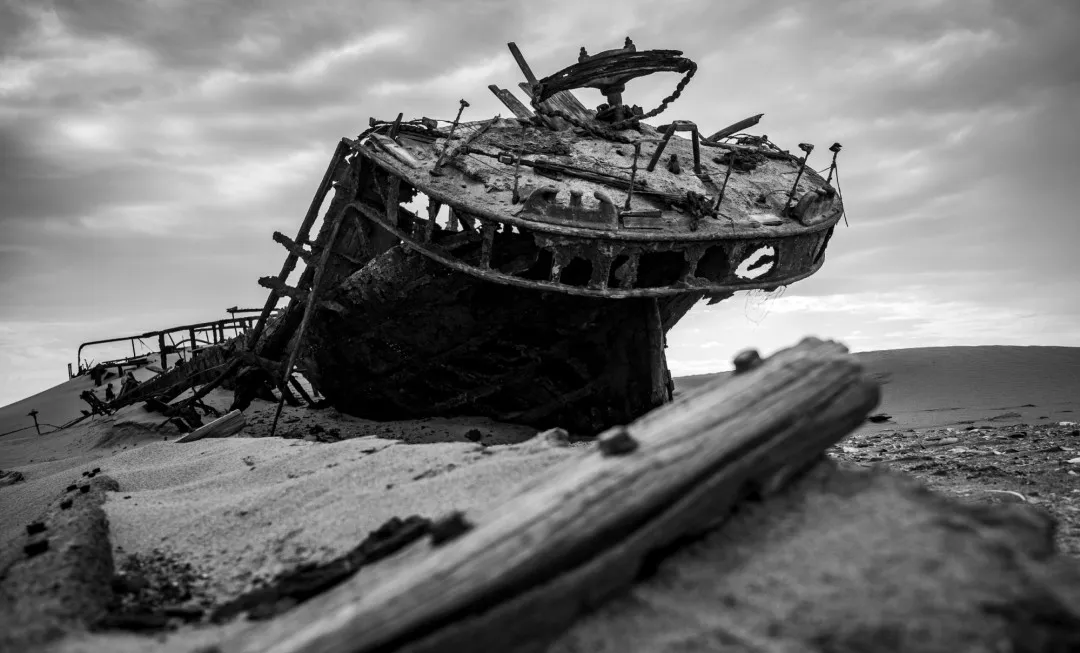
Finish at the famous landlocked shipwreck

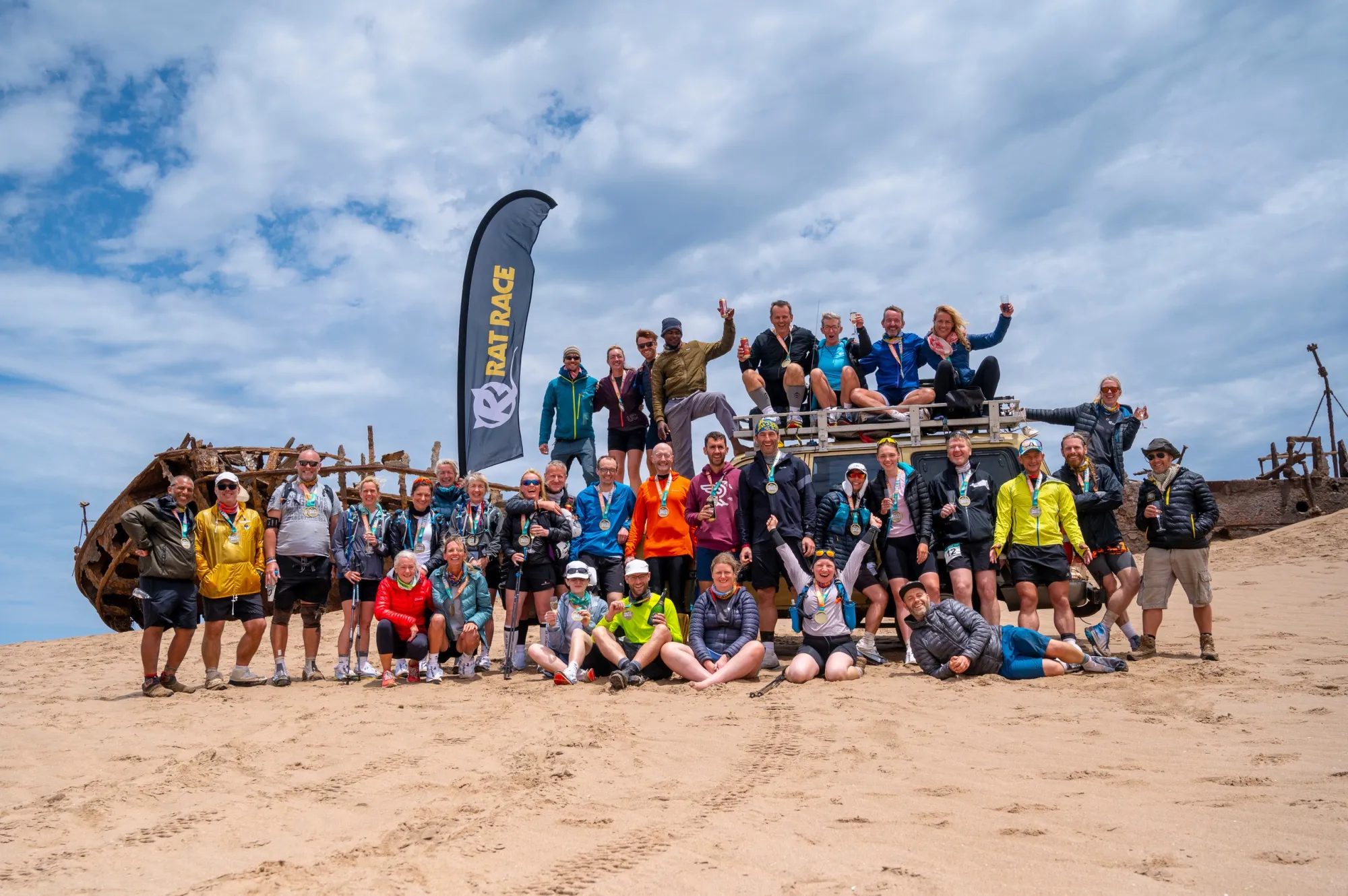
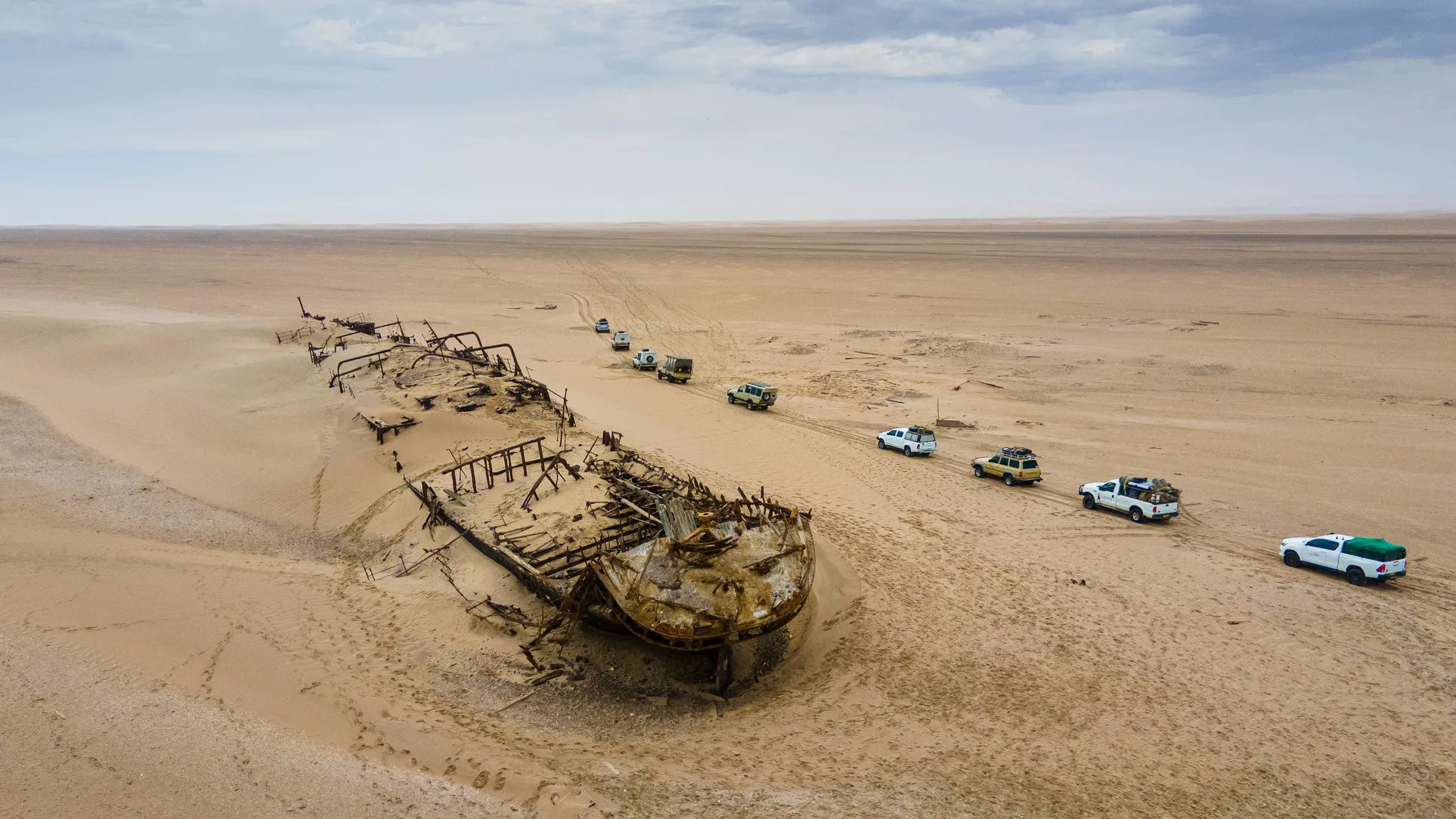
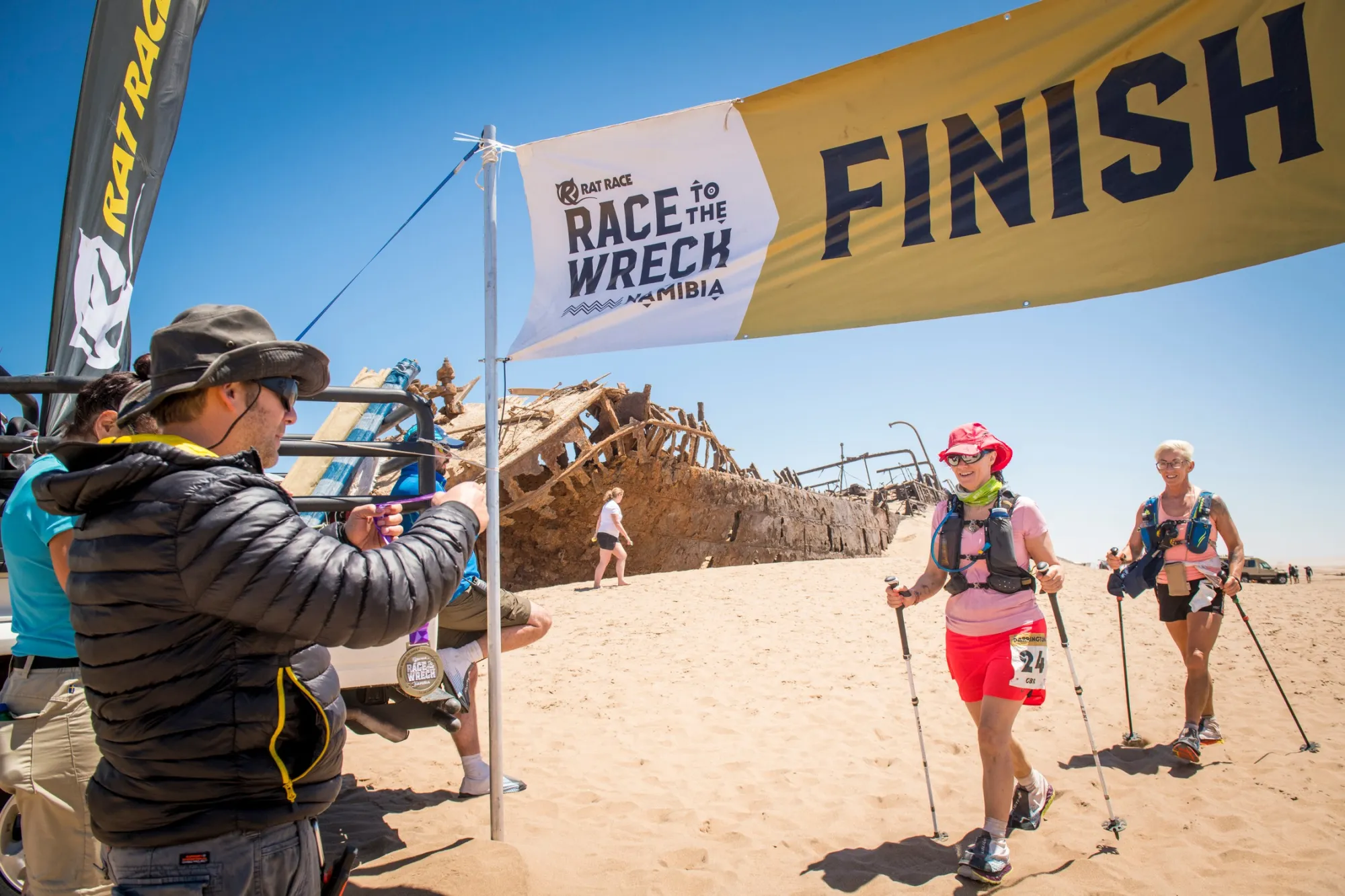
One of the most surreal highlights of Race to the Wreck is reaching the wreck of the Eduard Bohlen, a German cargo ship stranded in the Namib Desert since 1909 and now sitting hundreds of metres inland, left landlocked by the relentless movement of the desert dunes.

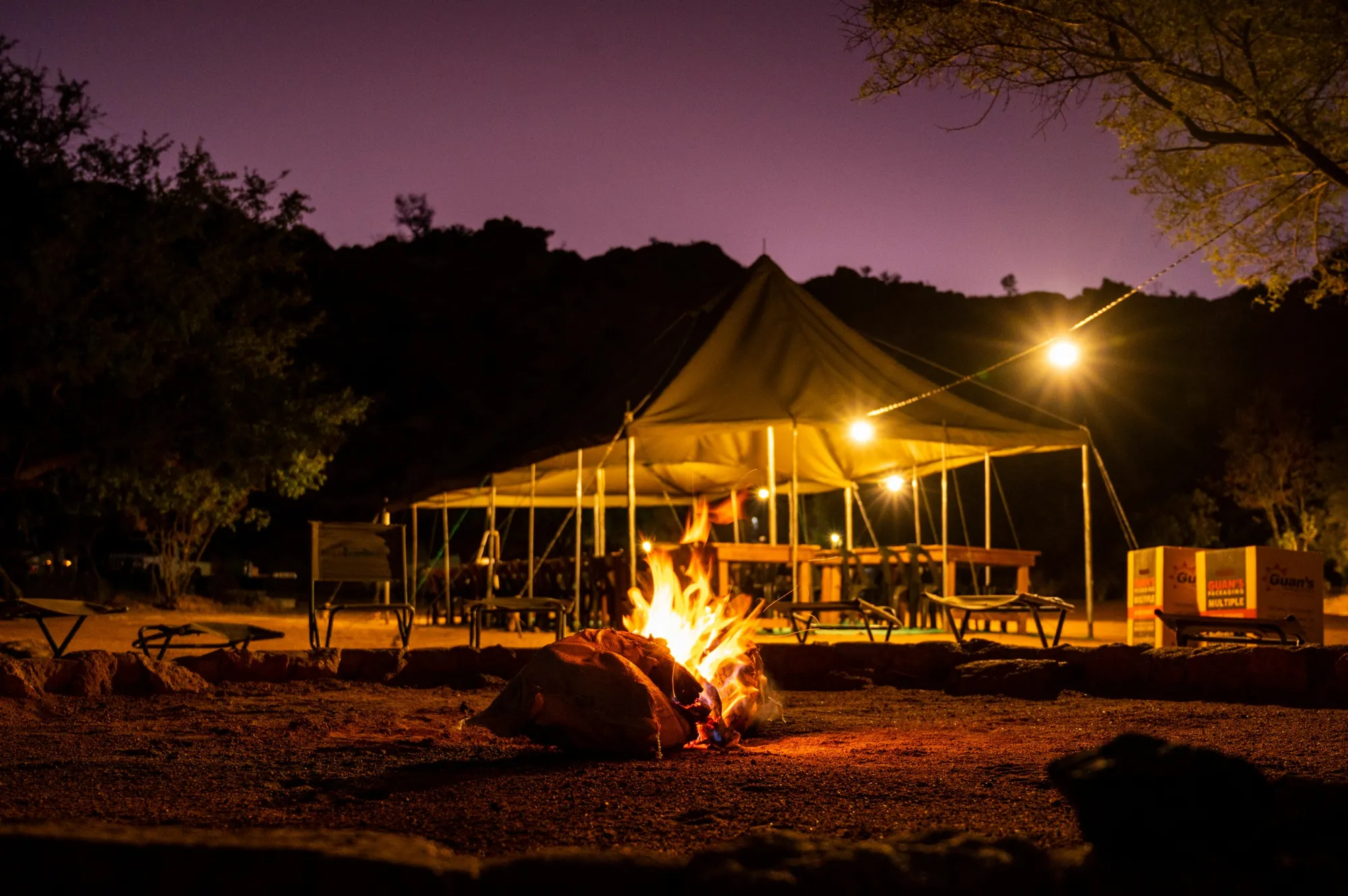
Fire, surrounded by chairs and gazebo behind

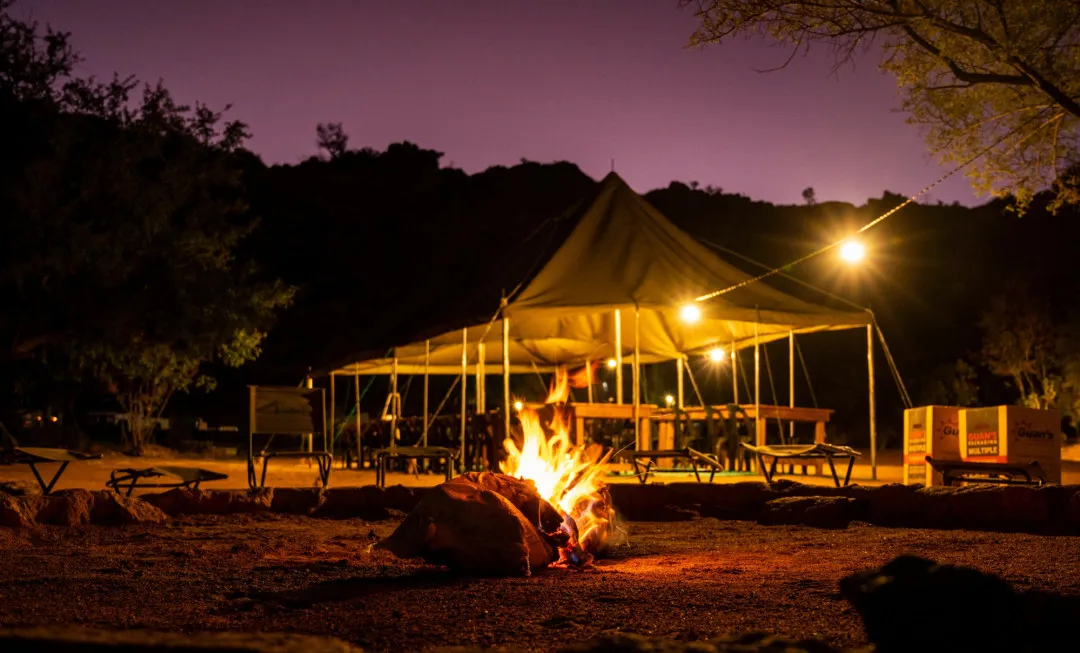
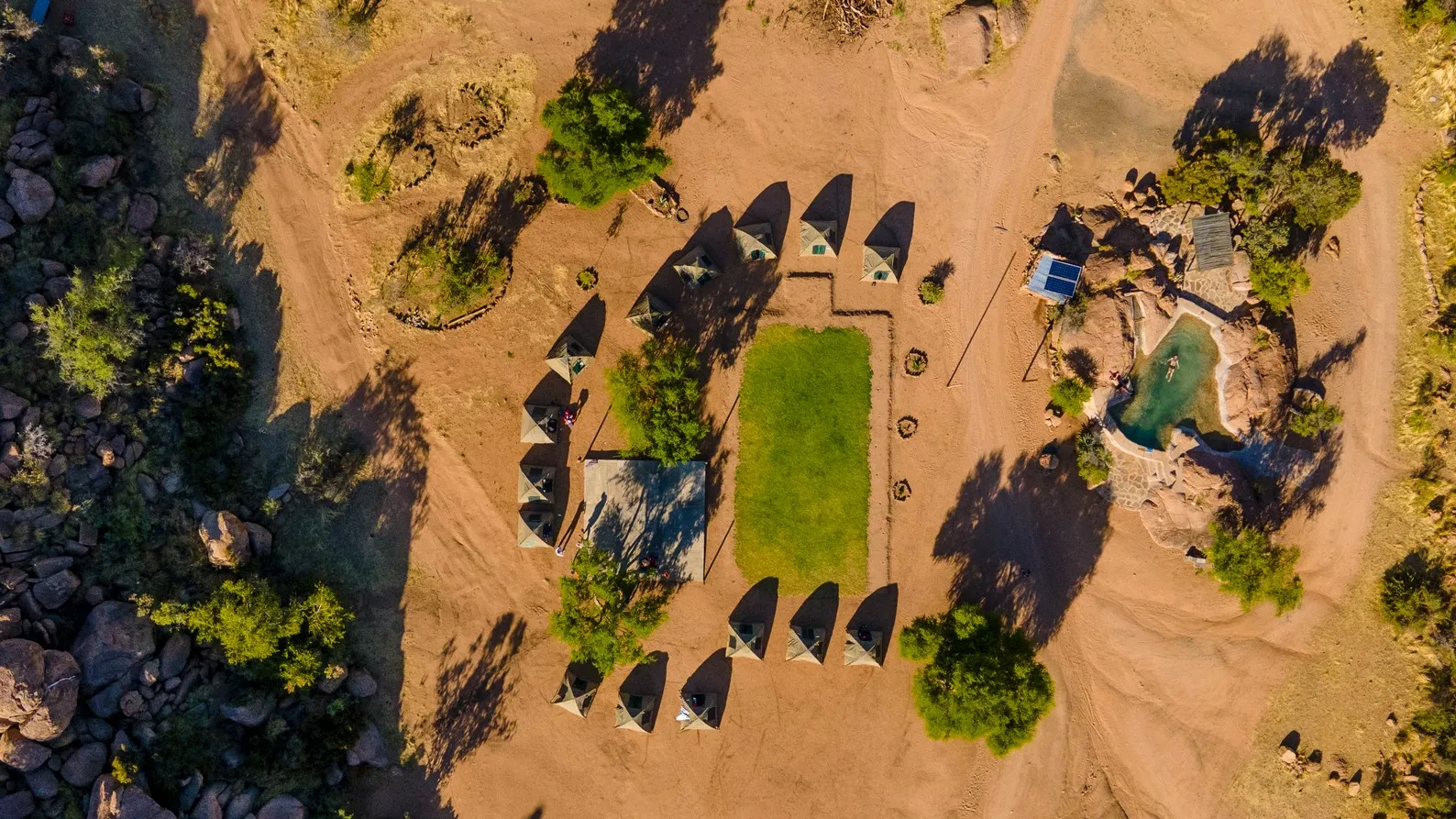
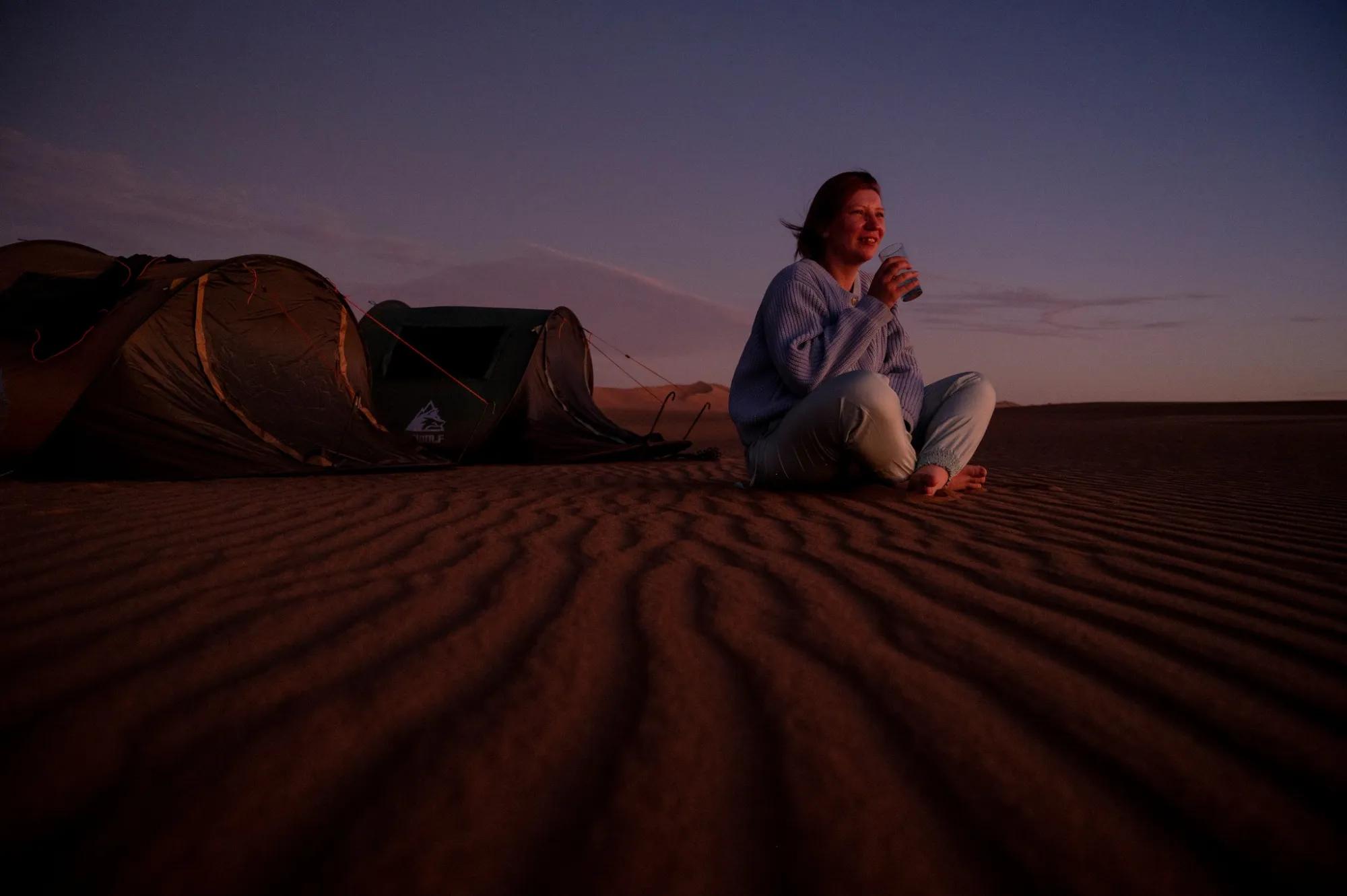
Sleep beneath the stars in our fully serviced campsites

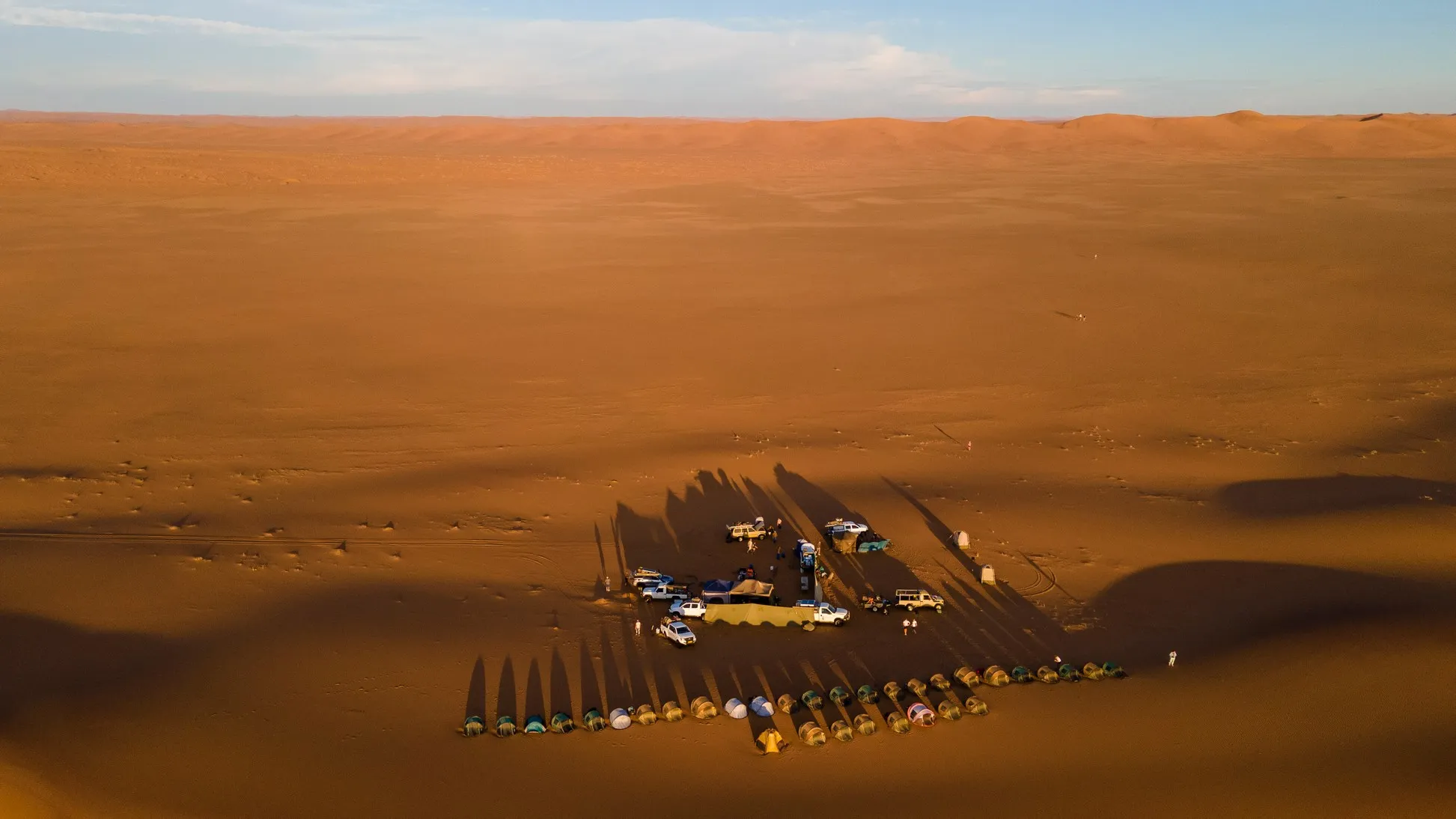
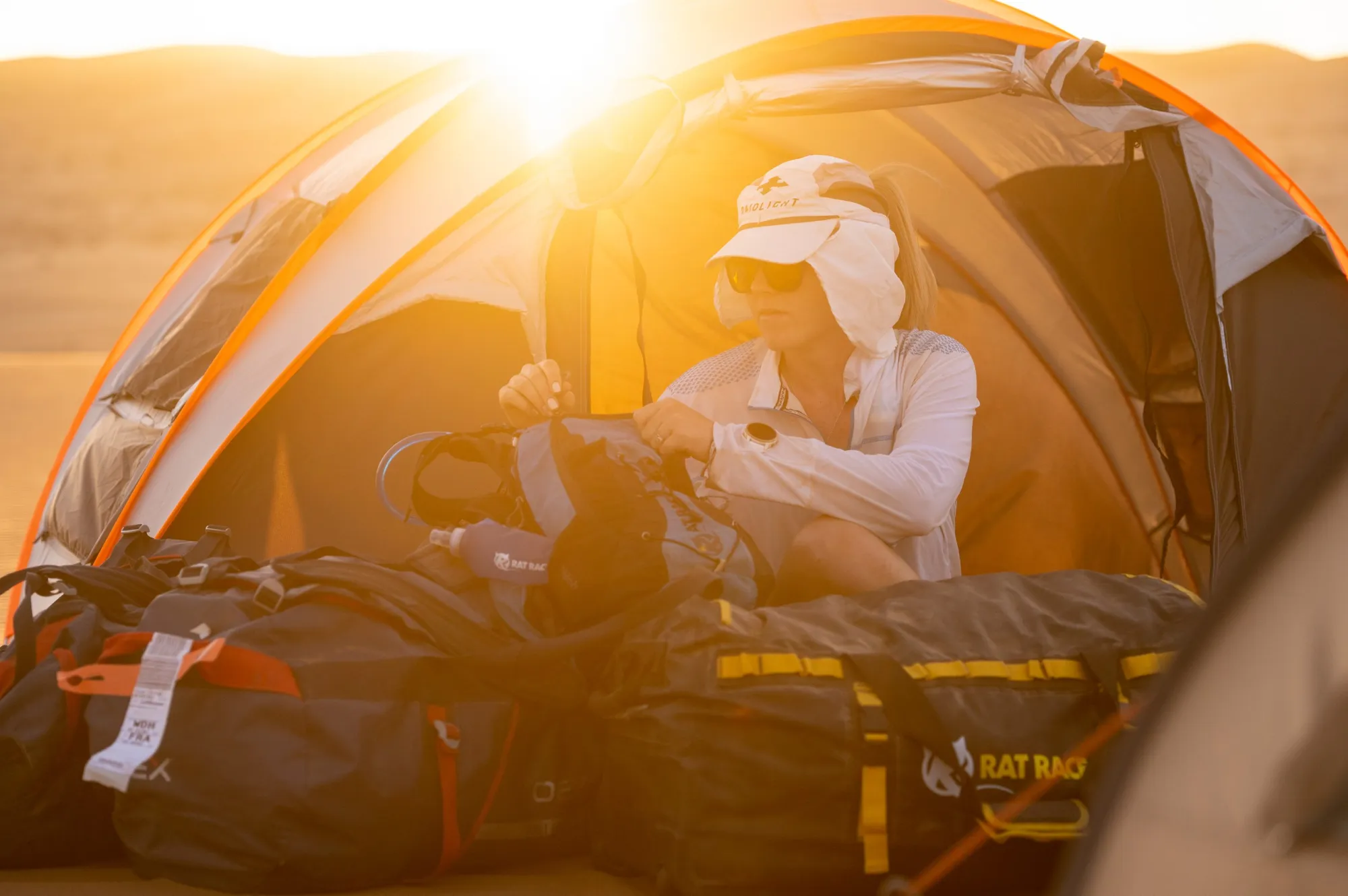
Our expert Namib crew will set up your luxury moving desert camp each day, so after every stage you can relax with hot showers, hearty cooked meals, and comfort in the heart of one of the world’s wildest landscapes.

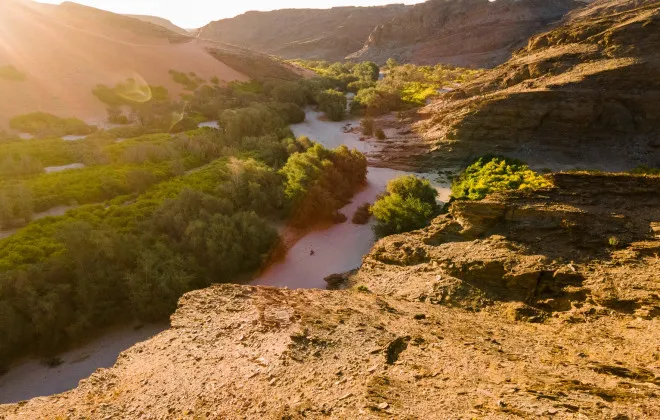
River travelling through greenery and rocky terrain

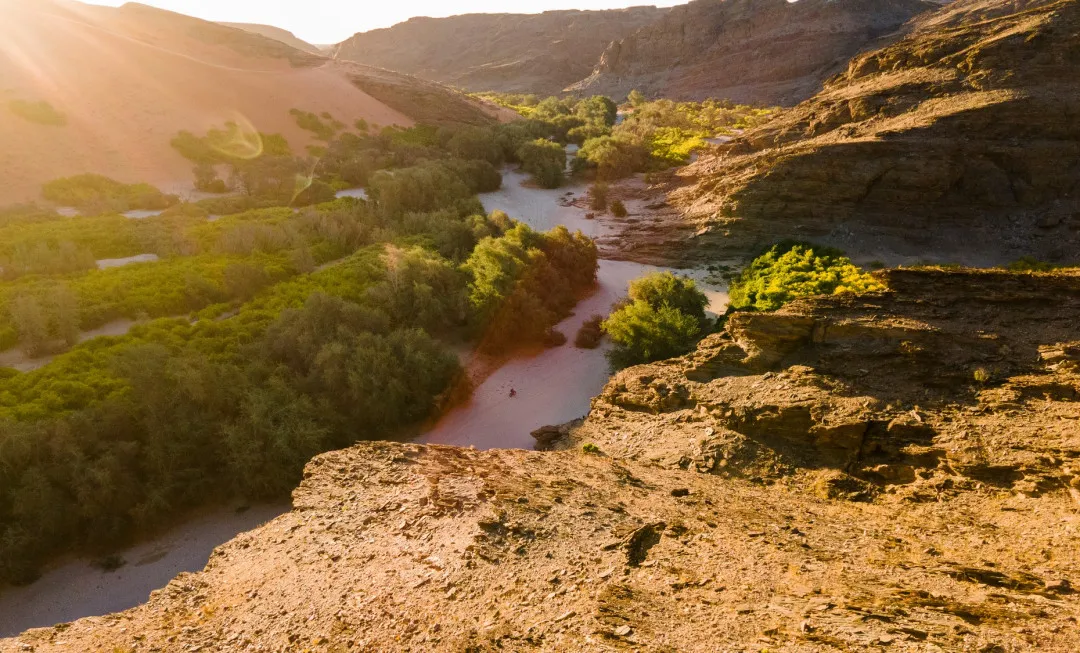
Pass through the Kuiseb riverbed

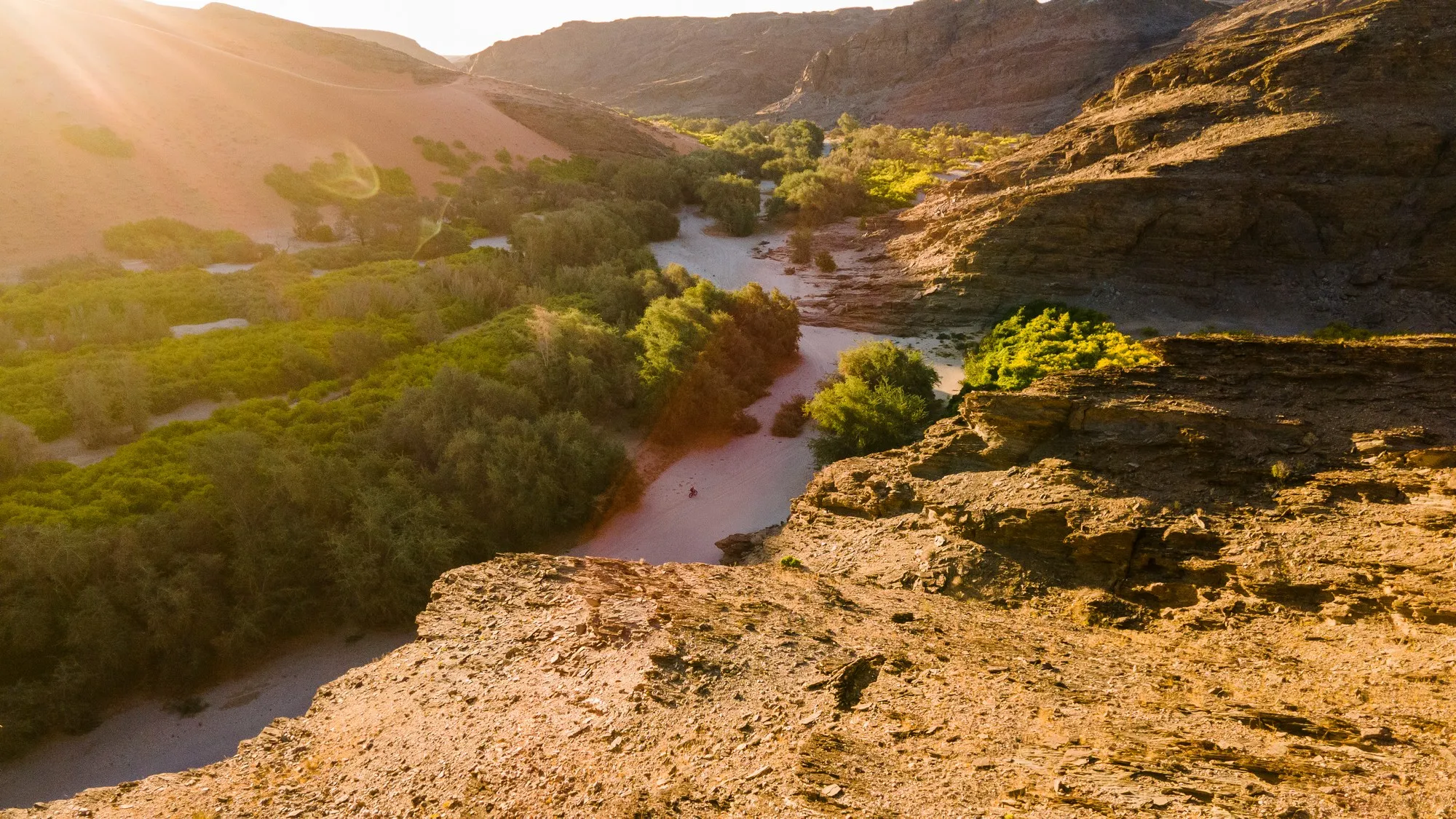
The Kuiseb River bed is one of the Namib’s most fascinating natural features, a mostly dry river that acts as a natural barrier, preventing the vast northern sand sea from swallowing the gravel plains to the south, while supporting surprising pockets of life in one of the driest places on Earth.

Itinerary

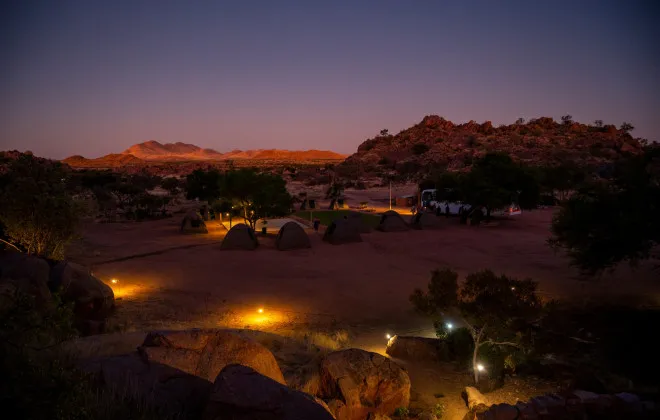
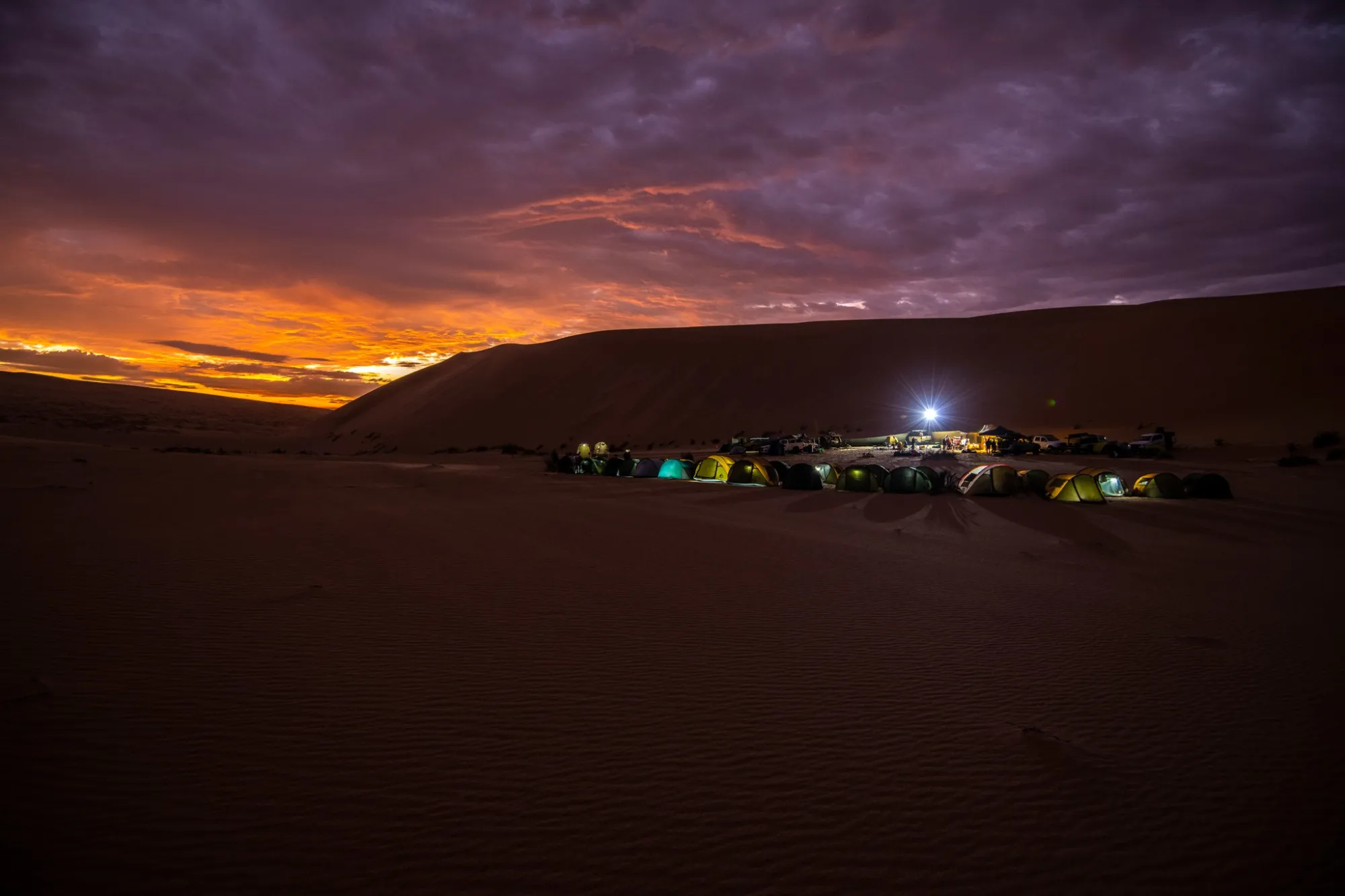
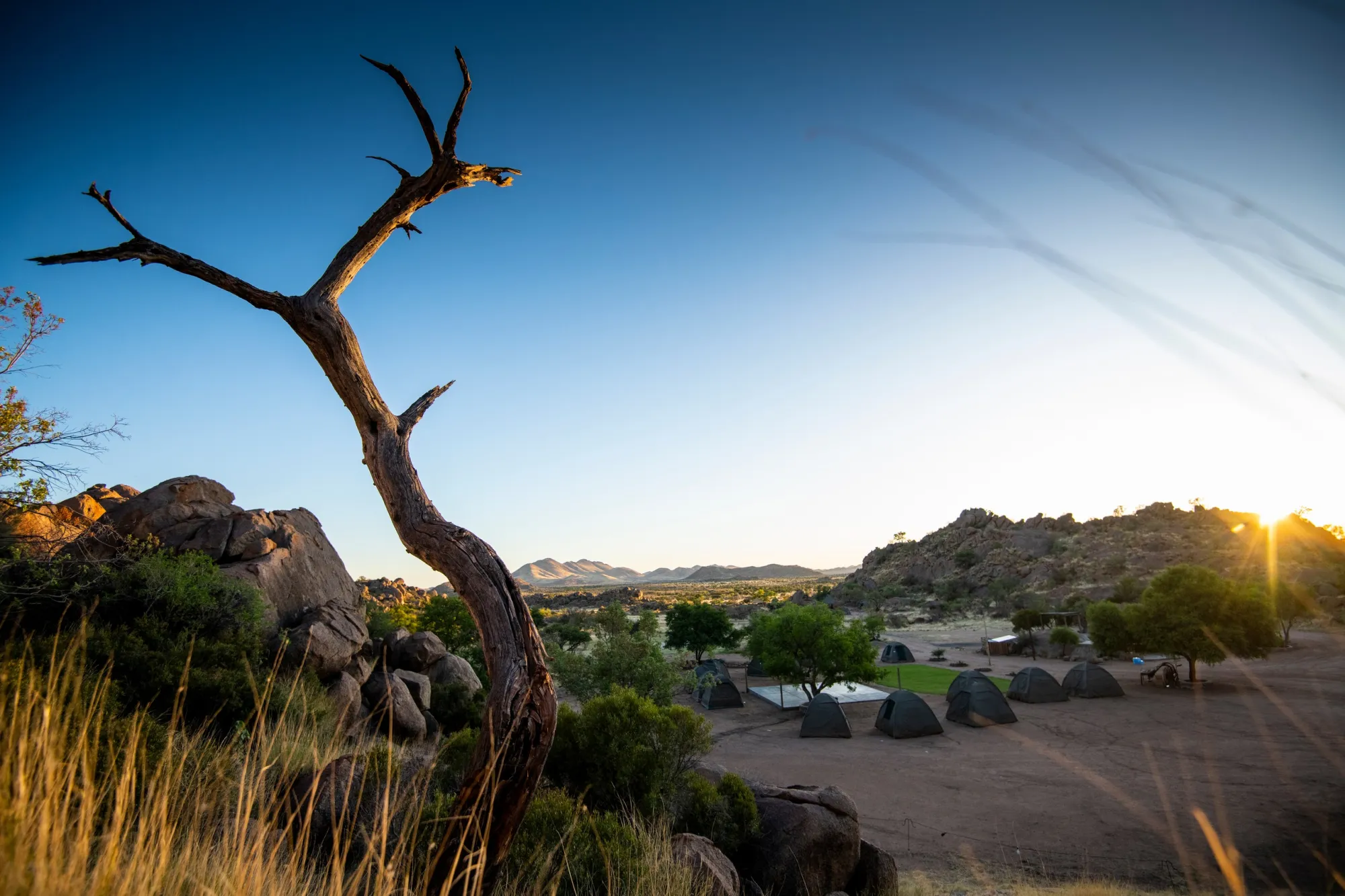
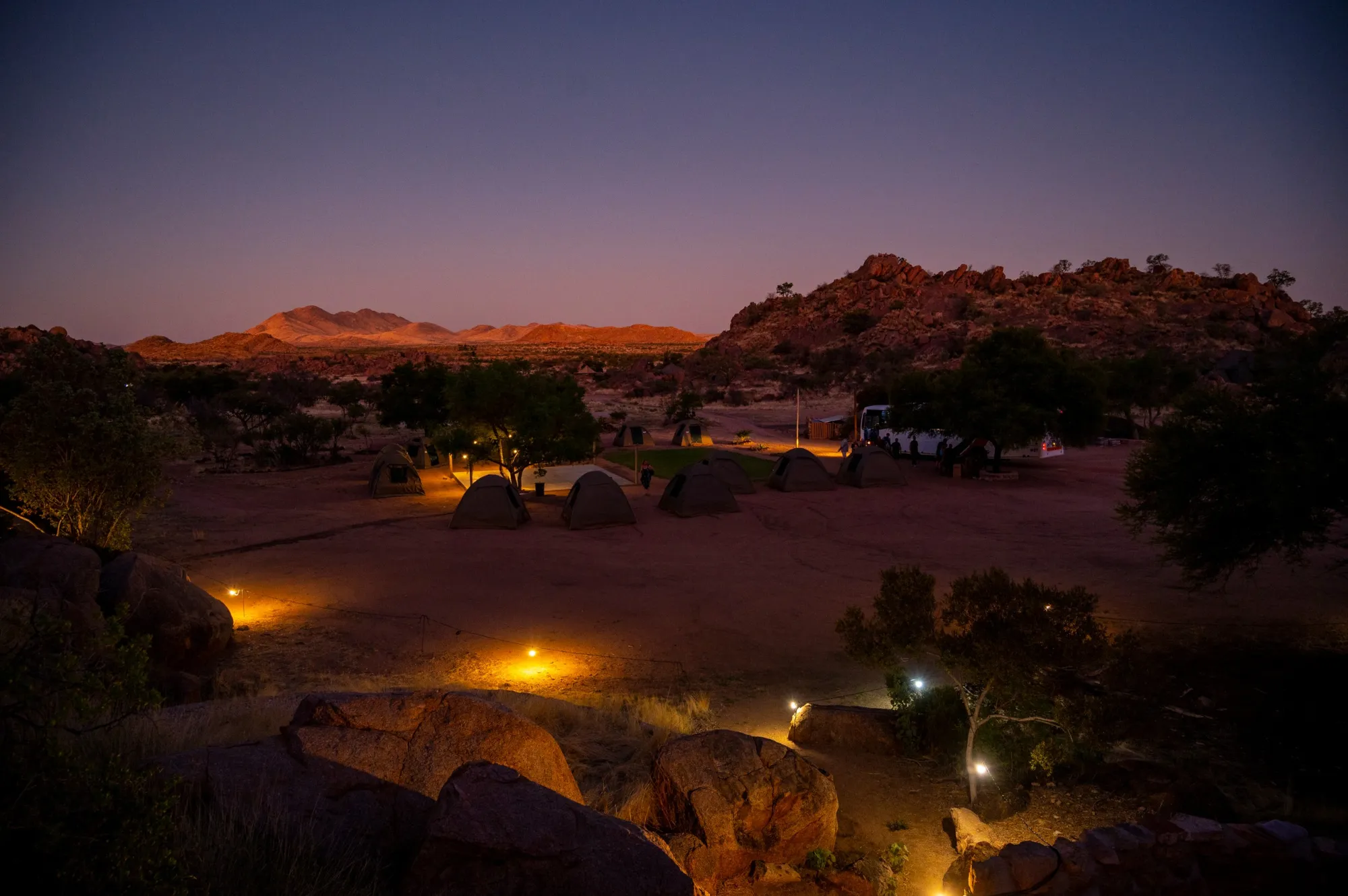
Campsite at night, surrounded by rocky terrain

DAY ONE: Sunday

Arrive in Windhoek and be transferred to our luxury desert camp accommodation.

The group transfer will depart Windhoek Airport at 1400, it will also then stop in downtown Windhoek at 1600 for anyone who has arrived in the days previously. 

Please note: You will need to fly into Windhoek Airport and out of Walvis Bay Airport. If you fly into and out of Windhoek, you will need to arrange your own transport back to Windhoek post-event. This is between a 4-7 hours journey depending on traffic.

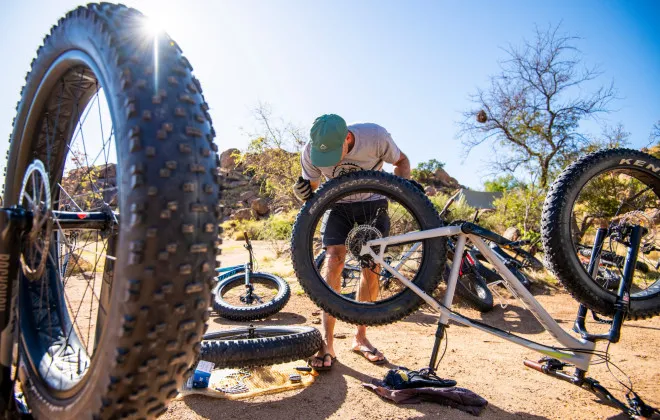
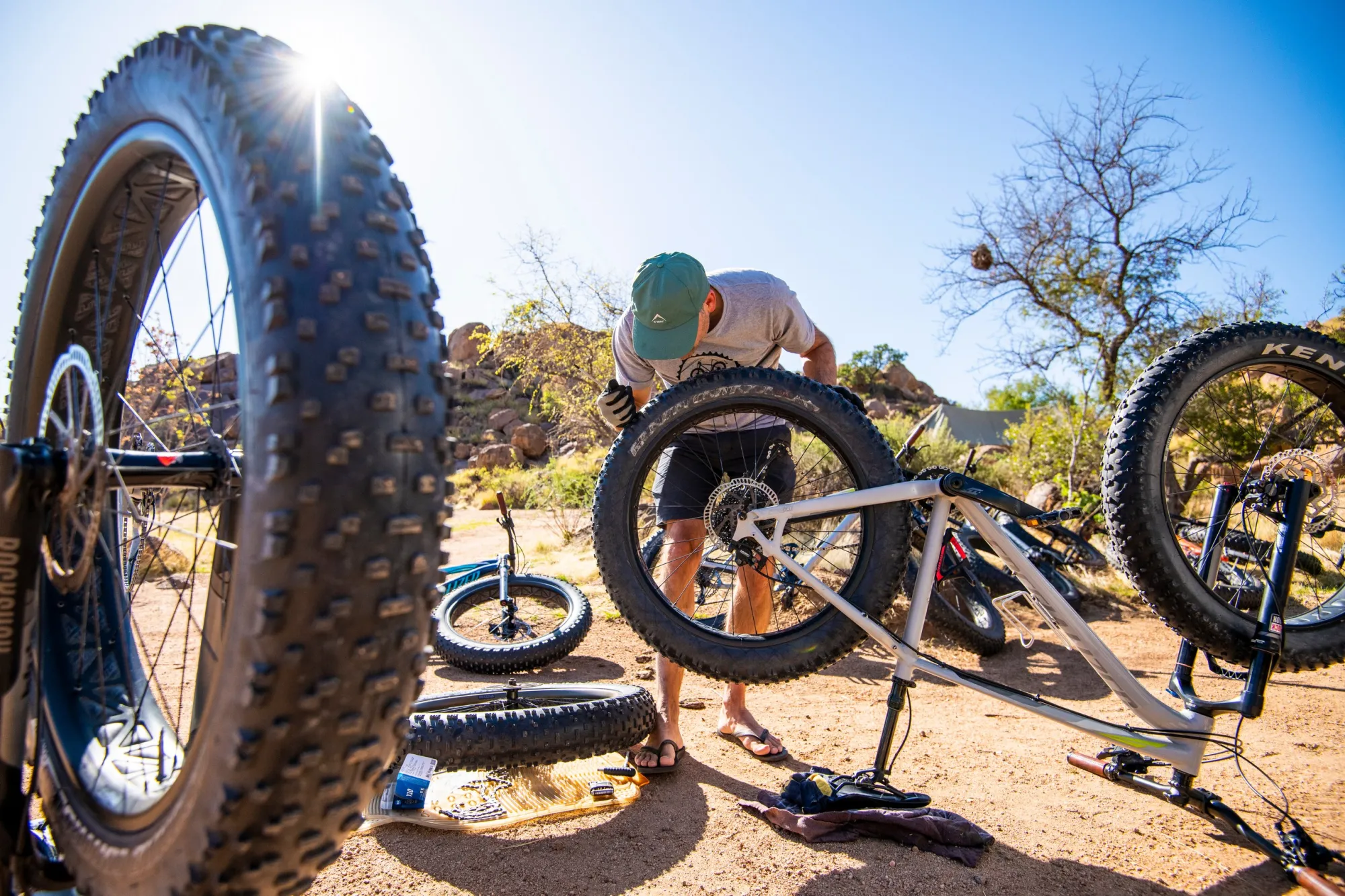
Man fixing bikes

DAY TWO: Monday

Enjoy the surroundings of your stunning desert camp setting. Today’s schedule will also include briefings, a kit check plus opportunities to be sized for and trial your fat bikes. Another night accommodated in the camp and then it’s off into the desert.

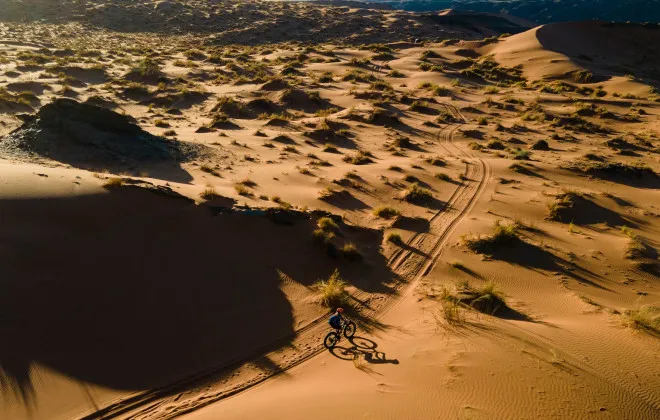
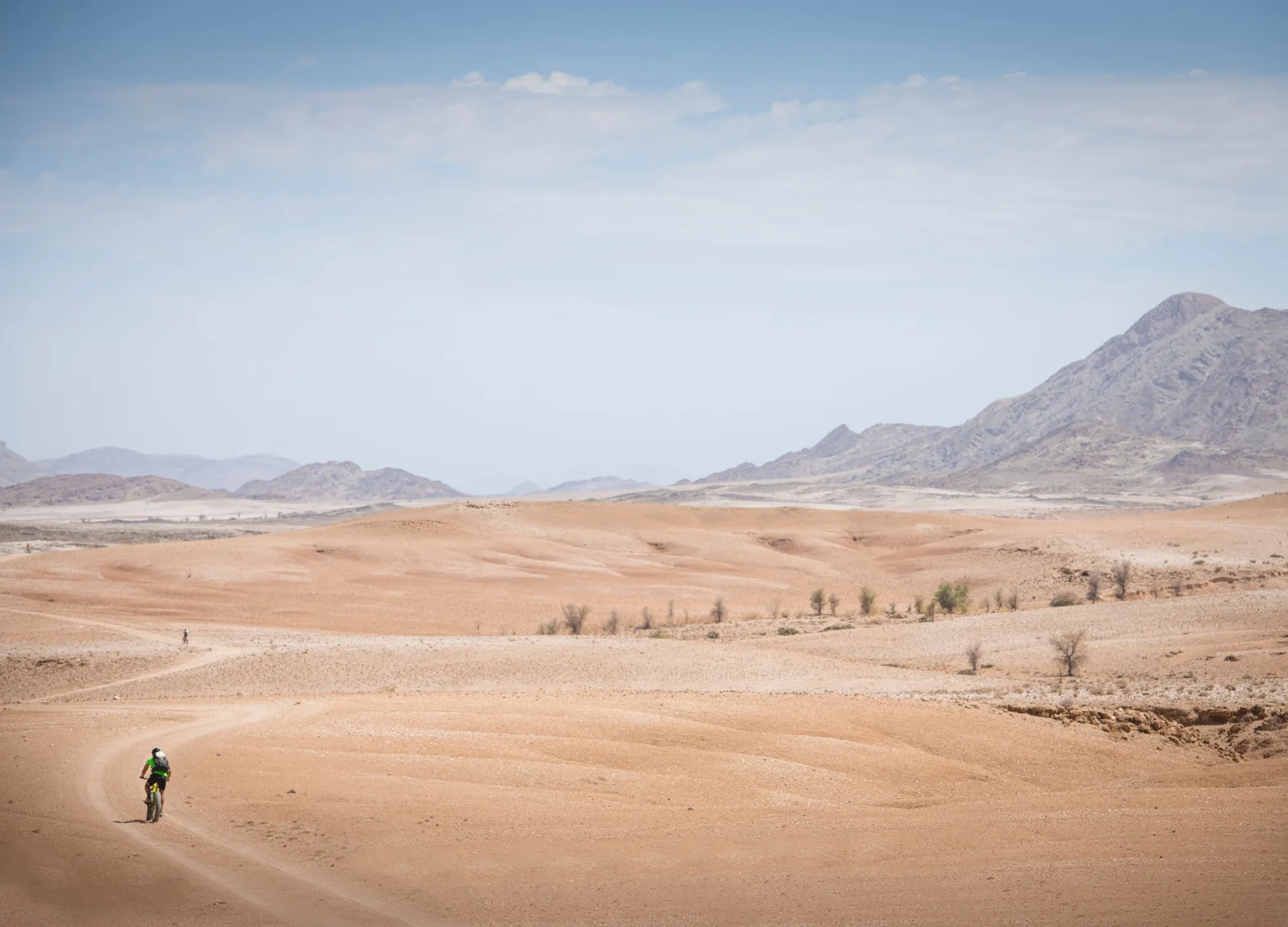
Cyclist riding over sandy and grassy path

DAY THREE: Tuesday

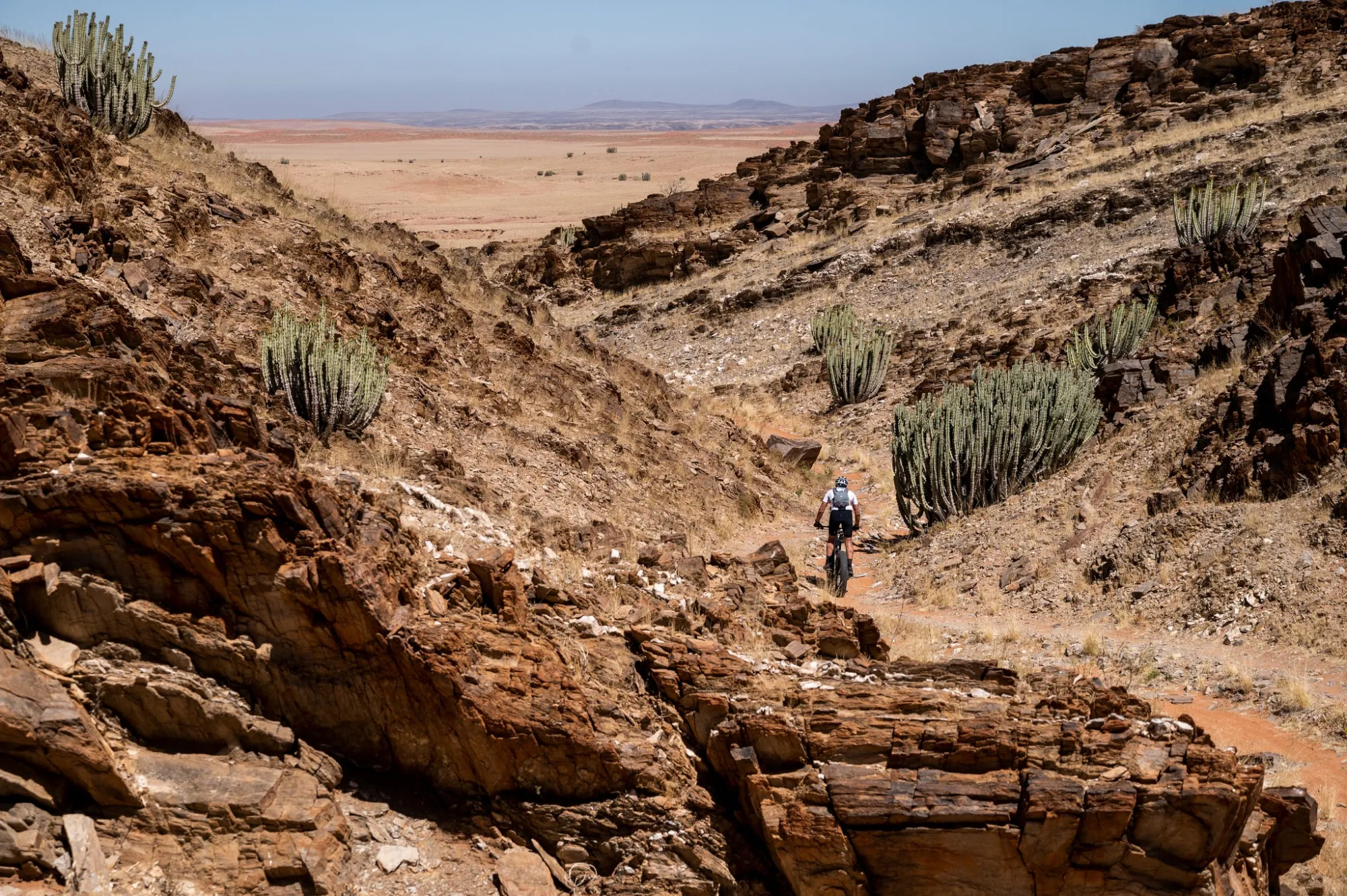
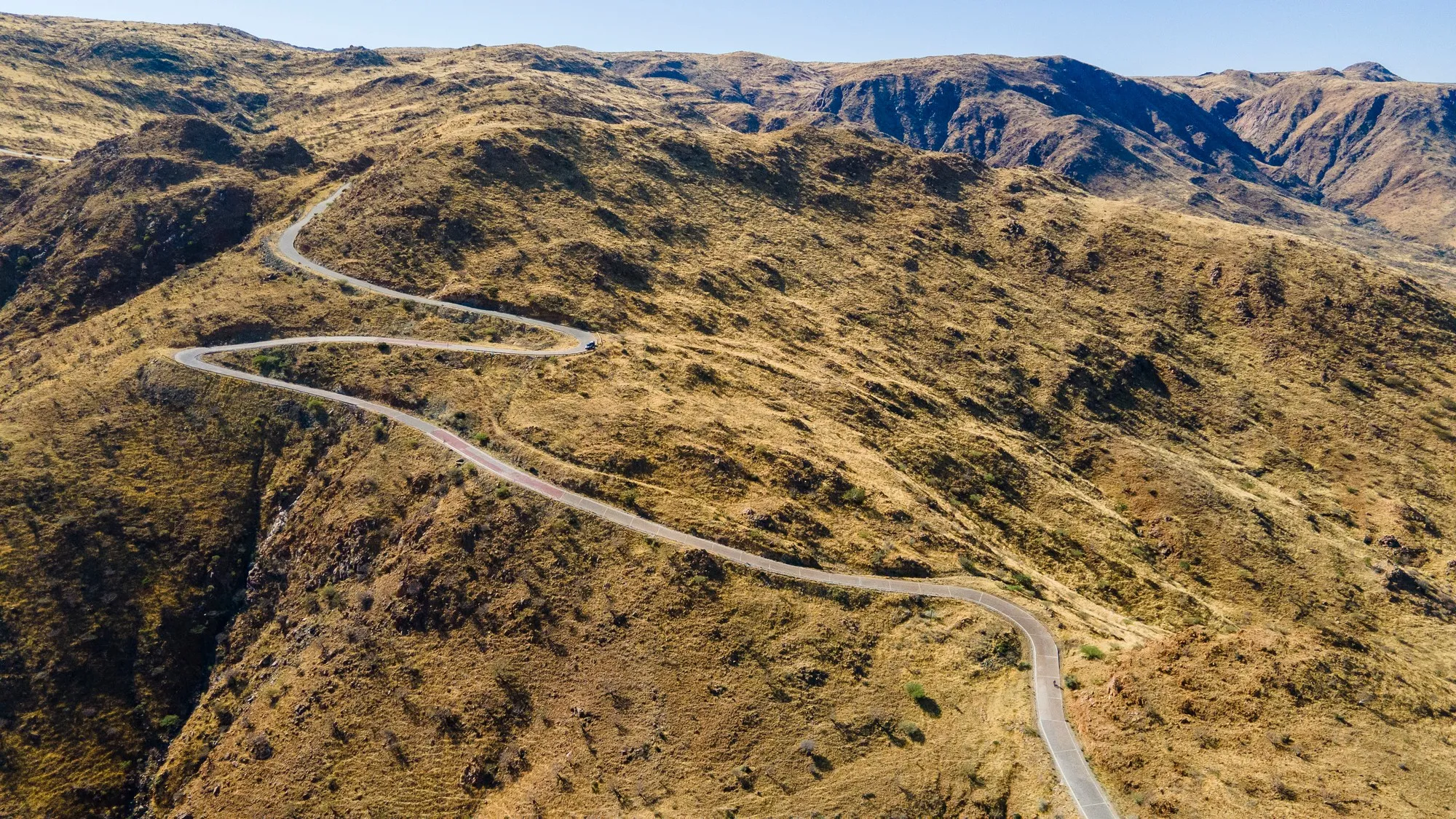
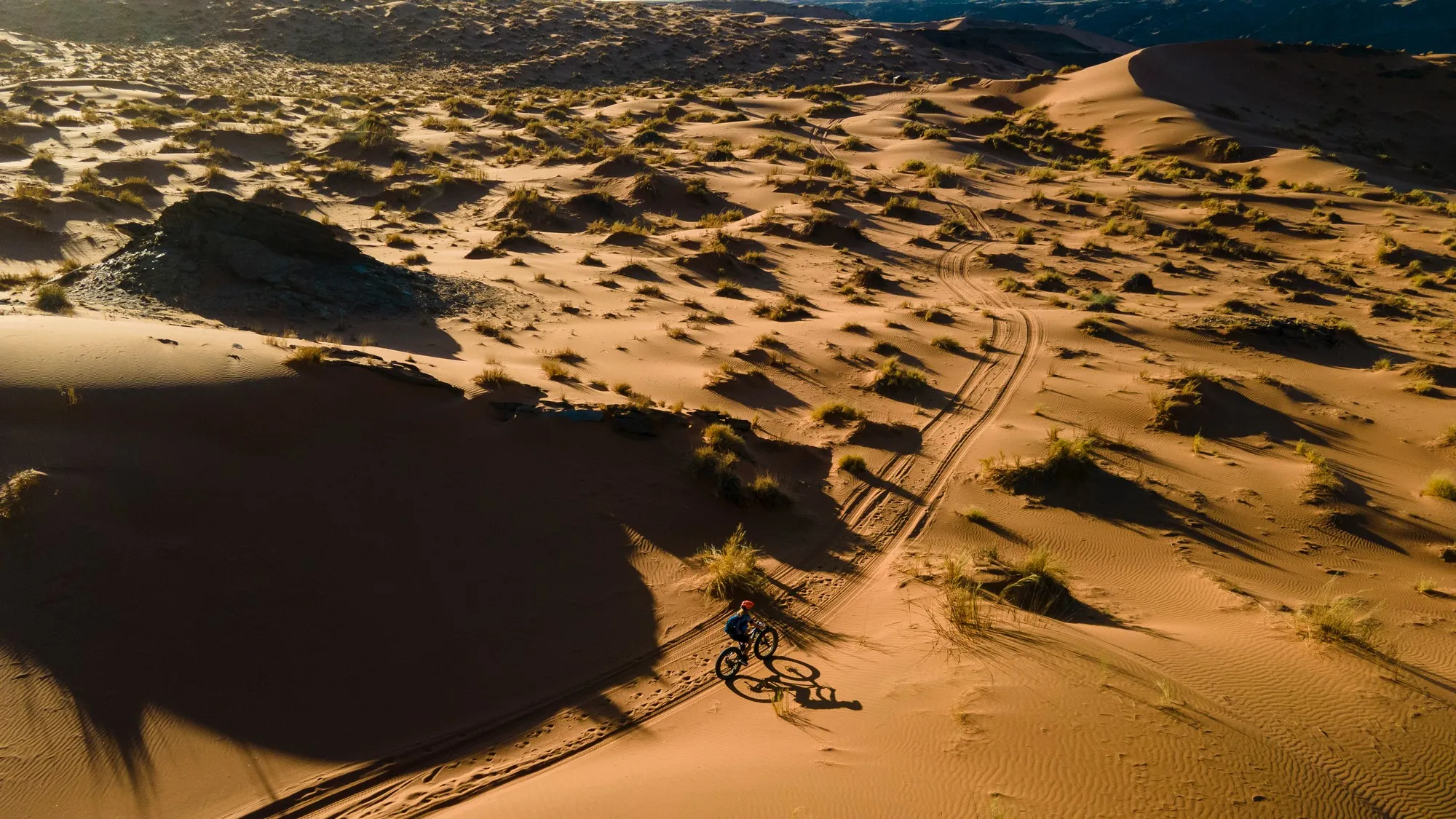
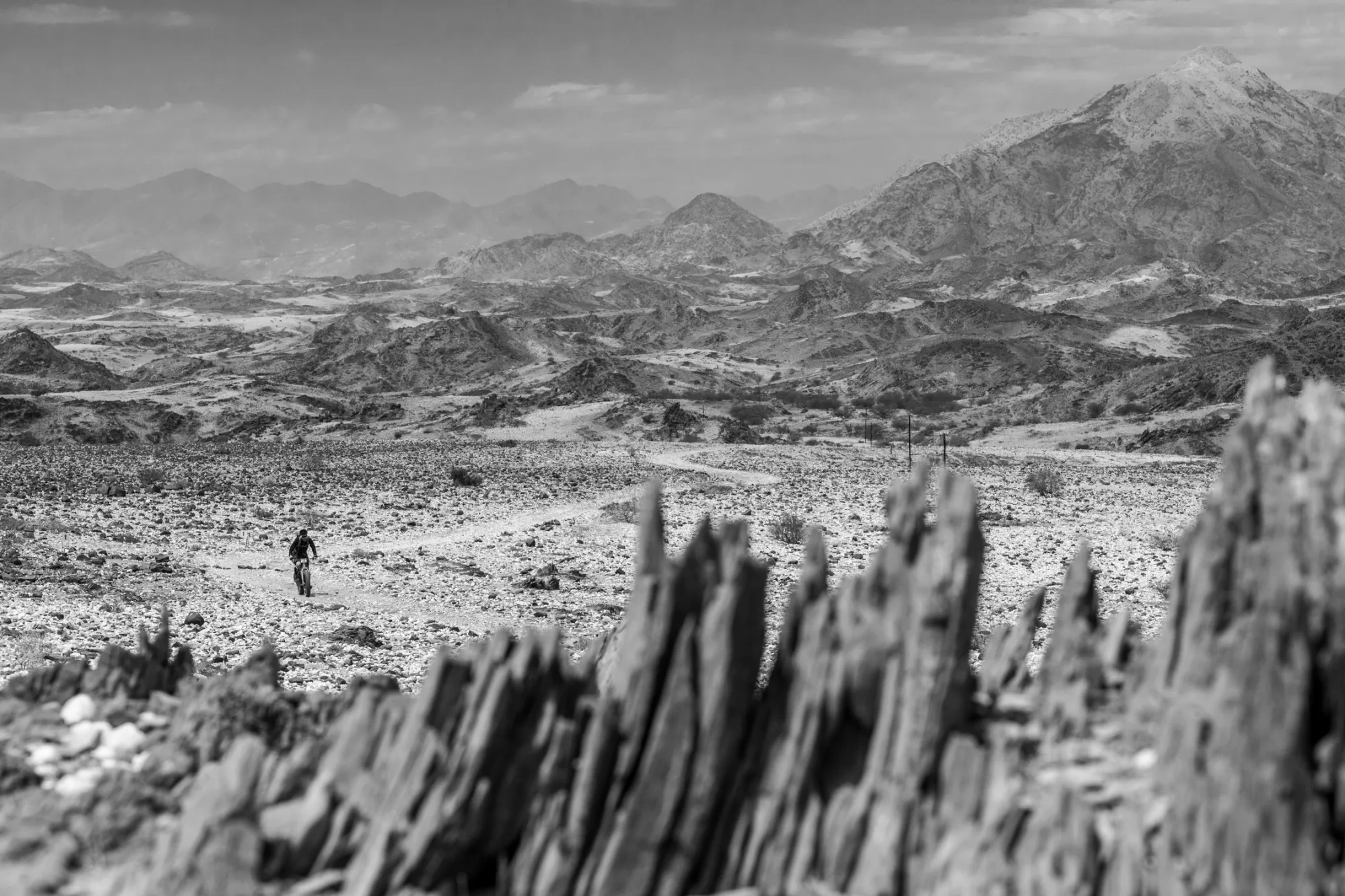
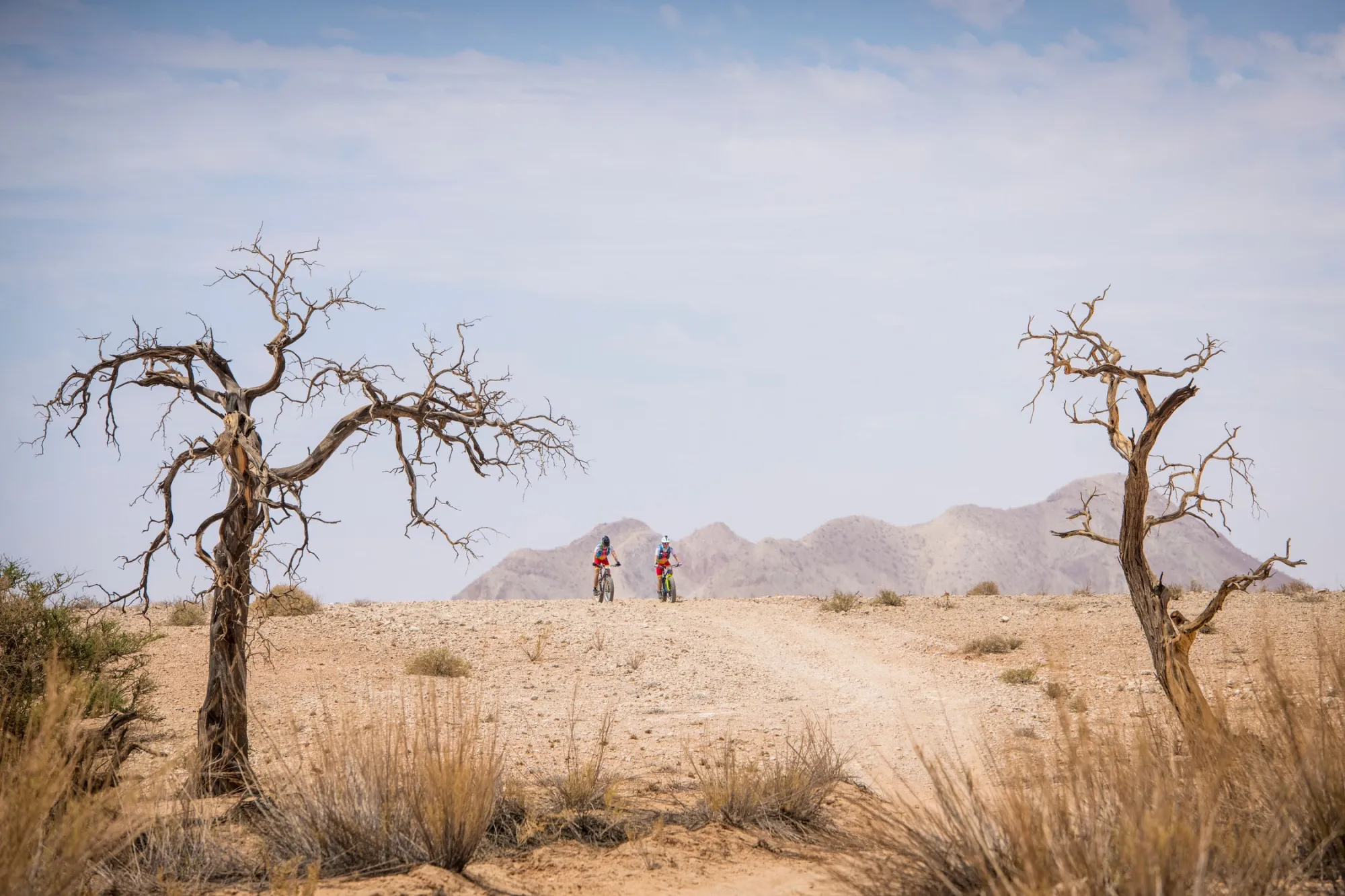
MULTISPORT: Cover 90km on fat bikes over gravel roads through the Khomas Hochland region, roughly paralleling the course of the Kuiseb River through rough, mountainous desert country to our overnight tented camp. Enjoy hot showers, braai, beers and vast starry skies.

RUN/HIKE: Cover 50km on foot over gravel plains, rusty red dunes and rolling sand until you near the Kuiseb River and our overnight tented camp. Enjoy hot showers, braai, beers and vast starry skies.

River travelling through greenery and rocky terrain

Day Four: Wednesday

MULTISPORT: Day 2 sees an early start to cover a massive 110km on the fat bikes, now descending into the sandy dry river bed of the Kuiseb itself and its towering gorges and really feeling the rhythm of that fat bike in the sand. Today we will reach the home of the Top’naa people at Homeb. From here you can literally touch the massive dunes of the Namib Naukluft, which tower above your overnight camp in the cool river bed.

RUN/HIKE: As the dunes get bigger you’ll rack up another 50km as you run towards the jawdropping canyon of the Kuiseb River before descending into it via an adrenaline filled dune drop off. Surrounded by towering gorges you’ll work your way to our canyon camp which are shouldered by the massive dunes of the Namib Naukluft which will tower above you.

Participants walking over sand dunes with low sun beside them

DAY FIVE: Thursday

Day 3 sees the transition to foot for the Multisport participants as we merge onto the same course for a massive 40km day (approx) as you get a taste of the dunes this area is so famous for before reaching our stunning overnight desert camp.

Smooth sand dunes under clear sky

DAY SIX: Friday

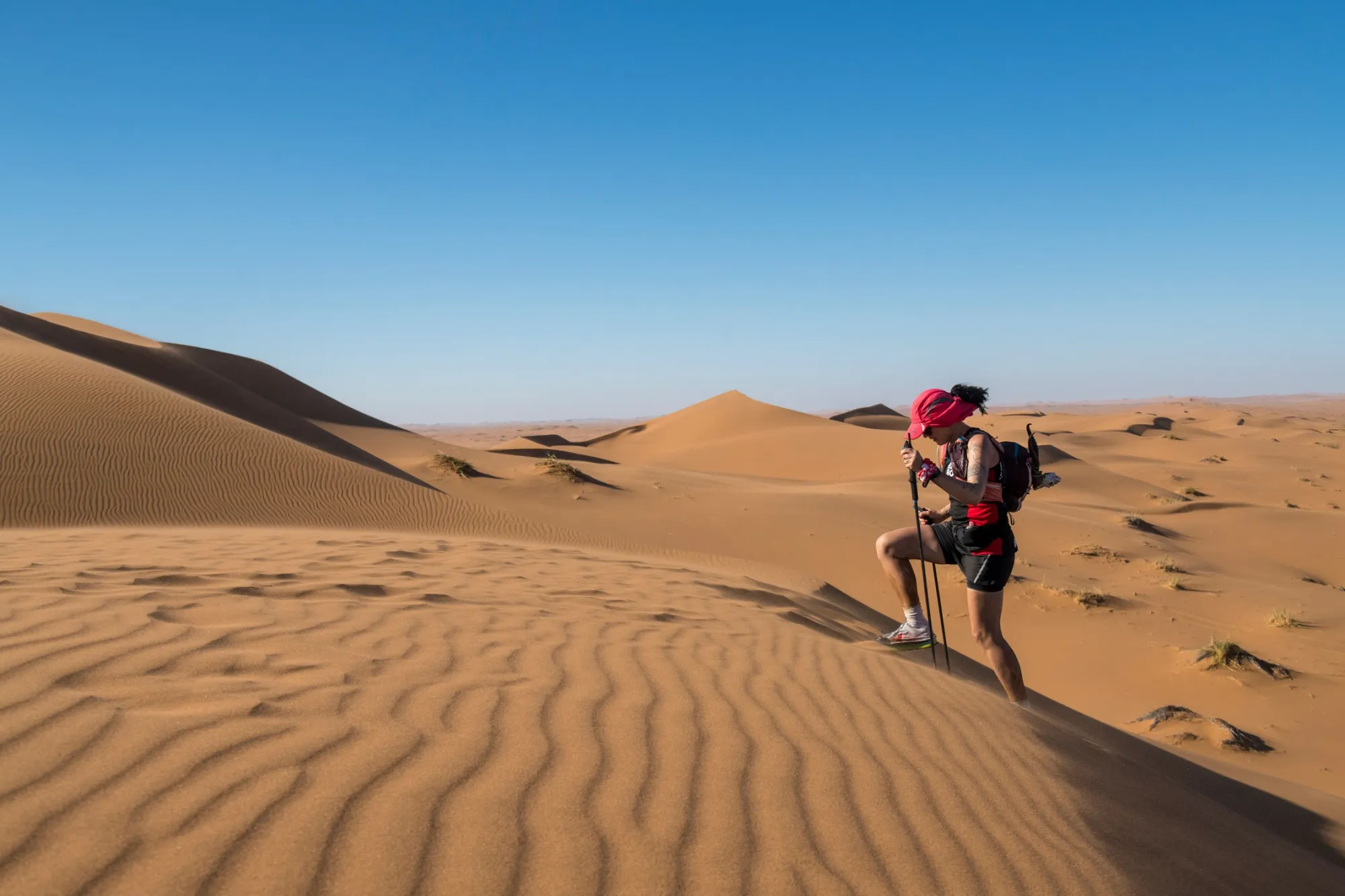
Be ready for Day 4, with over 9000ft of ascent packed into this 43km section it’s an exhilarating and exhaustingly long day on foot over another marathon’s worth of sandy terrain. Taking on over 21 dune formations will test you to the limit but the views are well worth it. The Day 4 camp will sit amongst these sand mountains in a truly spectacular setting.

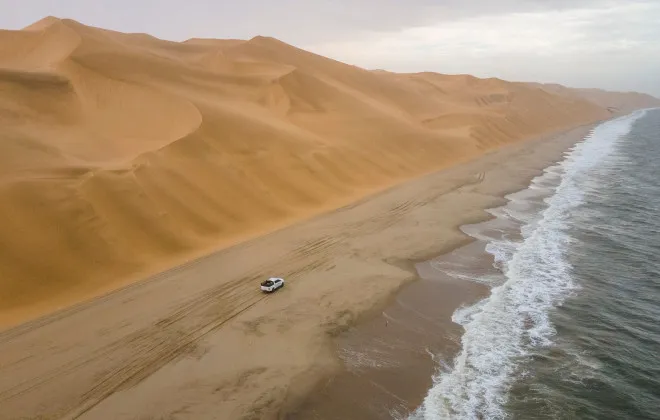
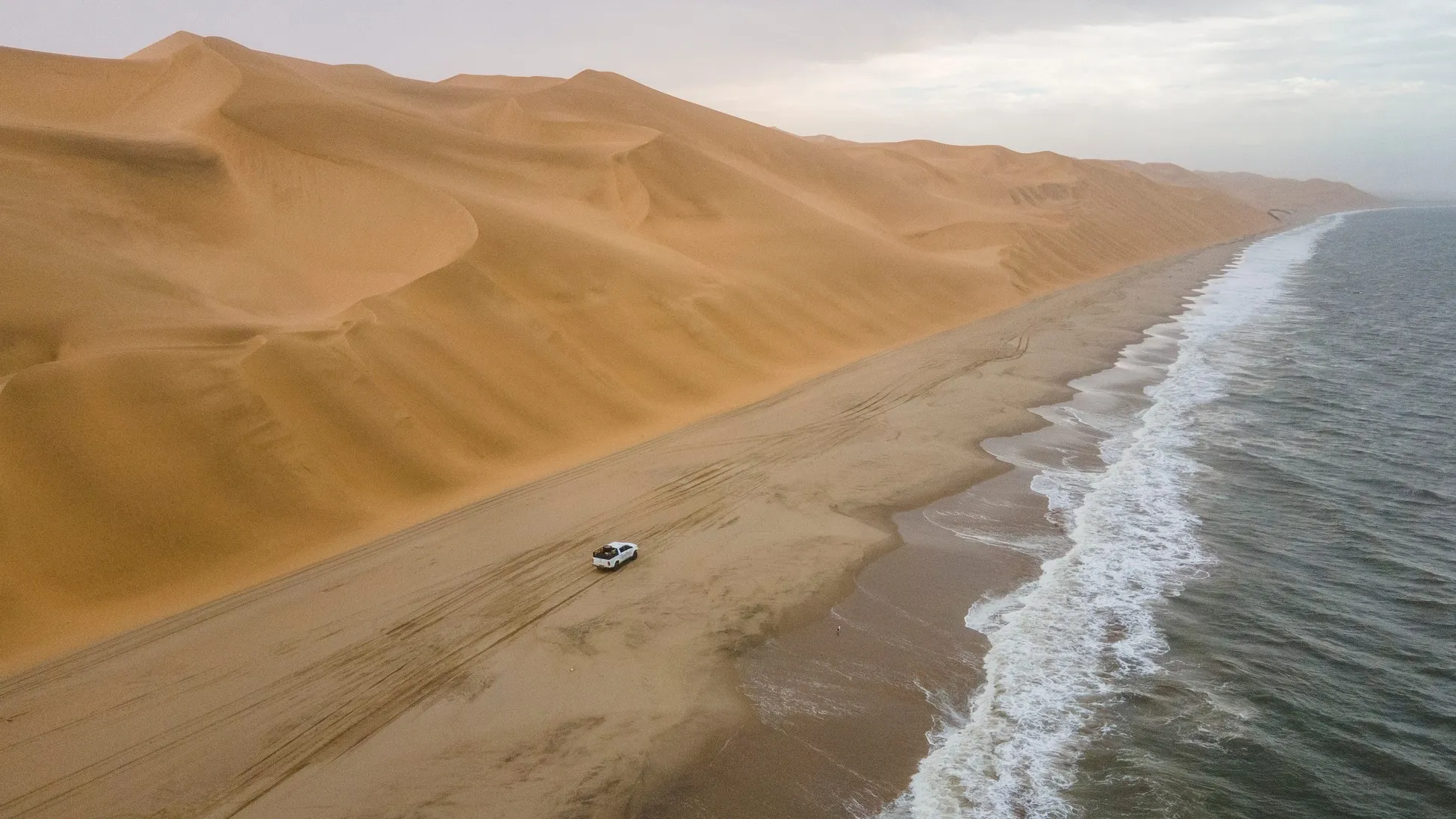
Car travelling along sandy coastline, between sea and sand dunes

DAY SEVEN: Saturday

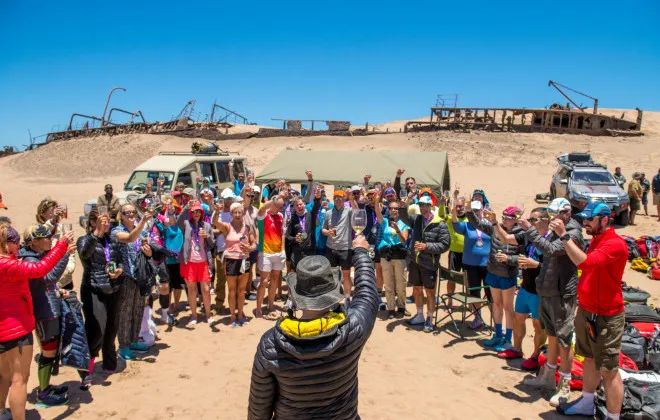
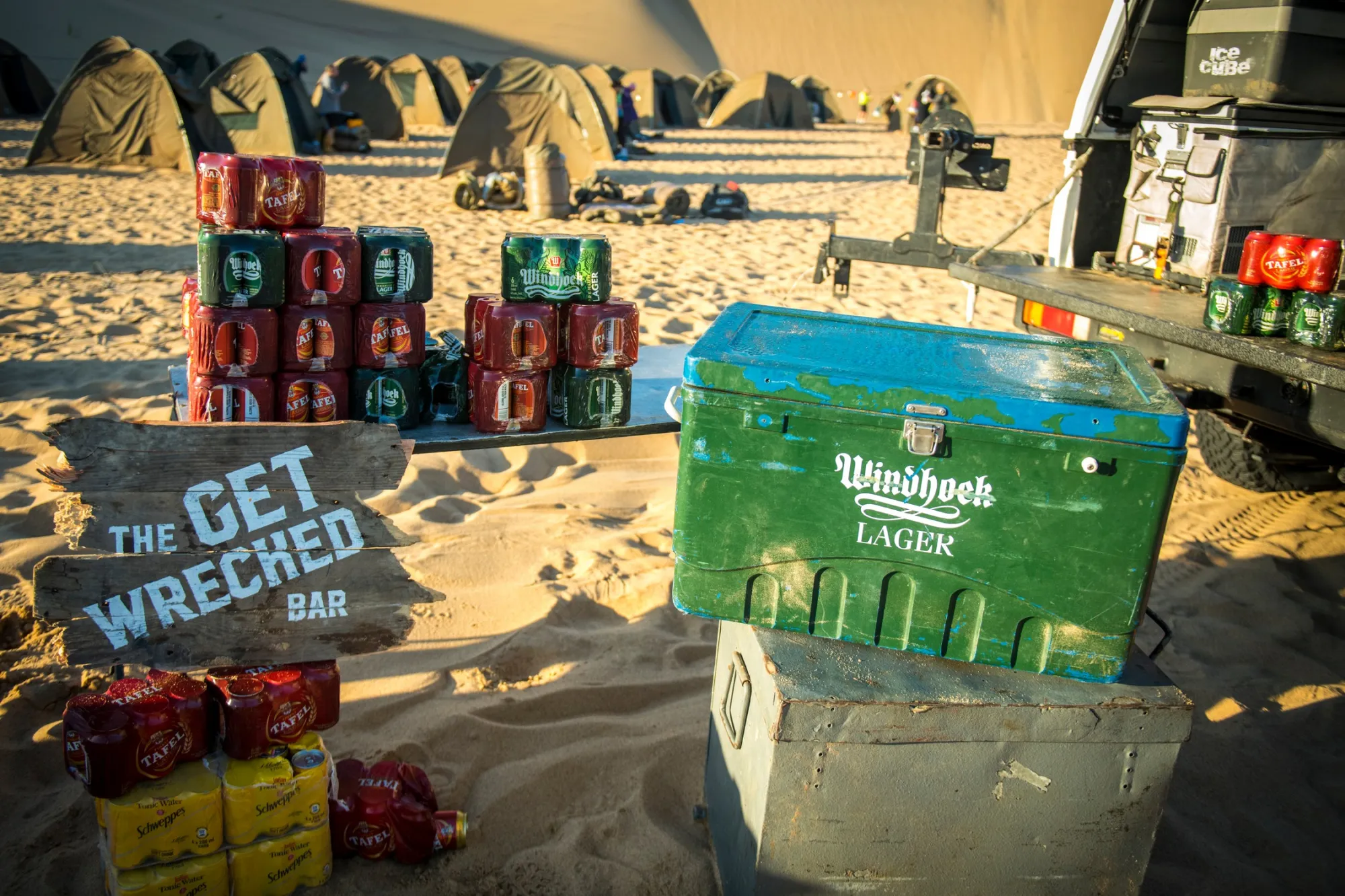
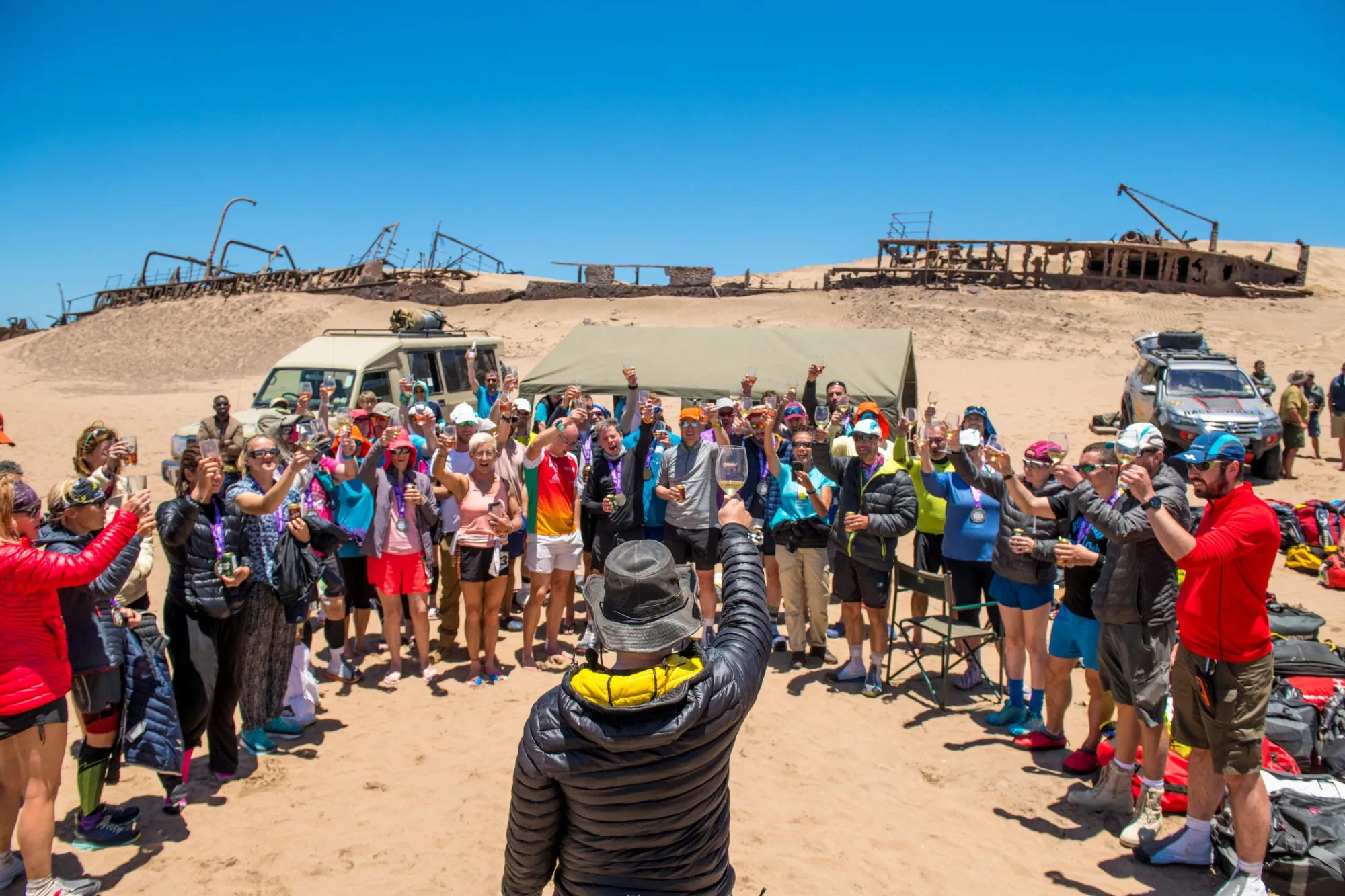
The final 20km and the exit from the dune awaits you on Saturday morning, as you hit the coast you will also take in some of the abandoned mining settlements around Conception Bay. By lunch time Rat Racers will reach their incredible destination – the Eduard Bohlen where a celebratory lunch and a cold beer will be waiting in its shadow. Once everyone is in we’ll be extracting you via our brilliant 4×4 excursion down the coast and over the dunes back to the afterparty in Walvis bay.

Participants gathered around a man raising a glass of wine

Day EIGHT: Sunday

Transfer for those who want it to Walvis Bay Airport at 0900 or hang around and enjoy Walvis Bay for an extra few days! 

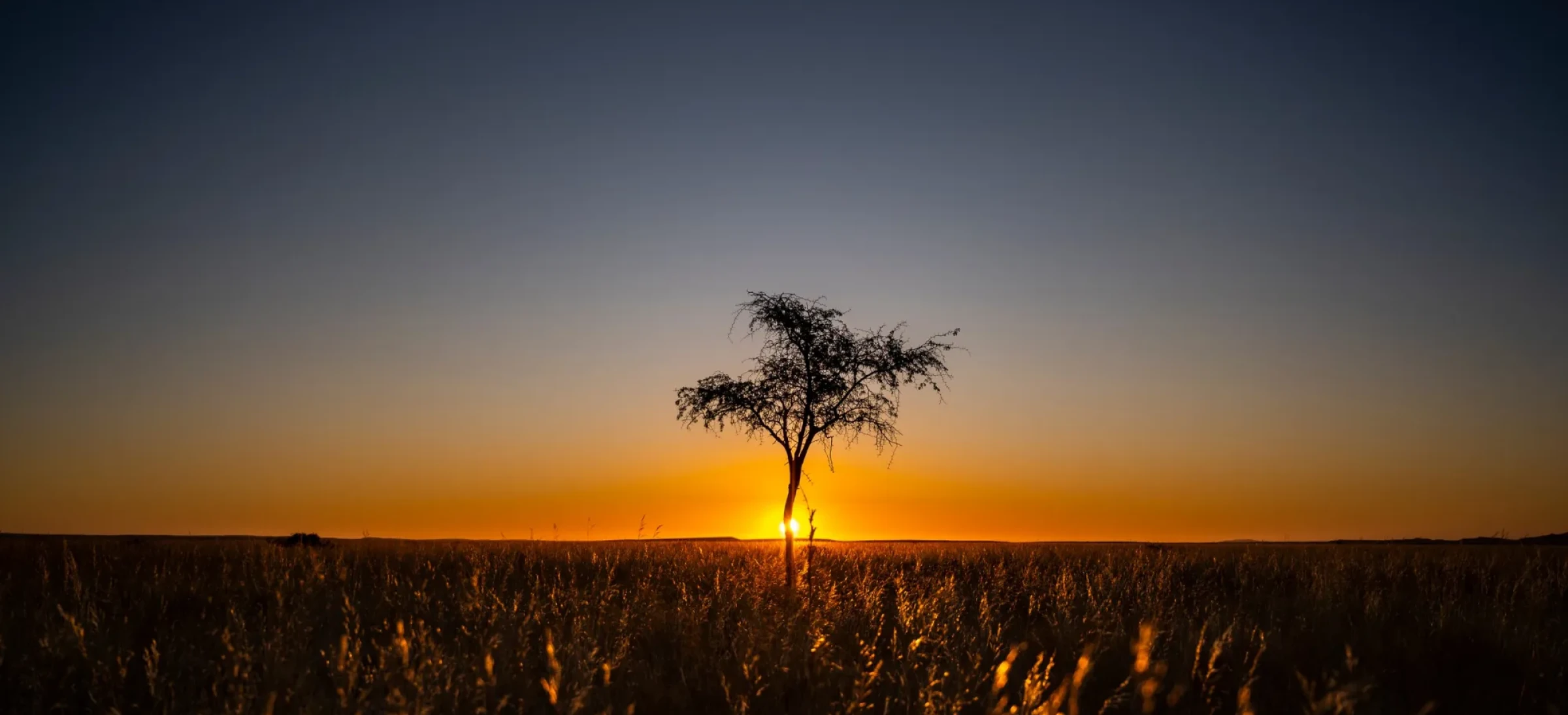
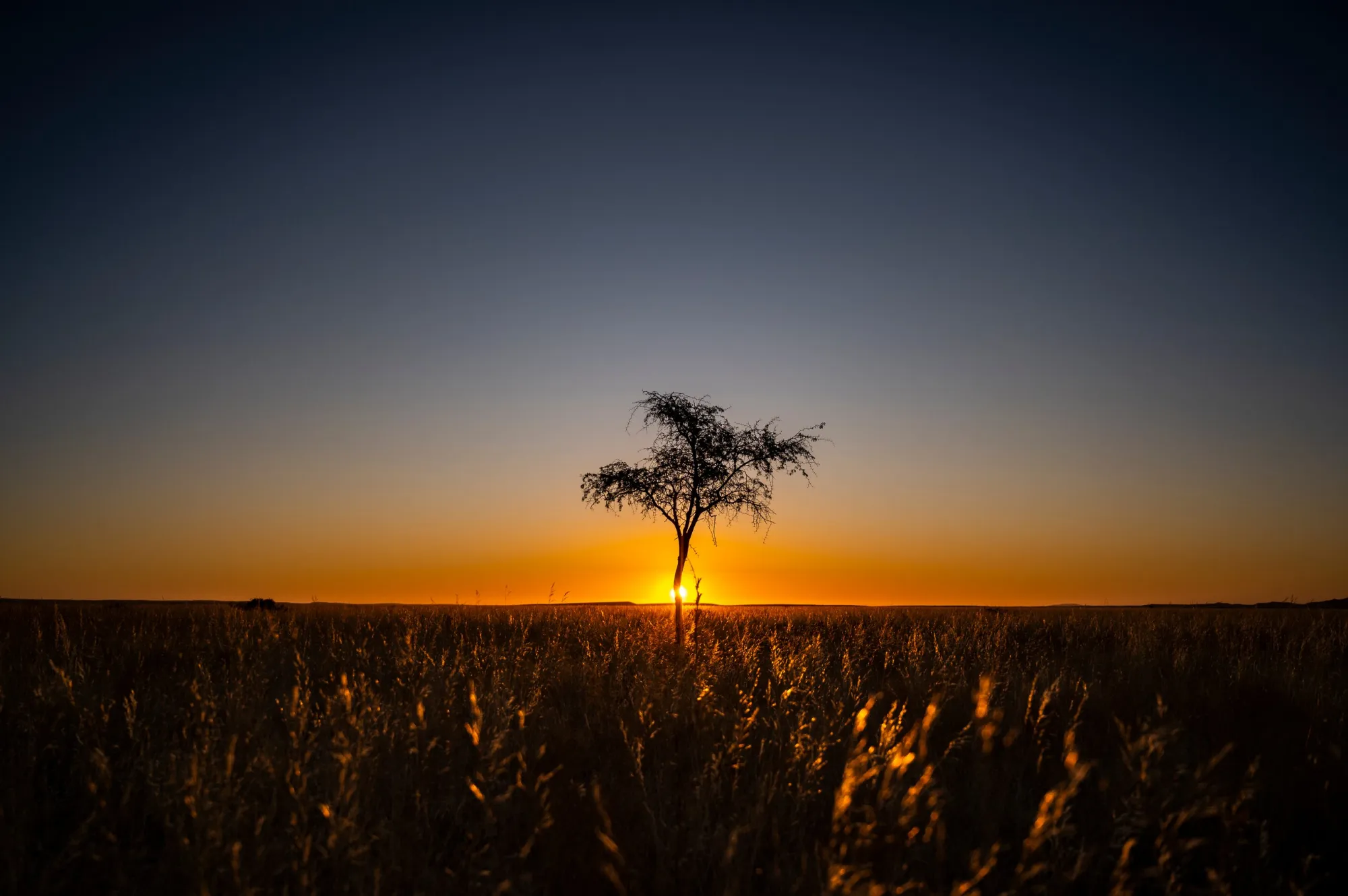
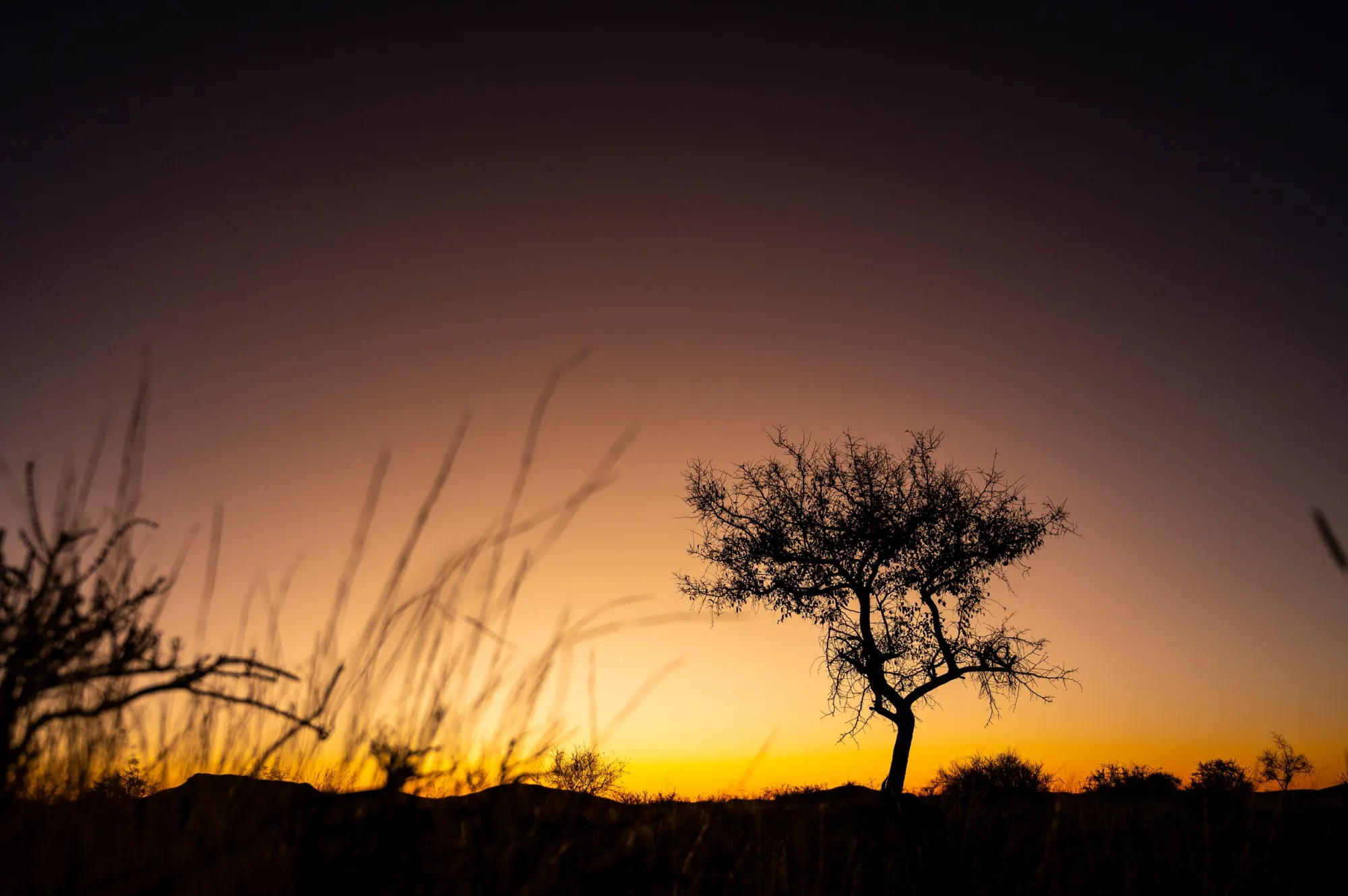
Lone tree standing infront of colourful sky
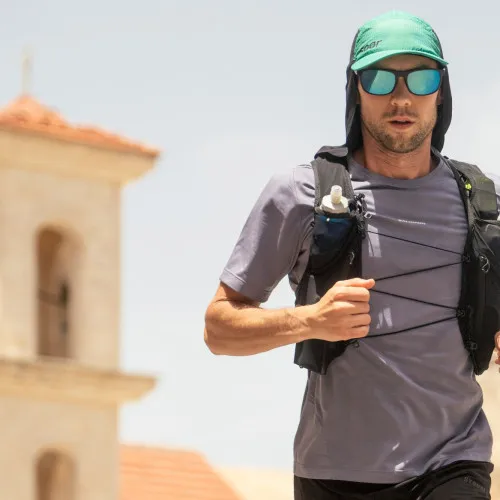
Man running in sunshine

Your Adventure Leader

James

Our multi-lingual running machine, James brings extensive sports event experience, having delivered events of all shapes and sizes across the industry. A UK Athletics qualified running coach, he combines expert endurance expertise with a sharp eye for route design, logistics and participant experience. James has a knack for crafting running routes you’ll genuinely love, always seeking out the very best trails, roads and hidden gems in every destination to create unforgettable adventure experiences.

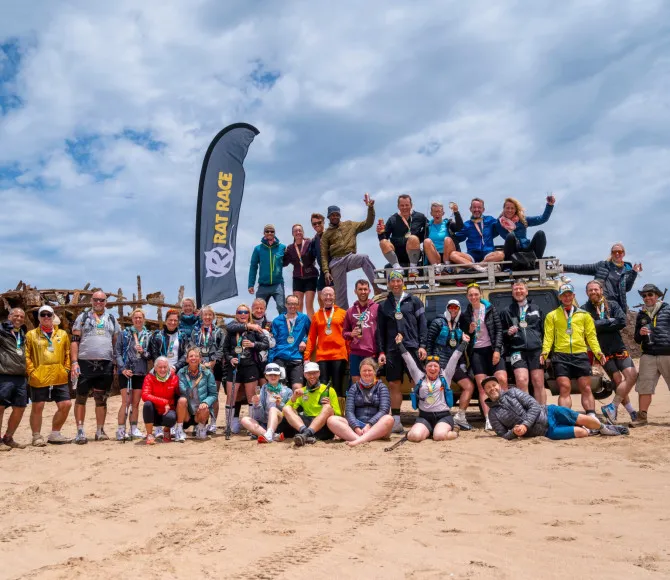
Group of participants with medals around their necks, posing for group photo and celebratingChildren-with-Cancer-UK-logo-white

Raise £5000 and get up to £2500 refunded

Find out more

FAQs

Is the route likely to change?

The very nature of adventure means that the unexpected can sometimes become part of the journey and that is all part of the experience. While we will always strive to deliver “Plan A”, there may be occasions where operational, safety, weather or environmental factors require us to adapt plans and implement contingency routes or alternative arrangements.

As with all Rat Race adventures, participant safety and overall event delivery remain our highest priorities. We therefore reserve the right to amend routes, itineraries or logistics where necessary, using the experience and judgement of our expedition team to make the best decisions on your behalf in changing conditions. Wherever possible, we will communicate any changes in advance. More often than not, these unexpected moments become part of the adventure itself adding to the stories, memories and unique character of the experience.

How do I enter?

Click 'Enter' and sign into your Rat Race account and follow the sign up procedure. If you need any assistance please drop the customer service team an email on events@ratrace.com

How old do I need to be?

Rat Race require you to be over 18 on the day of Registration for this adventure.

Can I transfer my entry?

If you find yourself unable to join us on the start line of this event, you are able to transfer your entry into an event credit voucher once for use on a new entry into an event of your choice. Transfers must be requested within the qualifying transfer window to be accepted and processed. Credit vouchers are valid for 12 months from the date of issue. Credit vouchers are exempt from the transfer process. To find out more information and how to submit a request, view of full transfer policy HERE 

Can I fundraise for charity?

You are very welcome to fundraise for any charity close to your heart while taking part in the event. Please note, however, that our Charity Refund Offer applies exclusively to participants fundraising for Children with Cancer UK.

Can I volunteer?

You can view our current volunteer positions here

Can I go at my own pace?

Yes, there are cut-offs on the event, but these are based purely around the available daylight hours each day. Our aim is to help everyone complete the adventure, so if you fall behind the required pace and are unlikely to reach base before nightfall, our crew will transport you forward by event vehicle. You are then welcome to restart again the following day. This is not an event where missing a cut-off means your adventure is over.

What is Refund Protect?

Add Refund Protect to your booking during purchase and receive a full refund of your entry fee if you are unable to attend the event due to a qualifying unforeseen circumstance. PLEASE NOTE this protection is with our 3rd party partner Refund Protect and NOT Rat Race. In the event you make a refund application this is administered by the Refund Protect customer service team, Rat Race are not privy to the application and cannot intervene on your behalf to influence the outcome determined by their team.

To add Refund Protect (administered by a 3rd party) to your Rat Race booking simply select this option when presented during the entry process. Refund Protect cannot be added retrospectively. Rat Race will then send you name and booking details to Refund Protect in order to protect your transaction with them. If you opt to pay in instalments and transfer your entry before the entry cost is full paid you will be liable to ensure the cost of Refund Protect has been fully covered. This total amount will be deducted from any Rat Race credit due through the transfer process or you will be invoiced by Rat Race for the outstanding amount as Rat Race have paid this on your behalf to Refund Protect at point of entry. 

Do I need insurance?

Yes. Comprehensive travel insurance is compulsory for this event and must cover both general travel and participation in the outdoor endurance activities included within the itinerary. You will also require Evacuation Insurance, which covers emergency extraction and onward medical transport by helicopter or similar should urgent assistance be required in this remote environment.

We strongly recommend arranging your insurance as soon as you enter the event and booking flexible flight options where possible to allow for any unexpected changes. Please ensure your chosen policy specifically covers the activities you will be undertaking during the expedition. There are a number of specialist adventure travel insurers available, including Mann Broadbent.

What kit do I need?

About the area

The Namib desert stretches for hundreds of miles along the coast of Namibia, reaching the swirling South Atlantic abruptly at the forbiddingly-named Skeleton Coast. We will be following the ancient Kuiseb River (which only flows about once every 5 years due to the lack of water in these parts) from its source near the Namibian capital Windhoek, to the edge of the famous Sand Dune Sea of the Namib Naukluft National Park, containing the highest sand dunes on Earth. The Naukluft is the jewel of the Namib Desert and special permission must be obtained to access it, which is only possible with rugged 4×4 vehicles. The highest sand dunes on Earth can be found here and we will be going over those dunes to reach our objective at the coast, the wreck of the Eduard Bohlen. This multi-sport crossing is a true World-first in many respects and the permissions granted for this event are truly unique. All up, a very special journey awaits into the heart of a very special piece of Africa.

Weather

It can be very hot during the say and actually quite cold at night. The desert is a land of extremes of all descriptions, weather included. It is not overbearingly hot however and the heat is very dry, making it far more manageable than humid climates with lower temperatures. One phenomenon which is unique to the coastal Namib is the fog that rolls in off the sea every morning. Aside from supporting all life-forms in this desert area, it has a cooling effect. One thing the weather is here is predictable: The fog burns off every day by mid-morning and the day heats up, before cooling down after dark.

Wildlife

The cold Benguela current brings a fog that shrouds the dunes of the Namib, supporting a surprising array of lifeforms. You will come across Welwitschia plants, nourished by the fog to live for over 2000 years; These truly are some of the oldest living things on Earth. Then there are the animals – oryx, jackal, seal, springbok have all adapted to this environment and especially at the coast, there is an abundance of these critters.

THE KIT LIST

Here’s a rundown with some additional advise from Test Pilot Darren. We may revise this nearer the time but this should give you a good idea at this stage.

Note: All items are mandatory, unless it says recommended, where they are, well, recommended!

To wear

  • Cap/hat with neck protection: Protecting your head and neck from the sun is a must. There are several variations but something like either this from My Race Kit or this from Raidlight will do the trick. The removeable neck protection function is useful, although it does not need to be removeable. You’ll want all the shade you can get on this event and this starts with your head.
    Sunglasses: We advise wrap-around sports sunglasses to give you maximum field of vision and maximum sun protection. These can vary massively in price, but anything with good UV protection will be fine as long as they’re comfortable on your hot sweaty face. Cat 3 protection minimum spec. 
    Darren: I steer away from spending too much on glasses on these trips as you have a good chance of getting them ruined at some point.

  • Buff – Or neck gaiter, neckerchief or bandana. 
    Darren: A buff keeps the sun off your neck and is especially cooler if under the shade of your hat, and you can wet it at water stops too, which is heavenly when you’re part-baked!

  • Suncream/block
    Darren: You’re in a desert and it’s hot. Of course. Plus that sun is out all day from early on and it is fierce on the skin. Another from My Race Kit, specially made to cope with extra sweaty desert runners, Tingerlaat has a good reputation amongst racers. P20 is also a fantastic choice, available widely at pharmacies. Also pack some sun blocking lip cream like this too

  •  T-shirt: Generally a loose-fitting lightweight t-shirt (not cotton) is advised. Short or long-sleeved are permitted but our strong advice is long-sleeved and with some element of SPF UV sun protection built in if you can find it. Raidlight do a good range of such garments including this one.
    Darren: Even the right cheap and simple shirt from the local sports store can do the trick, but in contrast to this, during the recce of the Namib, I tried the DNAmic Ultimate Cooling top and bottoms which proved to be fantastic in extreme heat and I can definitely recommend these garments. Anything from Raidlight is usually good, lightweight and well-made and our firm recommendation is to go LONG-SLEEVED. Anything with SPF in the fabric will also stand you in good stead. It’s one less part of the body to worry about sun-damage from if you have garments with SPF built-in.

  • Shorts: Whatever you’re most comfortable in to be honest. You can wear compression shorts/tights underneath for extra support if you choose.

  • Tights: (Not mandatory) You can wear shorts if you prefer; but if you want to keep the sun off your legs and avoid heat rash, cooling tights are well worth packing, plus the compression also helps with recovery.

  • Lightweight waterproof jacket: however unlikely it is that it may rain, a lightweight waterproof is recommended.

  • Socks and at least 1 spare set: Your final sock choice is up to you and can be quite personal. Our strong advice would be a double sock system with a toe sock and a good wicking lightweight running sock over the top. Ininji liner socks are fantastic. Coupled with something lightweight and breathable and ‘friction-free’ such as the Hilly Monoskin anklet or the Rat Race merino sock for outer layer – with excellent moisture wicking properties.
    Darren: Toe Socks like Ininji, can prevent blistering between toes. These have been fantastic for me and I wouldn’t go to a desert without them now. If toe socks aren’t your thing, then Hilly are a great brand and will sort you out.

  • Running shoes: In deep dry sand, trail shoes aren’t going to get you much more traction than road shoes. So we are not saying you MUST use trail shoes. Road or trail are OK. The important thing here is to have plenty of support and comfort and to ensure your sizing has enough space for some foot swelling in the heat and to accommodate a double sock system, if that is what you choose.
    Darren: Hokas are growing more popular for long distances so would be well worth checking out. The bossman Jim swears by his pair. My desert-pal Allie had zero problems with her trusty Altras and would strongly recommend these.  Personally I’ve found both Brooks GTS and Saucony Exodus to work great for me over deserts and have been the envy of camp with little to no blistering or rubbing throughout.

  • Sand gaiters: These are a must for the desert to keep the sand from going in your shoes. A good pair that is well attached will spare you the horrors that a tiny amount of sand could do inside your shoes – even a few grains can be enough to ruin your feet before you even finish day one.
    Darren: The Raidlights have been great for me across two deserts, and whilst others are available, I’ll stick with these, “if it ain’t broke…”. You’ll need to get a local cobbler to stitch/glue velcro around the edges of your shoes for the gaiters to attach to as they use a Velcro attachment system typically. This will pretty much guarantee keeping all the sand outside of your shoes and save your feet from misery.  If you live in the UK and if you choose gaiters from MyRaceKit.com they offer in-house stitching although you might get a better price locally, I paid about £25. The absolute go-to guy in the UK, who does this for many desert runners is a chap called Alex who runs Alex Shoe Repairs in Wandworth, London.  It’s not a cheap service, but nearly 8 months after the recce trip, with pretty much weekly use since then and a few Ultras under his belt too, bossman Jim’s Velcro is still fully intact with a completely unbroken ring of Velcro around the shoes, glued firmly on them still. Not very fetching, but you absolutely NEED the Velcro to be bombproof to make this system work. Alex is available on +44 (0) 207 223 4931.

  • Nightwear: You’ll want to change into some non-running gear at the end of each day, and it cools down a fair bit at night, in Namibia (especially towards the coast when the fog forms at night with the cool sea air hitting the hot desert sand), so pack a few base layers for top and bottom halves, maybe some favourite PJ’s. A lightweight down jacket like the Rat Race Challenger jacket or fleece is also recommended for evenings as they do get cool. For your feet, some comfy slippers/sliders or crocs will air your feet and give you something to wear around camp. It is very important to give your feet a break each evening.

Equipment

  • Poles: These are mandatory for this event. It is our strong view that without poles, you will struggle on this event. Even if you don’t use poles normally, you WILL use them on this one. Lightweight is good and if you want to splash the cash, carbon poles like the Black Diamond Carbon Z range is the gold-standard. Carbon is by no means required though; just a good, robust trekking or ultra-running pole.
    Darren: When used properly, poles are a huge benefit on sand, and definitely on the dune climbs, oh the climbs! Even if you don’t normally use them for running, I highly recommend them for desert crossings. There will be many sections where you’ll resort to a steady march or a long difficult climb and poles will really help to propel you forwards, you’ll be glad you have them. Go for the larger baskets to reduce how much they sink into the sand.

  • Daypack or Ultra Vest: You only need a handy day pack as the crew will carry your full load of gear from camp to camp.  15 – 20l is recommended. Although it is up to you – you will need to fit the mandatory kit inside, plus 2l of water, food (min 400 kcal) and spare clothing. It’s entirely up to you. Check out the Rat Race Great Glen running pack here.

  • Waterproof liner or drybag for daybag: This may sound strange in a place which has pretty much zero rainfall. The simple answer is that, if it’s waterproof, it’s sandproof. A waterproof liner or drybag will prevent sand getting all over your items inside your bag, which it will. It gets everywhere.
    Darren: Personally, I’ve been really pleased with the Salomon 12 set (I also have the 5L) both of which have been amazing for several years. These are the top end of the price range and cheaper packs are available, however, you usually get what you pay for when it comes to cheaper day packs, and I’m more than happy I got my money’s worth with these. So be smart about where and when to save money. There’s space for a bladder in the back as well as two 500ml soft bottles at the front on both the Salomon and the Rat Race one, plus so many pockets for all the things you never realised you’d need or want.

  • Water carrying system: We will ask that you have a MINIMUM carrying capacity of 2 litres on you at any one time. You may carry bladders, plastic ‘hard’ bottles or flex bottles. Soft flex bottles or something like this raidlight (with a straw for easy access and continual sipping) work well. A combo of both systems (flex flasks and bottles) will also work. Bladders are also fine. Anything combination is fine. Provided you can carry 2 litres.
    Darren: I’d recommend going with the soft flexi-bottles that come with the Salomon set (or similar, such as the Rat Race ScRUNch), it’s great that they squish away as they empty, instead of large empty rigid bottles with the last of the liquid swishing around. The current scientific thinking is to DRINK TO THIRST.  We’ll have no shortage of water although there will be a personal allowance. You should therefore not concern yourself with running out. Mores-o think about how and when you are going to drink. Regularity is key here – set up a regime and sip to it.  whether it’s three minutes, five or ten it doesn’t matter as long as it’s regular and you sip to thirst.  This regularity will prevent slipping into heat injury and just as important it’ll avoid hyponatremia   (see attached).  This is such a simple thing to get right but regularly claims victims in all desert events.  So keep it simple, drink to thirst within a regime and focus on the run without worrying about hydration.

  • Head torch: waterproof to IPX7 standard, minimum 150 lumens + spare batteries or second headtorch.
    Darren: You need to find your way around camp at night, and just in case you get caught out on the trail after sunset, you’ll want to find your way to back. The Black Diamond 325 is neat and effective, offering red and green light too, which saves blinding your campmates when chatting at night. Petzl also do fantastic head torches such as the ubiquitous Tikka. Don’t forget spare batteries! 

  • Portable charger: for that phone for selfies! But also for the charging of your GPS device – see below.
    Darren: I’ve been using the Anker Powercore 20100 for a few years and it’s been flawless, offering almost 7 full phone charges for an iPhone and five for my Galaxy S8, and two USB ports so you can help out a mate at the same time!

  • GPS device: We require that you have a GPS device that is capable if having a GPX file downloaded to it. This can be a watch (See below) or a handheld device. This is an important piece of equipment that will assist you with following the GPS-generated route line on the ground. If you are not familiar with such devices don’t worry – they are easy to use and just like a satnav for people (vs cars). You should practise with your device prior to arrival at the event but we will also assist you on arrival with these GPX files and ensure you know to download them to your device. The key is that is MUST have enough battery life to last a full 15 hr day and you must have the ability to re-charge it (portable charger, see above). You absolutely must have enough power to ensure your PGS device can be powered on each day for all 5 days on the trail.

  • GPS watch: (Not mandatory). Your GPS device CAN be a watch or it CAN be a handheld. So a watch per-se is not mandatory.
    Darren: Imagine sharing 130 desert miles to Strava when you get home! For multi-stage ultras with some days up to 15 hours long, there are only a few real contenders to keep recording and to also join up the days.  The Garmin Fenix 5 is unquestionably one of the best on the market, the price tag is pretty beefy though, so you could look for an older 2nd hand model if you wanted to save a few bucks. I’ve been more than happy with my older Fenix 3HR since about 2014 and it’s not a great deal different to the latest model.

  • Compass: Ideally you won’t need this or you might have a compass built into your watch, but an old-skool physical compass a must have ‘just in case’ your GPS device fails and you need to take a bearing. One like this will do the trick

  • Mirror: Not for checking your make-up, but for reflecting the sun to flash for attention/help if you get into trouble. You can get these within expedition first aid kits or buy here.

  • Whistle: As long as it makes a loud toot, then you can pick one up very cheap. Some backpacks have them built in. That is fine. So it’s an integrated backpack whistle; or a stand-alone one.

  • Pen knife or multitool: any type of leatherman is great. Or a swiss army knife. You do not need to spend megabucks on this gadget. It is very useful however for kit repairs and for general camplife.

  • Gaffer tape or electrical tape for unexpected kit repairs. Top Tip: to prevent you having to carry a full roll of duct tape, use a hotel key card or credit card-sized item and wrap the tape around it.

Food

We will provide you with Pit Stop support along the route. We ask that you maintain some emergency rations on you at all times. As a minimum, 400kcal. This equates to 4 gels or similar energy bars products.

You may also want to take your own foodstuffs and/ or sports nutrition as you know what works best for you and you may have a system you are comfortable with, or simply want some of your own preferred scooby snacks. Given we are transporting an overnight bag for you, there is the facility for this to be carried for you camp-to-camp and you top up with what you need prior to each stage. Darren: You’ll need to keep your energy up for hours on end so whatever works best for you, snack bars with oats and seeds provide good carb energy, I can honestly say the Rat Race Pit Stop Bars are great, and pack a lot of energy into a few easy bites. Include electrolytes in the mix as you’ll lose a lot of salts through sweating, I personally like to add powders to one of my water bottles so I get a constant top-up to prevent hitting a wall, SIS powders are always very good. Stash your favourite salty/savoury items, peanuts, gels and some sweets for a nice sugary hit when you need it. 

  • Electrolyte tablets, salt tablets or Sticks – To be clear, these are mandatory kit.
    Darren: We lose a lot of essential salts through sweat and sweating is something we do a lot in the desert. As well as the powders, gels and snacks, it’s handy to have an extra dose of salts to avoid burning out and dehydrating. These salt capsules are a sure way to keep topped up and moving forwards. NOTE on SALT and ELECTROLYTE intake: Folks sometimes do not believe us that you may find yourself literally swallowing sodium tablets whole and regularly. It feels like an alien concept to be taking on board that much salt. But constant electrolyte intake is absolutely key on this event. If you have not used salt tablets before (i.e. the tablets that are linked above, which are just sodium), then be advised that some people do find them to induce some nausea. That is the case for some folk; yet others swear by them.

Blister care

Ok this is a biggie. We have now laid out a ‘mandatory’ kit which is the minimum mandatory blister and foot care kit you should bring. Having said which, decisions such as whether you want to tape toes and ‘hot spots’ to prevent blisters in advance; or whether you treat blisters if/when they occur is personal and entirely up to you. Each school of thought has its merit. We have also therefore laid out some guidance and advice below, which we hope you find useful. Again, this is all from personal experience of this particular environment. So what you have here is the mandatory kit required as a minimum; and some further advice upon which you can build a good footcare strategy.

  • Footcare Kit – Mandatory:

    • Zinc Oxide tape (Recommended brands: Rock tape or Tiger Tan tape)

    • 4 x sterile needles

    • 4 x scalpel blades

    • Small pair of scissors or penknife with scissors

    • Gauze swabs (2 x packs of 5 swabs – used for drying/cleaning before applying tape)

  • Footcare Kit – Recommended:

    • Compeed blister plasters

    • Haplaband tape (if you are prone to getting blisters in-between toes this is recommended)

    • Disinfectant solution

    • Foot lube (silicon based)

    • Rubbing alcohol (used for drying feet and help prevent fungal infections)

    • All footcare  kit should be stored in a dry bag.

General footcare advice – taping:   For those wanting to do this, it’s worth knowing how to tape up well; and to have the right kit for it. Our recommendation is Rory Coleman’s method here. For this, you will need:

  • Hapla Band

  • Pen knife with scissors

  • Benzoin Tincture – this hardens the skin so helps prevent and dry out blisters

  • Iodine wipes and sterile blades/needles: if you want to lance your blisters. (You might get these in your first aid kit, although you can also use the tiny scissors on a swiss army knife after a quick wipe with some alcohol.)
    Darren: If you have known problem areas, I’d strongly recommend preventative measures and covering them before you start. Compeed blister plasters are brilliant, and whilst you can find similar from other brands like Scholl and Boots own, I find that these lead the way in my experience. 


General footcare advice – other products:

  • Silicon lube: For the ultimate anti-blister regimen, some people lubricate feet with this in the morning prior to putting on their socks. This product is silicon based so won’t wear off.
  • Rubbing alcohol: Take this to dry feet and blisters out at the end of the day. It is better than popping the blisters, which can lead to infection. There is no better way to dry feet that using rubbing alcohol.

  • Another tape recommendation is Hypafix self-adhesive dressing; to tape problem toes and to tape over blisters to keep them sterile and prevent infection. Top tip: Put a plaster on underneath.

Medical

  • Medical kit– Mandatory:

    • Pad and bandage style dressing (large)

    • Adhesive dressing – 1x medium and 1 x large

    • 1 x conforming bandage

    • Dioralyte sachets x 5

    • Basic pain relief (Paracetomol)

    • Any personal medications

    • Over the counter antihistamine tablets

    • Savlon tube (or other brand of antiseptic cream)

    • Hand sanitiser

    • Insect repellent

    • After-bite cream

    • Also a minimum of 2 x lateral flow tests

  • Medical kit – Recommended:

    • Triangular bandage

    • Plasters

    • Sudocrem/Vaseline for chaffing

All medical kit should be stored in a dry bag.

  • Sudocrem – to prevent or treat chaffing in the most inconvenient areas and promote healing of cuts and scrapes

  • Personal First Aid kit to include adhesive dressing, steristrips and triangular bandage as a minimum. Find a decent small personal med kit and squeeze in some of the other things on this list to keep it all together in one bag

  • Hand sanitiser – We all know is worth these days; but you won’t find many washrooms on the dunes and personal hygiene is of paramount importance when you’ve gone remote. A simple bug can bring everyone down, do keep the handy, handy!

  • Alcohol rub for your feet from a bottle or as wipes, this can be a life saver and really sort your feet out at the end of each day. As mentioned in blister care section, above

  • Insect repellents for skin and spray for clothing is worth having too. The rumours are true about Avon Skin So Soft, proving to be a great repellent too, and it leaves your skin silky smooth as a bonus!

  • Personal medication as required – make sure you have it all on you. You will be asked to disclose medical history to our medics nearer the time so they understand any requirements you have in this respect.
    Top tip: Keep your medical kit separate from your footcare kit. It is likely you will be accessing your footcare kit each evening so ensuring your kits are separate will help you keep your personal admin in check with all of that gear lying about the tent!

Sleeping gear

  • Lightweight sleeping bag

  •   Sleeping bag liner 

  •   Sleeping mat

Other mandatory kit

  •   Toothpaste & brush – all those gels and sugary snacks will leave your teeth feeling grim

  •   Personal toiletries

  •   Holdall or duffel for us to transport your gear between camps

  •   Casual clothing for transit and overnights

  •   Towel – travel micro towel or full-size

  •   Spork or other eating utensil

  •   Small drybag/s – for electronics. Sand WILL get everywhere and can compromise the effectiveness of your equipment and/ or scratch and damage items easily

Other recommended kit

  • Phone/Camera: Who wouldn’t want a selfie or two at the top of some of the biggest sand dunes in the world?!  You’ll be repeatedly amazed by the views and wildlife, so it’s likely your phone won’t stay in your pocket for long

  • General trekking or travel trousers

  • Robust outdoor footwear are recommended just given the type of destination (your running footwear are fine if you do not wish to bring another pair of shoes)

  • Reading material

  • International plug adaptor

Bike Only Kit list – for those doing bike/run ONLY

  • Your bike will be provided unless you wish to use your own

  • Helmet – you may provide your own or rent one from us for $10 US

  • Bikes will be supplied with flat pedals. Cleated pedals (SPD) may be attached if you wish to bring your own cleats. If doing so, please also bring a pedal spanner

  • Please bring a basic tool kit to include puncture repair patch, bike multitool and tyre levers

  • Please bring a small portable pump (shrader valve) to carry with you on the bike. Track pumps will be available in camps

Cycling clothing:

  • Padded cycling shorts

  • Cycling jersey – lightweight. As with the run kit above, the recommendation is to equip yourself where possible with SPF UV protective clothing

  • Cycling gloves

  • Socks for cycling

  • Footwear appropriate for flat pedals (running trainers/ sneakers are fine) or SPD footwear if using cleats, Please bring your own pedals if you wish to use them

  • Chamois cream

  • You are welcome to bring your own saddle if you wish

What bike do I need?

If you choose the bike/trek option your bike hire is included as part of your entry. We only permit fat bikes on this route and these are supplied by a local, tried and tested fat bike specialist who will accompany us as a mechanic on the ground.

How do I navigate?

We want you to concentrate on the views and the hard work of putting one foot (or wheel!) in front of the other. So we don’t want you to be staring at maps or navigational aids any more than you have to. There is no formal waymarking (i.e. signs) used on this event. Instead, we will provide and then be asking you to download a route file that you will be able to download onto your smartphone or GPS device. You will follow this ‘line’ when on foot and can use this as a back-up at all times. You may use your own device or rent one from us.

Do I need to carry everything with me like other desert events?

No. This is a supported format, which means that we transport gear for you. You will need to carry a daypack, which will have food, water, emergency gear and spare clothing in it, so you will have to carry something. But not all of your kit. We will do the hard yards on your overnight supplies by carrying a bag for you from camp to camp, plus all of the camping gear. This is a large logistical operation and is part of the value offered in this very special trip.

How do we get back to civilisation?

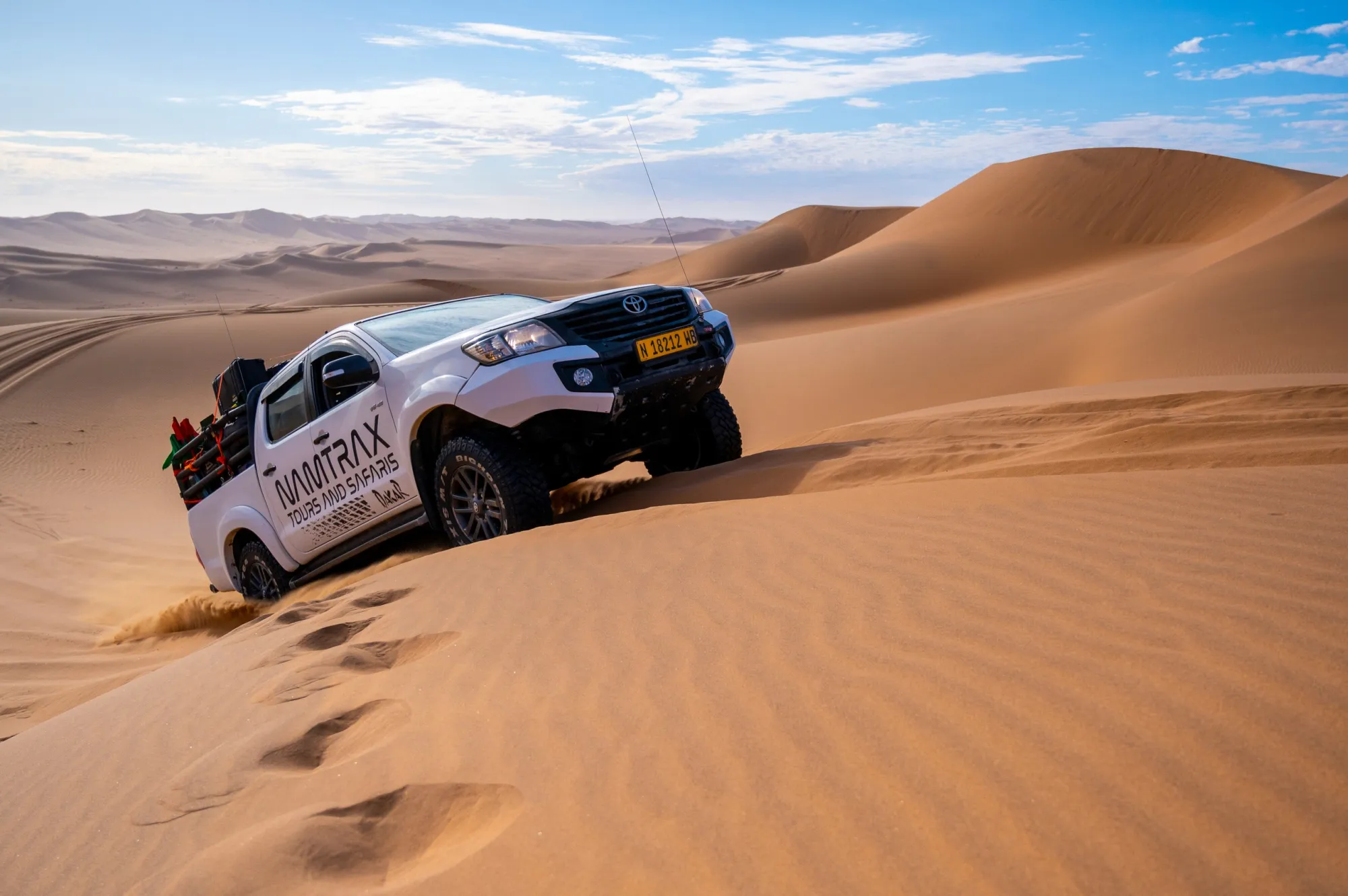
When we finish we are 200km from the nearest human beings. We will finish at the Wreck before making a spectacular 4×4 convoy return north to Walvis bay up the Skeleton Coast and across the dunes. On the way back we will pass landmarks such as the wreck of the Shawnee and Sandwich Harbour, with its enormous dunes and its flocks of pink Flamingos.

Pricing

PAY MONTHLY INTEREST FREE!
ENTER NOW AND SPREAD THE COST INTEREST FREE WITH OUR INSTALMENT PLAN

We’ve created a flexible, interest-free* instalment plan so you can choose how many months to spread the cost of your adventure. Choose to pay in full or in equal monthly instalments up to 3 months before your event date.

​* Once you sign up, Rat Race will set up a recurring monthly payment via Stripe. If a payment fails, you’ll receive reminders from Stripe and our team. After three failed contact attempts and no payment, your entry will be cancelled with no refund or transfer eligibility.

Protect your booking with Refund Protect

Pay in Instalments

Sign up today

£194.10

Interest Free!

/ Month

Pay in Full

2026

£4675

2028

£4900

/ Total Payment