We Value Your Privacy
We use cookies to enhance your browsing experience, serve personalised ads or content, and analyse our traffic. By clicking 'Allow All', you consent to our use of cookies. For further details, please see our cookies policy.
We use cookies to enhance your browsing experience, serve personalised ads or content, and analyse our traffic. By clicking 'Allow All', you consent to our use of cookies. For further details, please see our cookies policy.

What mandatory kit do you need
When it comes to running your first ultramarathon, the age-old question of "what should I wear?" suddenly becomes a lot more important. Whether you're tackling your first 50km, taking on a 100-mile challenge, or embarking on a multi-day adventure, your kit choices can have a huge impact on your experience and, ultimately, whether you reach the finish line.
Most people who enter an ultramarathon already have a good idea of what they're comfortable running in. Some runners are happy in shorts and a T-shirt whatever the conditions, while others prefer more coverage and layers. However, as distances increase, conditions change and time on your feet stretches into the night, the importance of making smart kit decisions becomes much greater.
Add in an event organisers mandatory kit list and it's easy to feel overwhelmed if you're new to ultrarunning. But don't panic, every item has a purpose, and our goal is to help you arrive at the start line feeling prepared and confident.
At Rat Race, our mandatory kit lists are exactly that, mandatory. Every item must be carried throughout the event and be available for inspection at any time. While the list can seem extensive at first glance, it's been carefully developed through years of delivering ultramarathons, trail runs and endurance adventures in a huge variety of environments and conditions.
Spot checks will take place during the event. These checks aren't there to catch people out; they're there to ensure every participant has the equipment they may need if conditions deteriorate or plans change.
The reality is that weather, terrain and fatigue can transform an event experience in a matter of hours. The gear that seems unnecessary at the start line can become invaluable later in the day, or in the middle of the night.
One of the biggest reasons participants fail to finish an ultramarathon isn't a lack of fitness, blisters or sore legs. More often than people realise, it's getting too cold.
Managing body temperature becomes increasingly challenging during long-distance events, especially as pace slows, darkness falls and fatigue sets in. Even in summer, temperatures can drop significantly overnight, and when you're moving more slowly than expected, you may find yourself needing every layer you've packed.
That's why our mandatory kit lists place such an emphasis on protective clothing and emergency equipment. These items are designed to give you the best possible chance of staying safe, comfortable and moving forward, whatever conditions the event throws at you.
It's not uncommon to see experienced ultrarunners wearing every item of their mandatory kit during the small hours of the morning as they grind out those final miles towards the finish line.
Below, we've broken down each mandatory kit item, explaining what it does, why you need it and what to look for when choosing your own ultramarathon gear.
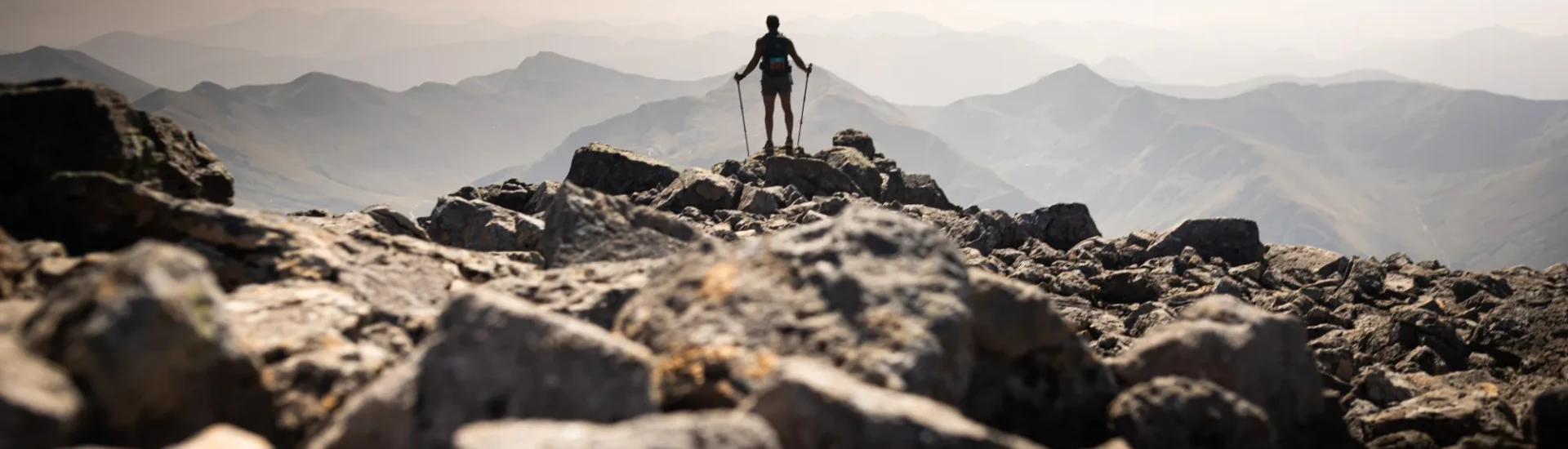
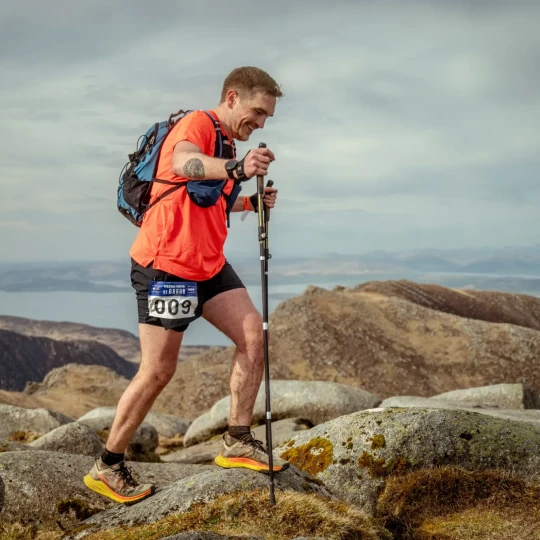
The key thing for this is that it is big enough to get all the kit in and it is comfortable! We would recommend at least a 12L capacity to make sure you've got the room you need. We have developed our own Great Glen bag which has been tried and tested by thousands of Rat Racers over the past 10 years and is designed to fit our mandatory kit list.
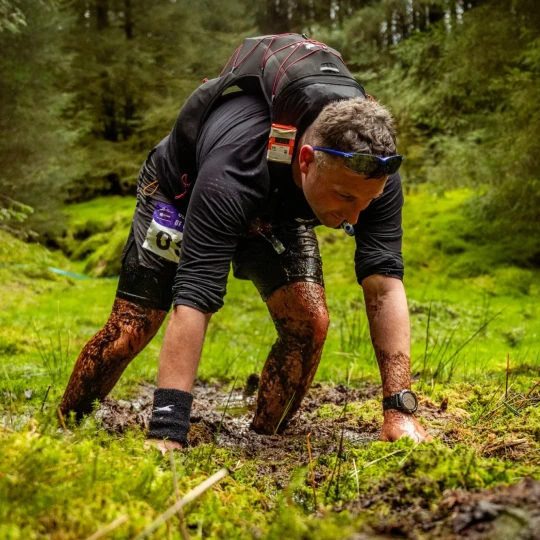
Make sure you have a pair that you know are comfortable and you've worn in. Don't break out the box fresh shoes on event day! If your event has a bag drop in it some people like to chuck in a different pair of shoes if you know there is a terrain change coming up, or incase you end up having a nightmare and wish you had another pair to change into. Sometimes if your feet are suffering a shoe change with different pressure points can help alleviate symptoms.
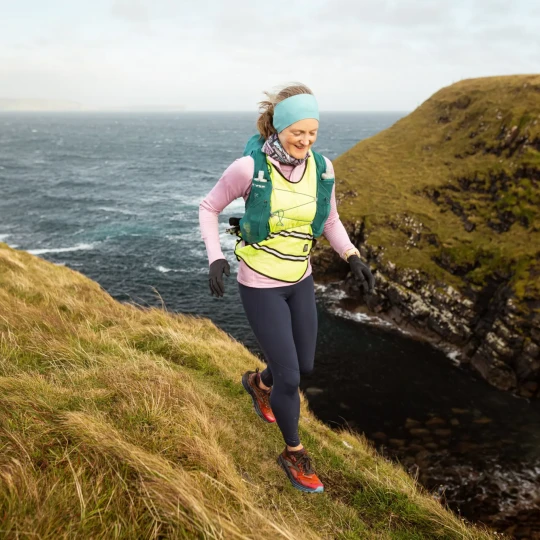
A 2L carrying capacity is required on most events. This doesn't mean you need to carry 2L at all times but you need the capacity incase you end up needing more water than you thought mid-event or if the weather is hot. You will have the opportunity to refill your water at all the Pit Stops. A popular way to carry water is to have 1L in a bladder in your bag and then 2 x 500ml bottles in the front.
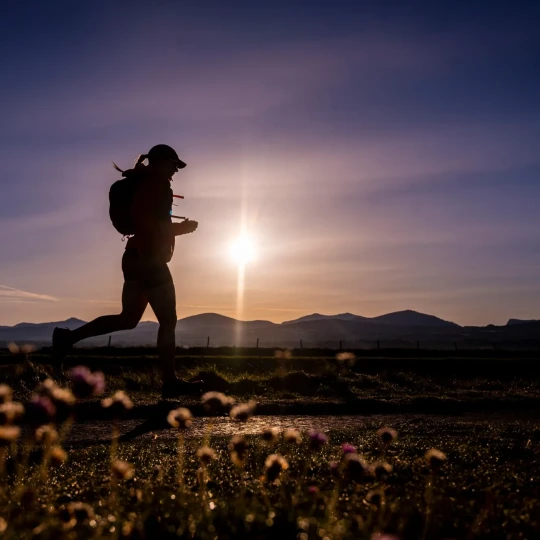
You will need to carry a basic first aid kit and spare food to be carried with you. This is to ensure that you have some supplies on you as you should be eating consistently during this event, ultrarunning is just a moving picnic! In your training it's good to understand how often and how much you need to take in to stop yourself flagging or feeling hungry. Everyone is different and if it's your first time clocking up this distance a good place to start is something small every hour (250-300kcals) and adjust the frequency or kcal amount from there based on how you feel over a 6-7 hour period.
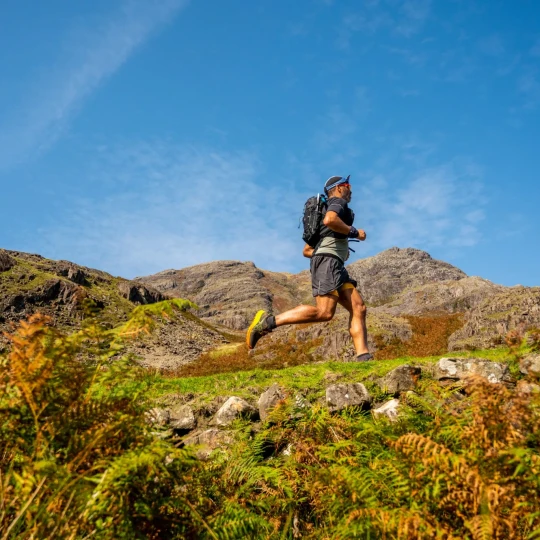
Survival bag, NOT blanket. This is an important safety item if you get injured and have to stop while we get support to you. If the weather is bad and you're tired your body temperature will drop very quickly so it's essential to have one of these to retain as much heat as possible. You will also need a whistle for emergency use. A lot of ultra packs have one built in or you can buy a lightweight one.
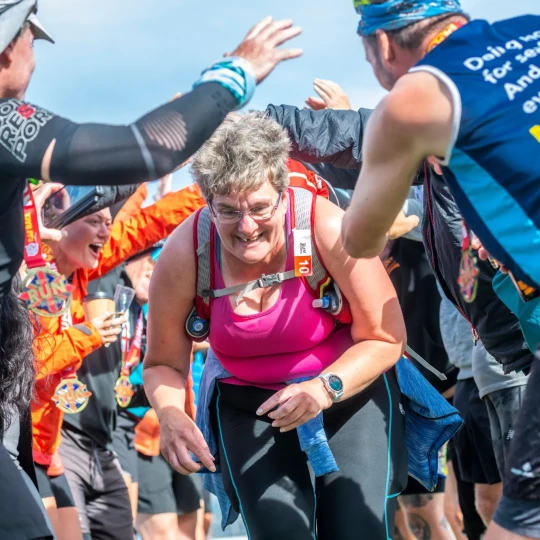
Reusable cup suitable for hot drinks at Pit Stops. In our strive to be more conscious about single use plastic we ask that you bring a cup to our Pit Stops to have a hot drink. A collapsible cup will pack down small and they are very lightweight.
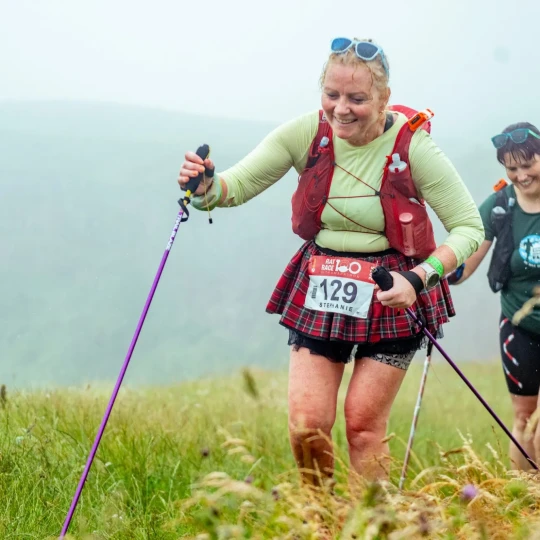
Insulating mid layer merino or synthetic similar. This can be confusing if you aren't used to layering, but we are basically looking for something that you can put on over your running kit to help keep you warm that is less than a coat. This can be a fleece style top, a half zip style long sleeved top or similar. You can see an example of a mid-layer here.
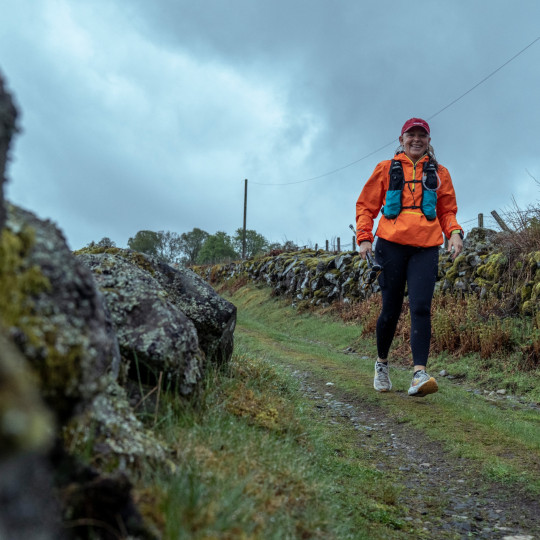
Full waterproof body cover, long sleeve jacket and full length trousers with taped seams. If you want to invest in a good running waterproof jacket you can go down a rabbit hole of brilliant jackets and end up spending big bucks. The plus side is that the better the jacket the less likely you are to have it rain on the inside as your sweat builds up if you do have to put it on. If you're walking often excessive sweating is less of an issue but you're more likely to have your body temperature drop in the rain vs a runner so you want a jacket that can help keep the heat in and the rain out. Taped seams are essential to ensure your waterproof is actually waterproof and not 'water resistant' look for this feature when you're choosing your waterproofs. Our Rat Race waterproofs are designed to throw on and protect you should the heavens open.
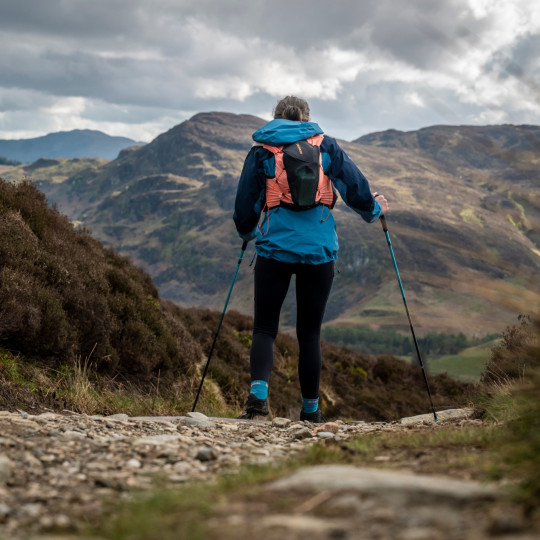
Additional full length leg cover if you are running in shorts (eg a pair of leggings, if you are wearing leggings you do not need to carry a second pair)
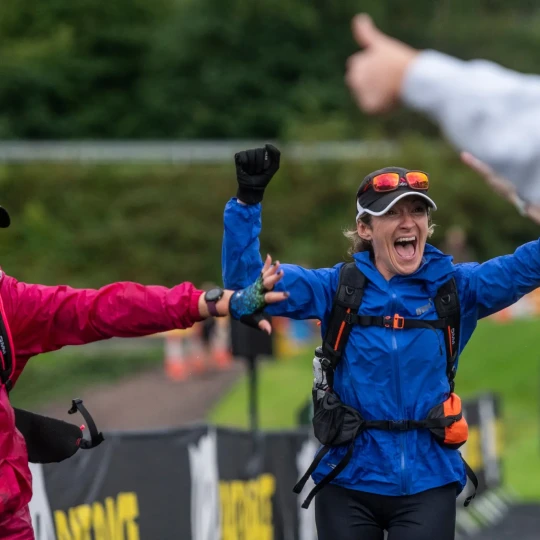
You'll be surprise how cold you can get at night if your ultramarathon is a 100km+ distance. Even in summer! A hat and gloves becomes invaluable at 2am when your body is struggling to regulate its temperature.
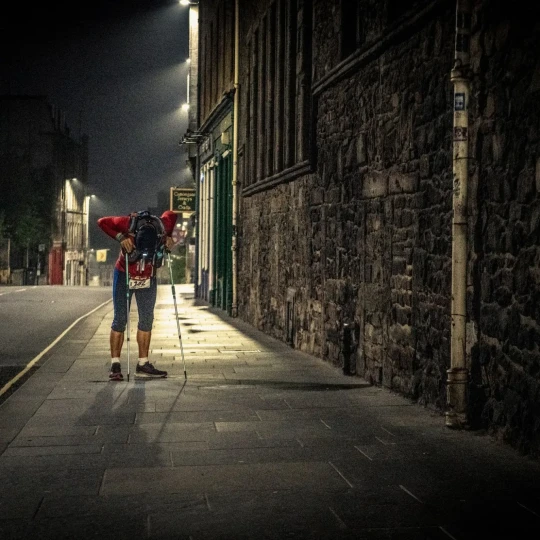
This is mandatory for any event where the chance to be out there in the dark exists. You need to carry spare batteries too to ensure you are never without a headtorch to ensure you are visible and can see where you're going!
Other items you'll find on a kit list include:
This kit is not mandatory but more 'common sense' additions that we recommend to give you the very best chance of reaching that bridge at the end!
Insulated jacket - we strongly recommend packing one if you think you might still be going in the early hours. The most common reason that people retire from our ultramarathons is that they get too cold. Regardless of the weather through the day you will get cold at 2am, find one that packs down small and get it in your pack. It might be the piece of kit that helps you get to the finish.
Suncream/sunglasses. You want sweatproof suncream so look for one that is designed for sport
Blister treatment kit. Our paramedics will prioritise live cases and they are not a foot care service, we recommend that you know how to treat your feet if hot spots and blisters do occur and that you are self contained.
Anti-chafe lubricant
Spare socks, a lot of people put spare socks in their drop bags for a fresh feet pick me up! The choice of socks is personal, we love our merino ones and lots of people swear by them. Another popular choice is the Hilly twin skin, we recommend experimenting to find a pair that help prevent those dreaded blisters.
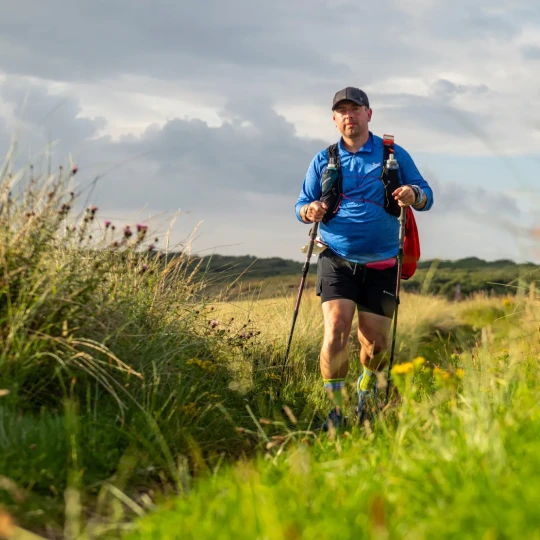
Trekking poles – totally optional but helpful if you are a walker to help maintain your pace and take the load off your legs. See our blog about walking and running with poles for more advice.
Headphones - when the going gets tough the tough listen to music! Please ensure these are not on noise cancelling mode and that you can hear the traffic and people around you.
Over and above the mandatory kit you should have a good supply of your own tried and tested nutrition and electrolytes onboard. During the event, regardless of the weather you will lose electrolytes and you need to ensure you're replacing them via supplements to keep yourself feeling balanced. If you struggle to drink electrolytes you can get chewable tables.
Read more about the benefits of electrolytes in ultramarathons and understand their value in this Runners' World article.
The right kit will make your ultra an unforgettable experience for all the right reasons. The key is to practise with it all before the big day, pack and unpack that bag. Test those socks, know where you chafe and address it before you get going. You need to know your body inside out and be able to adapt to any issues that may arise on the day, I like to do a little check in every 5 miles or so and just run through a self preservation list.
Do I feel too hot or cold in what I'm wearing?
Do I have any hot spots on my feet? (treat them straight away!)
Is anything starting to rub? (move it or lube it!)
When did I last eat?
Have I drank enough in the past hour?
This helps to keep me on track and get ahead of any problems that might take me out of the game and stop me from getting to the finish line.
If you have any questions about kit you can always get in touch with our friendly team on events@ratrace.com and we'll be happy to help advise you.